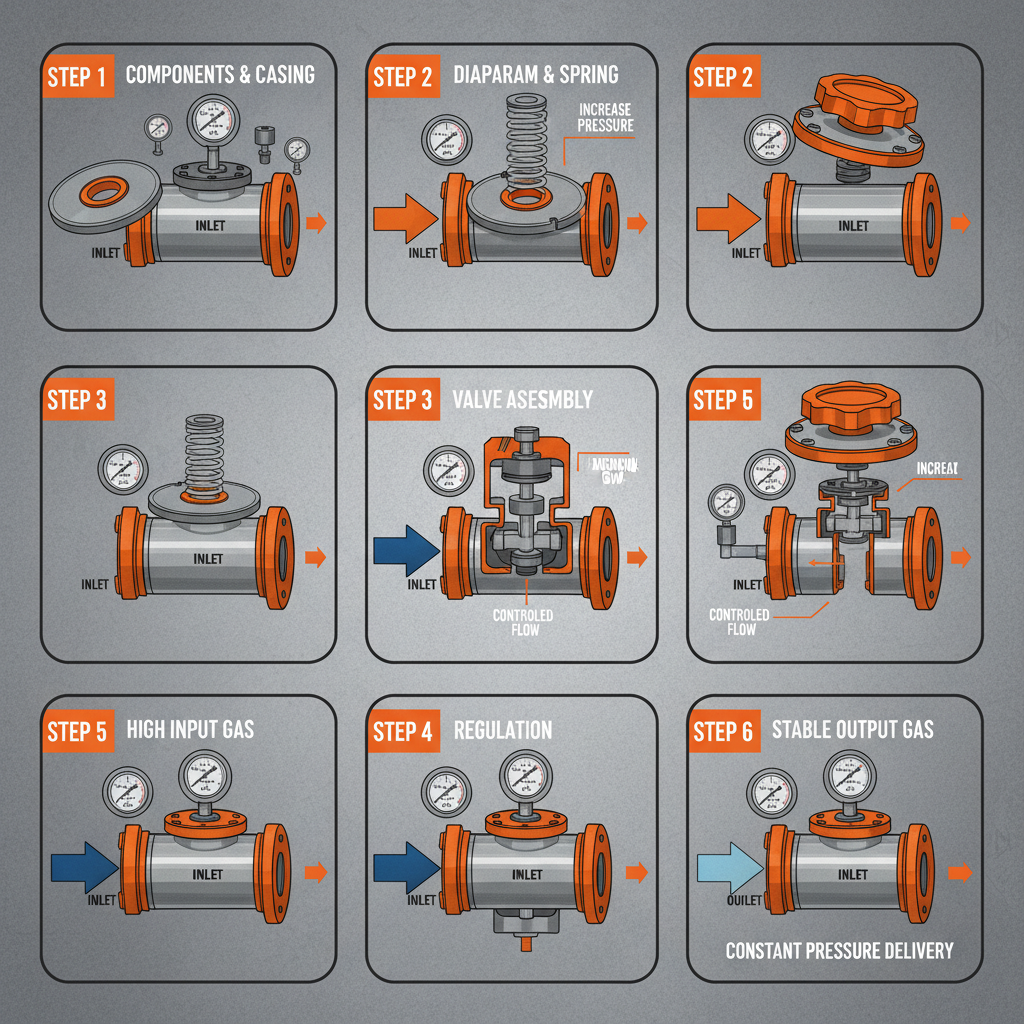
Selecting the right gas pressure regulator manufacturers is a critical decision for ensuring the safety and efficiency of gas transmission and distribution networks. In the specialized field of valve and cock manufacturing, the ability to maintain precise pressure control directly impacts operational stability and the prevention of catastrophic system failures.
For engineers and procurement managers, the primary challenge lies in balancing high precision with durability, especially when dealing with "dirty gas" mediums or extreme pressure fluctuations. A failure in pressure regulation can lead to over-pressure events, necessitating the integration of high-response safety shut-off mechanisms to protect downstream equipment.
This guide provides a technical framework for evaluating manufacturer capabilities, analyzing the critical specifications of safety shut-off valves, and establishing a decision matrix for procurement in industrial gas environments.

Evaluating Manufacturer Technical Competencies

When vetting gas pressure regulator manufacturers, the depth of their R&D infrastructure is a primary indicator of product reliability. High-tier manufacturers typically invest in advanced CNC machining centers and numerically controlled lathes to ensure the dimensional accuracy of valve stems and seating surfaces, which is essential for achieving leak-proof seals under high-pressure conditions.
HEBEI OUYINUO GAS EQUIPMENT CO., LTD. exemplifies this approach by utilizing specialized testing lines for high, medium, and low-pressure regulators based on national standard designs. This allows for the rigorous validation of products such as the SSDJ-FZ series, ensuring they meet the strict requirements of gas transmission and distribution systems used by large-scale energy enterprises.
Core Mechanism of Safety Shut-off Systems
A sophisticated safety shut-off valve is not merely a stop-cock but a dynamic response system. The fifth-generation cut-off mechanism, for instance, utilizes a trip brake release design where the cut-off membrane and sliding mechanism are separated. This architectural separation reduces friction and increases the sensitivity of the trigger, allowing the valve to respond to over-pressure events in less than one second.
The mechanical process involves the membrane pushing a sliding mechanism, which then triggers the release of the valve stem from its fastening groove. Driven by a cutting spring, the valve closes rapidly, effectively isolating the gas source without requiring external power. This autonomous operation is vital for safety in remote pipeline segments where electrical power is unavailable.
Application Requirements for Different Gas Mediums
The chemical composition of the gas medium dictates the material selection for the regulator and shut-off components. While natural gas and LPG are standard, the presence of corrosive elements or particulate matter (dirty gas) requires manufacturers to use high-strength alloys or specialized coatings to prevent erosion and seating failure.
For non-corrosive gases like coal gas and liquefied petroleum gas, the focus shifts toward sealing integrity and response precision. For example, the SSDJ-FZ-F/C-RQZ series is specifically engineered to operate normally in dirty gas mediums, ensuring that contaminants do not interfere with the trip brake release mechanism during a critical safety event.
Performance Metrics for Pressure Control
Evaluating the performance of a regulator requires looking beyond the maximum working pressure. Key metrics include the accuracy of the cutting pressure (e.g., AG2.5) and the response time. A faster response time reduces the peak pressure surge experienced by downstream components, thereby extending the lifespan of the entire system.
The illustrative chart above compares normalized priority scores for different technical attributes when selecting regulators. While maximum pressure is a baseline requirement, the operational precision and response speed are weighted more heavily in safety-critical industrial applications.
Critical Installation and Maintenance Protocols
Proper installation is as critical as the hardware itself. Determining whether a gas valve is open or closed requires a combination of visual indicators—such as handle alignment for ball valves or stem position for gate valves—and pressure gauge verification. In industrial settings, comparing upstream and downstream pressures provides an empirical confirmation of the valve's status.
Maintenance should focus on the integrity of the cut-off membrane and the lubrication of the sliding mechanism. Regular testing of the manual reset function ensures that the valve can be returned to service safely after an over-pressure event. Failure to maintain these components can lead to sluggish response times or a failure to trip, compromising the safety of the facility.
Common Risks in Regulator Selection
A common mistake among buyers is overlooking the compatibility between the regulator's flow coefficient (Cv) and the system's actual demand. A mismatch can lead to excessive pressure drops or "hunting," where the regulator continuously fluctuates around the set point, causing instability in downstream burners or equipment.
Another risk is the selection of valves based solely on price rather than certification and testing standards. Industrial regulators must be validated for specific temperature ranges (e.g., -20°C to +60°C) and pressure ranges (e.g., 0.005MPa to 1.6MPa). Using a valve outside its specified operational envelope can lead to diaphragm rupture or permanent deformation of the valve body.
Supplier Evaluation and Decision Framework
To optimize the procurement process, buyers should utilize a qualitative comparison matrix that evaluates the manufacturer's production capacity, technical certifications, and product versatility. This ensures that the chosen partner can support the full lifecycle of the equipment, from design and installation to long-term maintenance.
| Evaluation Factor | Standard Approach | Advanced Approach | Critical Impact |
|---|---|---|---|
| Manufacturing Tools | Conventional Lathes | CNC Machining Centers | Dimensional Precision |
| Testing Protocol | Batch Sampling | Full-Line Standard Testing | Reliability Assurance |
| Response Mechanism | Basic Spring Load | Trip Brake Release | Trigger Sensitivity |
| Material Selection | General Carbon Steel | Corrosion-Resistant Alloys | Lifespan in Dirty Gas |
| Control Integration | Purely Mechanical | Solenoid/Electric Actuation | Automation Capability |
| Compliance | Local Standards | ISO/National Standards | Regulatory Approval |
By applying this framework, procurement teams can shift from a price-centric model to a value-centric model, prioritizing the long-term operational safety and reduced downtime of the gas distribution network.
Frequently Asked Questions
A standard regulator maintains a constant outlet pressure, whereas a safety shut-off valve is a protective device designed to completely stop gas flow automatically when abnormal conditions, such as over-pressure, are detected.
This mechanism separates the sensing membrane from the sliding trigger, reducing mechanical friction and allowing for a response time of ≤1s, which is critical for preventing downstream pipe bursts during system failures.
Yes, specialized series like the SSDJ-FZ are designed to work normally in dirty gas mediums, provided the contaminants are non-corrosive to the chosen body materials.
While it varies by model, many industrial safety shut-off valves operate within a range of 0.005MPa to 1.6MPa, with maximum working pressures reaching up to 6.4MPa.
Check the visual indicators: for ball valves, a handle parallel to the pipe indicates it is open; perpendicular indicates it is closed. For gate valves, a raised stem typically means the valve is open.
Many industrial safety valves, including the SSDJ-FZ series, use the pipe network's own pressure to trigger the shut-off, meaning no additional electrical power is required for the safety function to activate.
Conclusion
The selection of gas pressure regulator manufacturers must be based on a rigorous assessment of technical precision, material compatibility, and safety mechanism reliability. Transitioning from simple regulation to integrated safety systems—incorporating high-response shut-off valves and standardized testing—is the only way to ensure the long-term integrity of industrial gas infrastructure.
For organizations evaluating implementation options or seeking detailed technical specifications for pressure control equipment, further information is available at www.gasouyinuo.com to assist in matching the right solution to specific application requirements.