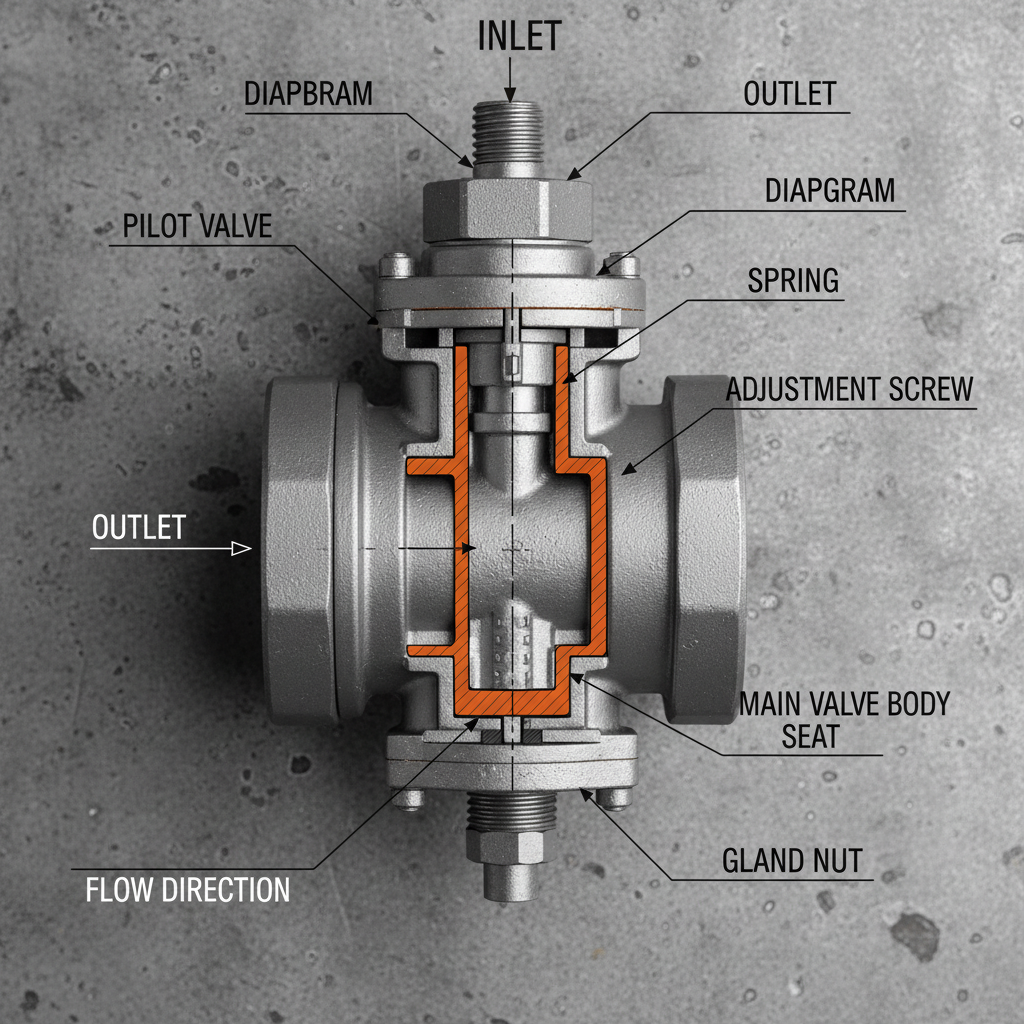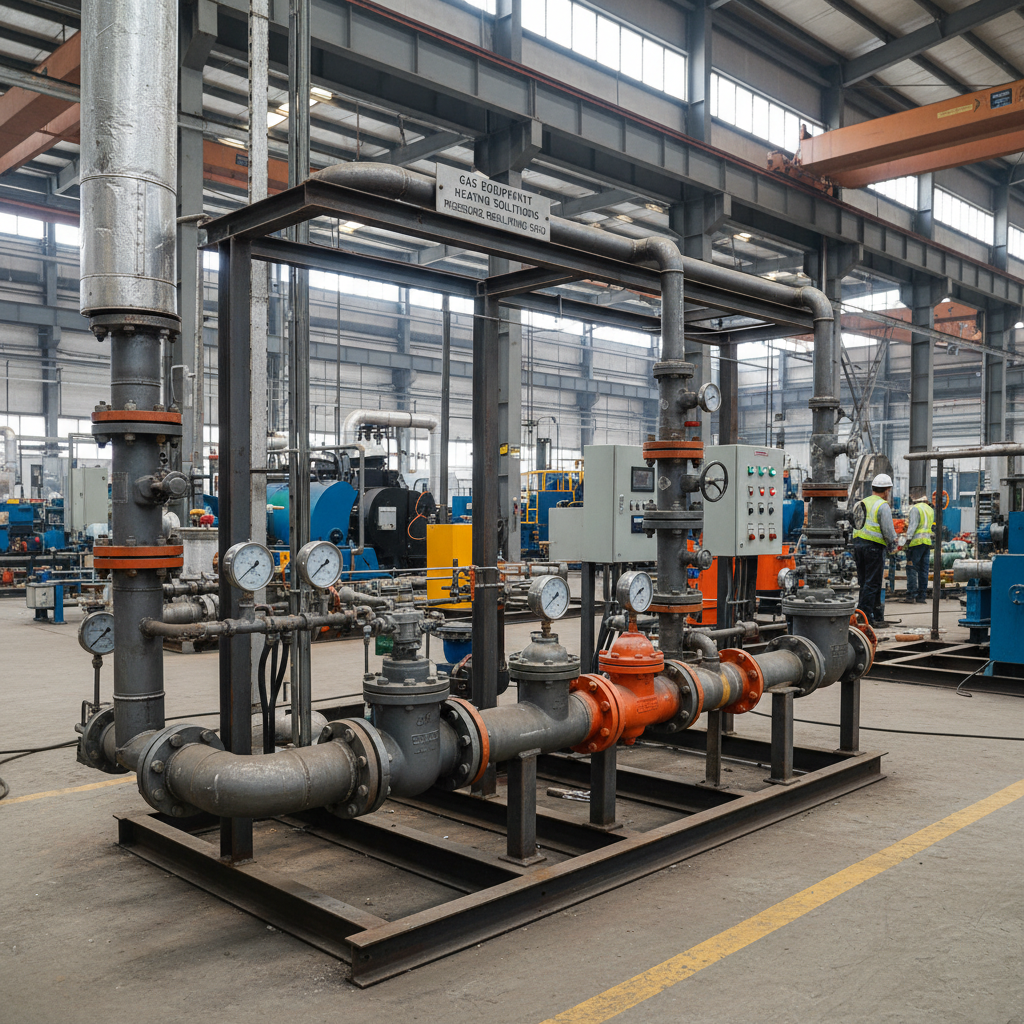
The global energy infrastructure is currently undergoing a significant transition toward higher efficiency and tighter safety tolerances in gas transmission. For engineering procurement managers, the challenge has shifted from simply finding gas pressure regulator suppliers to identifying partners capable of integrating precision regulation with high-durability vessel engineering.
The criticality of this shift lies in the volatile nature of high-pressure gas environments, where a minor discrepancy in regulation or a failure in the containment vessel can lead to catastrophic system downtime. Modern industrial requirements now demand a seamless synergy between the regulator's precision and the structural integrity of the surrounding pipeline components, such as pigging systems.
This technical analysis explores the engineering requirements for gas pressure regulation and the essential role of specialized equipment in maintaining pipeline health, providing a framework for evaluating the technical capacity of modern gas pressure regulator suppliers.


Effective gas regulation is not merely about the valve itself but the entire vessel architecture that houses the regulator. The integration of components—including the cylinder, reducing pipes, and process connecting pipes—must be executed to minimize turbulence and pressure drops.
When analyzing the capabilities of gas pressure regulator suppliers, it is essential to examine their adherence to pressure vessel standards such as GB150-2011. This ensures that the containment can withstand maximum allowable working pressures (MAWP) without structural deformation.
Material selection is the first line of defense in gas regulation systems. High-grade carbon steels and corrosion-resistant alloys are typically employed to maintain integrity across wide temperature ranges, often from -40℃ to +80℃. The choice of material directly impacts the lifespan of the regulator assembly and its resistance to atmospheric corrosion.
Beyond materials, the mechanical design must incorporate safety stop valves and venting systems. In a professional engineering setup, the upper end of the regulator enclosure is equipped with a safety valve and pressure gauge, while the lower section includes a drain valve to remove condensate, preventing liquid slugs from damaging the regulation mechanism.
Compliance with TSG R0001-2009 regulations ensures that fixed pressure vessel safety technology is applied, reducing the risk of over-pressurization. For buyers, verifying that a supplier holds licenses for pressure pipeline elements manufacturing is a non-negotiable requirement for operational safety.
Pipeline maintenance is inextricably linked to regulation efficiency. Pig launchers and receivers allow for the insertion of cleaning and inspection devices (pigs) without interrupting the flow of gas, ensuring that internal deposits do not interfere with pressure stability.
There is a clear distinction between Type I and Type II facilities. Type I is designated for common pigging operations, while Type II is engineered for intelligent pigging, supporting advanced inspection tools that provide high-resolution data on pipeline wall thickness and corrosion levels.
Evaluating the efficacy of different gas regulation configurations requires a normalized approach. Rather than looking at isolated metrics, engineers assess the balance between pressure stability, response time, and structural durability across various operational profiles.
The following assessment represents a relative engineering rating based on typical industry configurations. It highlights the trade-offs between basic manual regulation and fully integrated intelligent systems provided by top-tier gas pressure regulator suppliers.
In a typical industrial deployment, the regulator is installed as part of a point supply and peak shaving equipment series. The workflow involves an initial high-pressure intake, followed by a gradual reduction phase where the regulator maintains a constant downstream pressure regardless of upstream fluctuations. This process is critical for protecting downstream equipment from pressure surges.
Integration with pigging facilities occurs at the start and end of the transmission line. The launcher introduces the pig into the regulated flow, while the receiver captures it downstream. This cyclic maintenance ensures that the inner walls of the pipe remain free of paraffin or scale, which otherwise would create localized pressure drops and force the regulators to work harder, reducing their service life.
The industry is moving toward "Smart Regulation," where digital processing equipment and CNC-machined components allow for tighter tolerances and integrated sensors. The goal is to transition from reactive maintenance to predictive maintenance, using real-time data to forecast when a regulator diaphragm or seal may fail.
Future systems will likely integrate more deeply with SCADA (Supervisory Control and Data Acquisition) networks, allowing for remote adjustment of pressure set-points based on real-time demand from the distribution network. This minimizes energy loss and optimizes the flow dynamics of the entire gas grid.
Furthermore, the adoption of new high-performance materials and improved welding techniques, following updated ASME and API standards, will allow for higher MAWP in smaller vessel footprints, reducing the overall land requirement for gas station installations.
When selecting among various gas pressure regulator suppliers, procurement teams should avoid focusing solely on the price per unit. Instead, a lifecycle cost analysis should be performed, considering the cost of installation, the frequency of seal replacements, and the energy efficiency of the regulation process.
Technical audits should verify the supplier's capability in high-accuracy digital processing, including their use of CNC machining centers and turning milling centers. The ability to produce both the regulator and the associated pressure vessel ensures that there are no compatibility issues during the integration phase.
The following matrix provides a comparison of configuration profiles, helping engineers match the equipment to the specific demands of their application environment.
| Configuration Type | Primary Specification | Operational Factor | Recommended Use Case |
|---|---|---|---|
| Basic Configuration | Manual Adjustment | Standard Durability | Low-Flow Small Plants |
| Standard Configuration | Automatic Regulation | High Stability | City Gas Distribution |
| High-Duty Configuration | Reinforced Vessel | Extreme Temp Range | Industrial Processing |
| Precision Configuration | Digital Control | Tight Tolerance | Laboratory/Medical Gas |
| Automated Configuration | SCADA Integrated | Remote Monitoring | Regional Transmission |
| Industry Baseline | ASME/API Compliant | Standard Safety | General Utility Use |
Pig launchers and receivers are pressure vessels and must primarily adhere to the ASME Boiler and Pressure Vessel Code (BPVC) Section VIII, Division 1 or 2. Additionally, API 1111 provides essential guidance on the design, construction, and operation of pipelines and associated facilities, ensuring the geometry of the barrels and closure devices is safe for high-pressure operations.
The slope is critical for drainage and pig movement. A launcher is typically installed with a 5/1000 downward slope toward the fast-opening blind plate to ensure that any liquids or debris are pushed forward into the pipeline. Conversely, the receiver uses a 5/1000 upward slope to facilitate the controlled retrieval of the pig and the drainage of collected contaminants.
Type I facilities are designed for common pigging operations, such as routine cleaning or basic separation. Type II facilities are specialized for intelligent pigging, designed to accommodate high-tech inspection tools (smart pigs) that provide detailed internal pipeline mapping. Type II usually involves more complex installation and higher precision in barrel geometry.
A complete assembly includes the fast-opening blind plate for access, the main cylinder for containment, reducing pipes to manage flow velocity, process connecting pipes, and saddle supports for structural stability. Safety components like venting valves, safety relief valves, and pressure gauges are essential for preventing over-pressurization.
Evaluation should focus on manufacturing certifications (e.g., pressure vessel licenses), the precision of their machining equipment (CNC centers), and their ability to meet diverse standards like GB150 or ASME. Reviewing their experience with large-scale enterprises such as PetroChina or Sinopec can also indicate their ability to handle complex, high-stakes engineering projects.
Standard industrial-grade equipment is typically designed to operate reliably between -40℃ and +80℃. For environments outside this range, specialized material alloys and seal configurations are required to prevent brittleness at ultra-low temperatures or thermal degradation at extreme highs.
The stability of gas transmission networks depends on the seamless integration of precision regulation and robust containment. By aligning equipment selection with strict design codes like ASME Section VIII and implementing a rigorous maintenance schedule through intelligent pigging, operators can significantly reduce the risk of system failure and optimize throughput.
As the industry pivots toward smarter, more autonomous systems, the role of gas pressure regulator suppliers will expand from providing hardware to delivering integrated pressure management solutions. Procurement should prioritize partners who demonstrate a holistic understanding of both the regulation mechanism and the structural engineering of the pressure vessels.