


Sep . 19, 2025 10:20
Back to list
Expert Pressure Regulators: Gas & High-Pressure Control
Navigating the Dynamics: Current Trends in Pressure Regulation Technology
The industrial landscape is undergoing a significant transformation, driven by demands for increased efficiency, enhanced safety, and sustainable operations. In this context, the role of the pressure regulator has never been more critical. Modern industrial processes, from petrochemical refining to power generation and municipal gas distribution, rely heavily on precise and reliable pressure control to optimize performance and ensure compliance with stringent safety standards.
Key industry trends underscore the evolving requirements for pressure regulation solutions. There is a growing emphasis on smart, interconnected devices capable of real-time monitoring and predictive maintenance. Digitalization is paving the way for advanced diagnostics and remote control, allowing operators to fine-tune systems and respond proactively to anomalies. Furthermore, the push towards decarbonization and the adoption of alternative fuels like hydrogen are creating new challenges and opportunities for specialized gas pressure regulator designs that can handle novel media and operating conditions.
The market is seeing a surge in demand for high pressure regulators that offer superior accuracy, faster response times, and enhanced material compatibility to withstand extreme conditions. Manufacturers are also focusing on modular designs that facilitate easier maintenance, reduce downtime, and offer greater flexibility for various application environments. Sustainability is another driving factor, with a preference for solutions that minimize fugitive emissions and optimize energy consumption across entire process chains. These trends collectively highlight the need for robust, intelligent, and adaptable pressure regulation technologies.
Precision Engineering: The Manufacturing Process of a Pressure Regulator
The development and manufacturing of a high-performance pressure regulator is a testament to precision engineering, robust material science, and rigorous quality control. The RTZ1-/0.4LQ Series, for instance, undergoes a multi-stage production process to ensure its reliability and longevity in demanding industrial environments.
Materials Selection: The Foundation of Performance
The choice of materials is paramount. For critical components like the body and bonnet, materials such as ductile iron, forged steel, or specialized stainless steels (e.g., 316L) are selected based on their mechanical strength, corrosion resistance, and compatibility with the intended media (e.g., natural gas, air, inert gases). Elastomers for diaphragms and seals are carefully chosen for their chemical inertness, flexibility, and temperature resilience, often including NBR, FKM, or EPDM, to ensure leak-tightness and responsiveness across operational ranges.
Core Manufacturing Processes
- Casting and Forging: Regulator bodies and bonnets are typically manufactured through precision casting or forging processes. Forging provides superior material integrity, reducing porosity and enhancing strength, which is crucial for high pressure regulators. Casting allows for complex geometries. Both processes are followed by annealing to relieve internal stresses and ensure material stability.
- CNC Machining: Critical internal components such as valve seats, stems, poppets, and spring cages demand exceptionally tight tolerances. CNC (Computer Numerical Control) machining is employed to achieve micron-level precision, ensuring smooth operation, minimal hysteresis, and accurate pressure control. This precision is vital for maintaining the desired setpoint, especially in applications requiring a highly sensitive gas pressure regulator valve.
- Surface Treatment: Depending on the application, components may undergo surface treatments such as passivation for stainless steel (to enhance corrosion resistance), or specialized coatings to reduce friction and wear.
- Assembly in Controlled Environments: Assembly takes place in cleanroom-like conditions to prevent contamination, which could compromise performance and service life. Skilled technicians meticulously assemble each unit, adhering to strict torque specifications and assembly sequences.
Rigorous Testing and Quality Assurance
- Hydrostatic Testing: Each regulator body undergoes hydrostatic testing to verify its structural integrity and resistance to pressure, typically at 1.5 times its maximum rated operating pressure, in accordance with standards like ANSI/ASME B16.34.
- Pneumatic Leak Testing: Both internal (seat) and external leak tests are performed using inert gas (e.g., nitrogen) at specified pressures to ensure bubble-tight shut-off and prevent fugitive emissions. This is critical for safety and environmental compliance, especially for natural gas pressure regulator applications.
- Flow Performance Testing: Regulators are tested across their entire operating range to verify accuracy, setpoint stability, lock-up pressure, and relief valve performance. This involves simulating various inlet and outlet pressure conditions and measuring flow rates and output pressure deviations.
- Cyclic Life Testing: A select number of units undergo extensive cyclic testing to simulate years of operation, evaluating the durability of diaphragms, springs, and moving parts.
- Compliance: Products adhere to international standards such as ISO 9001 (Quality Management), ISO 22000, API 6D (for pipelines), and specific European EN standards where applicable.
Service Life and Application Advantages
With proper installation and maintenance, the RTZ1-/0.4LQ Series is designed for a service life exceeding 10-15 years, even in continuous operation. This robust design delivers significant advantages across target industries, including:
- Energy Saving: Precise pressure control minimizes over-pressurization and reduces system losses, leading to optimized energy consumption in industrial burners, boilers, and process heating.
- Corrosion Resistance: Strategic material selection ensures longevity in harsh chemical environments, such as those found in petrochemical facilities and wastewater treatment plants.
- Enhanced Safety: Built-in safety features like slam-shut valves and overpressure relief mechanisms prevent catastrophic failures, crucial in industries like petrochemicals and gas distribution where safety is paramount.
- Process Stability: Delivering consistent output pressure regardless of inlet fluctuations ensures stable operations in metallurgy (e.g., furnace atmosphere control) and water supply & drainage systems (e.g., controlling pump discharge pressure).
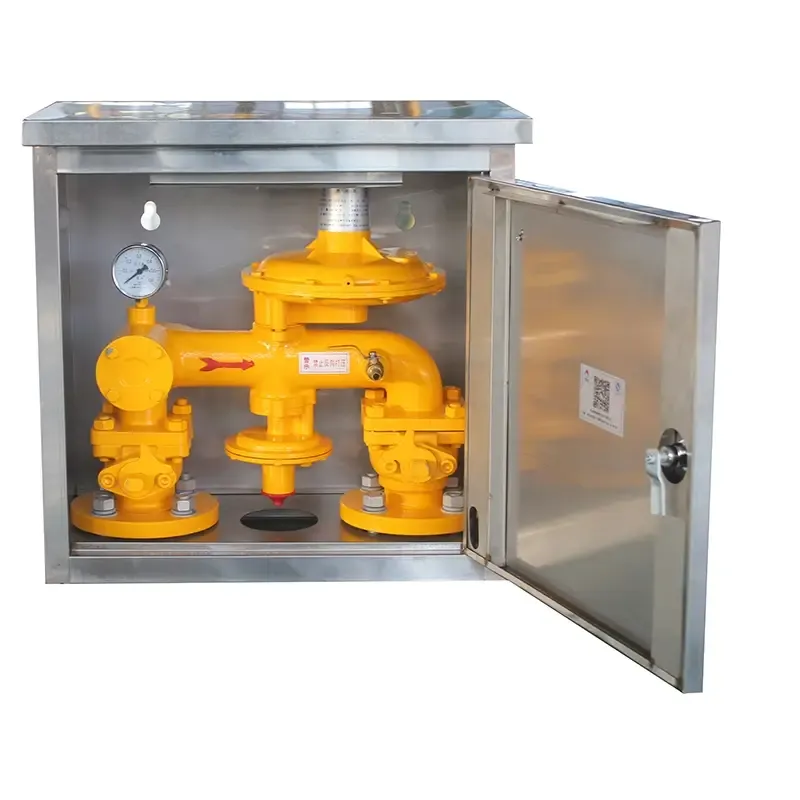
Technical Specifications: RTZ1-/0.4LQ Series Gas Pressure Regulator
The RTZ1-/0.4LQ Series is engineered to provide robust and accurate pressure regulation for a wide array of industrial and commercial applications. Its design focuses on high reliability, ease of maintenance, and exceptional control precision, making it an ideal choice for critical infrastructure.
Key Product Parameters:
| Parameter | Specification (RTZ1-/0.4LQ Series) |
|---|---|
| Model Series | RTZ1-/0.4LQ Gas Pressure Regulator |
| Inlet Pressure Range (P1) | 0.02 MPa to 0.4 MPa (0.2 bar to 4 bar) |
| Outlet Pressure Range (P2) | 0.001 MPa to 0.05 MPa (0.01 bar to 0.5 bar) |
| Nominal Diameter (DN) | DN25, DN40, DN50, DN65, DN80, DN100, DN150, DN200 |
| Accuracy Class (AC) | AC10 (±10% of setpoint) |
| Lock-up Pressure Class (SG) | SG30 (≤30% of setpoint) |
| Operating Temperature Range | -20°C to +60°C |
| Applicable Medium | Natural gas, manufactured gas, LPG, air, nitrogen, other non-corrosive gases |
| Body Material | Cast Iron (HT200, QT450), Cast Steel (WCB) |
| Diaphragm/Seal Material | NBR, FKM (optional) |
| Connection Type | Flanged (PN1.6, ANSI 150), Threaded (Rp) |
| Safety Features | Integrated Overpressure Shut-off (OPSO) / Underpressure Shut-off (UPSO) options |
| Compliance Standards | ISO 9001, GB/T 17267, EN 334 |
Understanding the parameters is crucial for proper selection. The 'Accuracy Class (AC)' denotes the maximum deviation of the outlet pressure from the setpoint, expressed as a percentage. An AC10 rating indicates a highly precise regulator suitable for applications where stable output pressure is paramount. The 'Lock-up Pressure Class (SG)' specifies the maximum increase in outlet pressure above the setpoint when flow stops, crucial for system integrity. These specifications highlight the RTZ1-/0.4LQ Series' capability to function as a reliable gas pressure regulator in diverse settings.
Advanced Technical Advantages of the RTZ1-/0.4LQ Series
The RTZ1-/0.4LQ Series distinguishes itself through a suite of technical advantages designed to enhance performance, ensure safety, and reduce operational costs for industrial users.
- Superior Control Accuracy: With an Accuracy Class of AC10, these regulators maintain an exceptionally stable outlet pressure, even with significant fluctuations in inlet pressure or varying flow demands. This precision is vital for processes requiring tightly controlled parameters, preventing material waste and ensuring consistent product quality.
- Rapid Response Time: The innovative diaphragm and spring design allows for quick and accurate response to sudden changes in downstream demand, minimizing pressure surges or drops that could disrupt sensitive processes. This dynamic responsiveness sets it apart from many standard pressure regulator models.
- Wide Turndown Ratio: Capable of handling a broad range of flow rates while maintaining its accuracy, the RTZ1-/0.4LQ Series offers excellent turndown capabilities. This flexibility makes it suitable for applications with variable load requirements, from low standby flows to peak demand.
- Modular and Self-Acting Design: Its self-acting mechanism eliminates the need for external power sources or complex control systems, simplifying installation and reducing operational complexity. The modular construction allows for easy maintenance and replacement of individual components, extending service life and minimizing downtime.
- Integrated Safety Features: Optional Overpressure Shut-off (OPSO) and Underpressure Shut-off (UPSO) devices provide critical layers of safety, automatically closing the valve if outlet pressure exceeds or falls below predefined limits. This proactive safety measure is indispensable for preventing equipment damage and ensuring personnel safety in gas pressure regulator systems.
- Robust Construction for Longevity: Built with high-grade cast iron or cast steel bodies and durable NBR/FKM diaphragms, the regulators are designed to withstand harsh industrial environments, offering exceptional corrosion resistance and extended operational life with minimal maintenance.
- Low Noise Operation: Optimized internal flow paths reduce turbulence and cavitation, resulting in quieter operation, which contributes to a more agreeable working environment and compliance with noise regulations.
These advantages collectively translate into tangible benefits for B2B clients: enhanced operational safety, reduced energy consumption through optimized pressure delivery, minimized process downtime, and a lower total cost of ownership over the regulator's extended service life.
Diverse Application Scenarios for Pressure Regulators
The versatility and reliability of the RTZ1-/0.4LQ Series gas pressure regulator make it indispensable across a multitude of industrial and commercial applications. Its ability to maintain precise output pressure regardless of upstream fluctuations is critical in ensuring the efficient and safe operation of various systems.
- Industrial Burners and Furnaces: In manufacturing facilities utilizing industrial boilers, ovens, and furnaces (e.g., steelmaking, ceramics, food processing), a consistent fuel gas supply at the correct pressure is paramount for optimal combustion efficiency, temperature control, and emission reduction. The RTZ1-/0.4LQ ensures a stable fuel gas input to these burners.
- Natural Gas Distribution Networks: From city gate stations to district regulating stations and individual building service lines, natural gas pressure regulator units are essential for reducing high pipeline pressures to safe and usable levels for residential, commercial, and industrial consumers. The RTZ1-/0.4LQ is perfectly suited for these vital points, often integrated with slam-shut valves for enhanced safety.
- Power Generation Plants: Gas-fired power plants rely on precise pressure control for fuel gas delivery to turbines and auxiliary boilers. Stable pressure ensures consistent power output and prevents damage to sensitive combustion equipment.
- Chemical and Petrochemical Industries: In process control applications, maintaining specific gas pressures for reactor feedstocks, blanketing systems, or inert gas purging is critical for safety, reaction kinetics, and product quality. The RTZ1-/0.4LQ handles various non-corrosive industrial gases with high accuracy.
- Industrial Gas Supply Systems: For bulk industrial gases like nitrogen, compressed air, or CO2, a pressure regulator is used to reduce cylinder or tank pressure to the required working pressure for welding, cutting, inerting, or pneumatic tools.
- Commercial Building HVAC Systems: Large commercial and institutional buildings use gas for heating and hot water. Regulators ensure a safe and consistent supply to these systems, preventing appliance malfunction and ensuring occupant comfort.
- Water Treatment Plants: While primarily for gas, specialized adaptations can control compressed air for aeration processes or chlorine gas dosing (with appropriate material selections), maintaining critical operational parameters.
Each of these scenarios underscores the need for a reliable, accurate, and safe pressure regulator to optimize operational efficiency and minimize risks, a role perfectly fulfilled by the RTZ1-/0.4LQ Series.
Vendor Comparison: RTZ1-/0.4LQ Series vs. The Market
Choosing the right gas pressure regulator valve supplier is a strategic decision for B2B clients, impacting system reliability, operational costs, and long-term performance. While numerous manufacturers offer pressure regulation solutions, the RTZ1-/0.4LQ Series differentiates itself through a combination of engineering excellence, robust features, and comprehensive support.
Competitive Landscape Analysis:
| Feature/Attribute | RTZ1-/0.4LQ Series | Tier-1 European/North American Brand | Generic Asian Manufacturer |
|---|---|---|---|
| Accuracy Class (AC) | AC10 (High) | AC5-AC10 (Very High) | AC15-AC25 (Moderate) |
| Lock-up Pressure Class (SG) | SG30 (Excellent) | SG20-SG30 (Superior) | SG50-SG100 (Acceptable) |
| Material Quality (Body) | Ductile Iron/Cast Steel (Robust) | Forged Steel/Stainless Steel (Premium) | Cast Iron (Standard) |
| Integrated Safety Features | OPSO/UPSO Optional (Comprehensive) | OPSO/UPSO Integrated (Advanced) | External Safety Devices (Basic) |
| Customization Options | Good (Materials, pressure, connections) | Extensive (Digital integration, exotic materials) | Limited (Standard models) |
| Price Point | Competitive (High Value) | Premium (High Cost) | Economical (Low Cost) |
| Lead Time (Standard Product) | 4-6 Weeks (Efficient) | 6-10 Weeks (Standard) | 2-4 Weeks (Fast, but variable quality) |
| After-Sales Support | Responsive (Technical support, spares) | Global Network (Extensive) | Variable (Often limited) |
| Certifications | ISO 9001, EN (Robust) | ISO, API, ATEX, SIL (Extensive, Global) | Basic local certifications (Limited) |
As demonstrated, the RTZ1-/0.4LQ Series offers a compelling balance of high accuracy and robust safety features, placing it firmly in the upper tier of performance, often at a more competitive price point compared to premium global brands. While certain niche applications might require the absolute highest-tier specifications or very specific global certifications of top-tier brands, the RTZ1-/0.4LQ Series provides excellent value and reliability for the vast majority of industrial and utility applications for pressure regulator duties, surpassing generic options in quality and performance consistency.
Tailored Excellence: Customized Solutions for Your Pressure Regulation Needs
Recognizing that no two industrial applications are exactly alike, we specialize in providing customized pressure regulator solutions to meet the precise and often unique requirements of our B2B clients. Our RTZ1-/0.4LQ Series serves as a highly adaptable platform, allowing for significant modifications to optimize performance for specific operational challenges.
Our collaborative engineering approach involves working closely with client teams to understand the nuances of their systems, including:
- Specific Material Requirements: For corrosive media or extreme temperatures, we can adapt the body, diaphragm, and seal materials beyond standard offerings (e.g., specialized stainless steel alloys, alternative elastomers like PTFE, Kalrez) to ensure chemical compatibility and extended service life.
- Extended Pressure Ranges: While the standard RTZ1-/0.4LQ operates within a defined range, we can engineer specific configurations for higher inlet pressures, acting as a high pressure regulators for niche applications, or fine-tune outlet pressure ranges for micro-adjustments.
- Flow Capacity Optimization: For unusually high or low flow rates, modifications to valve trim, seat design, and orifice sizes can be implemented to maintain optimal control accuracy and stability without oversizing or undersizing the unit.
- Unique Connection Types: Beyond standard flanged and threaded connections, we can accommodate specific connection standards or custom designs required for integration into existing pipelines or specialized equipment.
- Integrated Safety and Control Features: Customization can extend to integrating advanced safety features, such as remote-actuated shut-off valves, specialized pressure gauges, transmitters for SCADA integration, or redundant safety loops tailored to specific process safety integrity levels (SIL).
- Environmental Adaptations: For installations in extreme climates (e.g., arctic conditions or desert heat), we can incorporate special coatings, heating elements, or insulation to ensure reliable operation.
Our commitment to customized solutions ensures that our clients receive a gas pressure regulator valve that is not merely off-the-shelf, but a precisely engineered component perfectly aligned with their operational demands, maximizing efficiency, safety, and return on investment.
Real-World Impact: Application Case Studies
Case Study 1: Enhancing Efficiency in a Steel Manufacturing Plant
Client: A major integrated steel manufacturer in East Asia.
Challenge: The client faced inconsistent natural gas pressure supply to their annealing furnaces, leading to fluctuating burner performance, uneven heat distribution, increased fuel consumption, and higher scrap rates due to quality issues. Their existing natural gas pressure regulator units struggled with wide inlet pressure swings common in the local grid.
Solution: We deployed several RTZ1-DN100/0.4LQ Series pressure regulator units, specifically chosen for their AC10 accuracy class and robust response to inlet pressure variations. The units were integrated with a pre-filter system to ensure gas purity.
Outcome:
- Achieved highly stable fuel gas pressure to the furnaces, maintaining +/- 0.5% of the setpoint.
- Reduced natural gas consumption by an estimated 7% due to optimized combustion and elimination of over-firing.
- Improved product quality and reduced scrap rates by 3% due to consistent furnace temperatures.
- Downtime for regulator maintenance decreased by 40% due to the RTZ1's robust design.
"The stability provided by these regulators has been transformative for our furnace operations. We've seen a measurable impact on both our energy costs and product quality." - Chief Engineer, Steel Plant.
Case Study 2: Enhancing Safety in a City Gas Distribution Network
Client: A large municipal gas utility serving over 500,000 residents.
Challenge: The utility needed to upgrade its district regulating stations (DRS) to comply with updated safety regulations and improve overall reliability. Existing regulators had limited overpressure shut-off capabilities and were prone to slow response during sudden demand changes, posing potential safety risks.
Solution: We supplied and oversaw the installation of RTZ1-DN200/0.4LQ Series regulators, equipped with integrated OPSO (Overpressure Shut-off) mechanisms, at 15 key DRS points. These gas pressure regulator units were selected for their fast-acting safety features and high flow capacity.
Outcome:
- Significantly enhanced public safety by preventing potential over-pressurization events in the distribution network.
- Improved network stability, reducing instances of low-pressure alarms in residential areas during peak demand.
- Compliance with the latest national safety standards for gas infrastructure.
- Reduced maintenance interventions due to the robust and reliable operation of the new regulators.
"The RTZ1 regulators have proven to be exceptionally reliable and have significantly boosted our confidence in the safety of our gas network." - Operations Manager, Municipal Gas Utility.
Ensuring Trust: FAQs, Support & Commitment
Our commitment extends beyond delivering high-quality pressure regulator solutions. We believe in building lasting partnerships through comprehensive support, transparent policies, and responsive service. Here's what you can expect:
Frequently Asked Questions (FAQs)
Q1: How often should a pressure regulator be inspected or serviced?
A1: We recommend a visual inspection every 6-12 months. A full functional check, including checking for leaks, pressure setpoint verification, and diaphragm integrity, should be performed every 2-3 years, or more frequently in demanding or critical applications as per local regulations and manufacturer guidelines.
Q2: What is the typical service life of the RTZ1-/0.4LQ Series?
A2: Designed for durability, the RTZ1-/0.4LQ Series typically has a service life of 10-15 years or more, provided it is properly installed, operated within its specified parameters, and undergoes routine maintenance.
Q3: Can these regulators handle corrosive gases?
A3: The standard RTZ1-/0.4LQ Series is designed for natural gas, air, and other non-corrosive gases. For corrosive media, we offer customized solutions with specialized body materials (e.g., stainless steel) and chemically resistant elastomers. Please consult with our engineering team for specific corrosive applications.
Q4: How do I select the right regulator for my application?
A4: Proper selection involves considering inlet pressure, desired outlet pressure, maximum and minimum flow rates, media type, operating temperature, and required accuracy. Our technical sales and engineering teams are available to assist you in selecting the optimal RTZ1-/0.4LQ configuration or a custom solution.
Lead Time and Fulfillment
We understand the importance of timely delivery for industrial projects. Standard configurations of the RTZ1-/0.4LQ Series typically have a lead time of 4-6 weeks from order confirmation. For customized solutions or large-volume orders, lead times will be confirmed based on project specifics, material sourcing, and manufacturing schedules, usually ranging from 8-12 weeks. We maintain robust supply chain logistics to ensure efficient global delivery.
Warranty Commitments
All RTZ1-/0.4LQ Series pressure regulator products come with a standard 12-month warranty from the date of installation or 18 months from the date of shipment, whichever comes first. This warranty covers defects in materials and workmanship under normal use and service. Our commitment is to quality and reliability, ensuring peace of mind for our clients.
Customer Support and After-Sales Service
Our dedicated customer support team and network of technical specialists are available to provide comprehensive after-sales service, including:
- Technical Assistance: 24/7 online and phone support for troubleshooting, operational queries, and technical guidance.
- Spare Parts Availability: A readily available inventory of genuine spare parts to ensure prompt repairs and minimize downtime.
- On-Site Field Service: Experienced engineers available for on-site installation support, commissioning, and advanced diagnostics.
- Training Programs: Customized training for client personnel on product operation, maintenance, and safety best practices.
We are committed to being a reliable partner throughout the entire lifecycle of your pressure regulation systems.
References
- International Organization for Standardization (ISO). (n.d.). ISO 9001: Quality management systems. Retrieved from iso.org
- American Society of Mechanical Engineers (ASME). (n.d.). ASME B16.34: Valves – Flanged, Threaded, and Welding End. Retrieved from asme.org
- European Committee for Standardization (CEN). (n.d.). EN 334: Gas pressure regulators for inlet pressures up to 100 bar. Retrieved from cenelec.eu
- Gas Technology Institute (GTI). (n.d.). Resources & Publications. Retrieved from gti.energy
- Pipeline and Hazardous Materials Safety Administration (PHMSA). (n.d.). Pipeline Safety Regulations. Retrieved from phmsa.dot.gov
Latest news
-
Industrial Natural Gas Pressure Reducing Valve Guide and SelectionNewsApr.16,2026
-
Understanding the Industrial Regulating Valve for Fluid ControlNewsApr.09,2026
-
Understanding Gas Pressure Reducer Types Applications and Safety MeasuresNewsApr.07,2026
-
Understanding and Optimizing Gas Pressure Reducing Valve SystemsNewsApr.04,2026
-
Optimizing System Performance with the Right Filter Separator SelectionNewsMar.31,2026
-
Comprehensive Guide to Understanding and Utilizing Pressure Pipe SystemsNewsMar.28,2026