


Oct . 16, 2025 21:30
Back to list
Need a high-efficiency gas purifier with low pressure drop?
Gas Filter Buyer’s Field Notes: What’s Really Behind a gas purifier that Works
I’ve walked enough plant rooms to know: when your fuel train sneezes, your burners, turbines, and analyzers catch a cold. A solid filtration setup looks boring—until it isn’t. Lately, the conversation around point-of-use filtration and coalescing has shifted from “nice-to-have” to “if we don’t do it, we’re risking costly downtime.” And, to be honest, the best systems don’t overpromise; they publish verifiable test data, certify the vessel, and keep pressure drop sane.
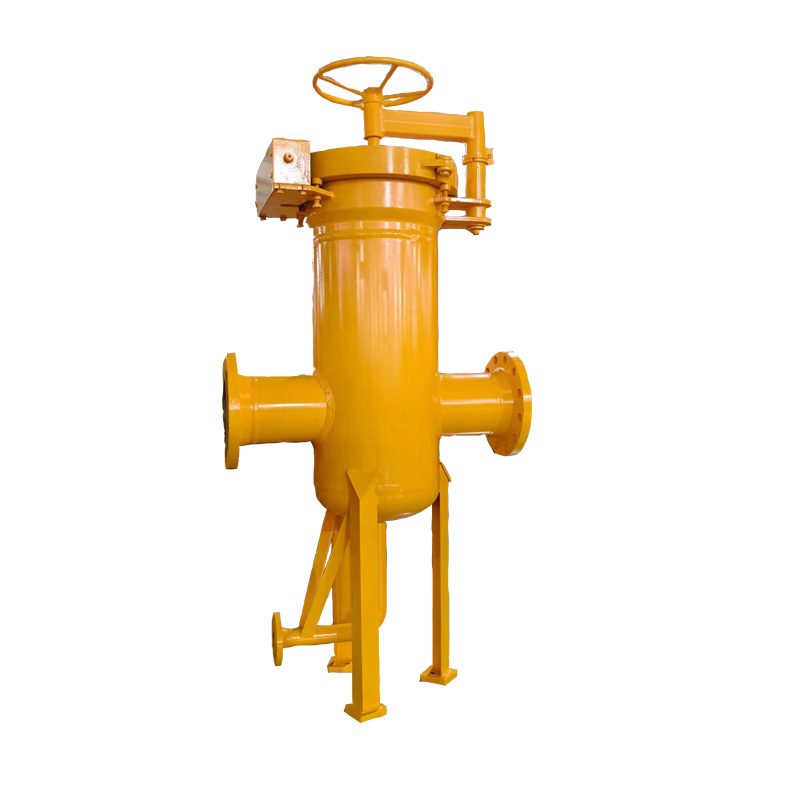
On-skid Gas Filter, Hebei, China — field-ready, flange-in/flange-out simplicity.
Quick trend check
What’s new? Higher turndown burners, LNG peak shaving, and city-gate odorization all demand cleaner gas. I’m seeing more plants specify coalescing-grade elements ahead of critical valves and IR meters. Interestingly, many customers say they’d trade a touch of CAPEX for lower life-cycle cost—elements that last longer and housings that don’t corrode out.
The product at a glance
Gas Filter (origin: No. 6 Weiqi Street, South District of Hengshui Innovation Port, Zaoqiang County, Hengshui City, Hebei, China) targets purification and filtration of natural gas, coal gas, LPG, and other non-corrosive gases. It’s your classic inline unit with options for particulate and coalescing service. In fact, that’s where a gas purifier makes or breaks itself—element selection and vessel build quality.
| Spec | Gas Filter (typical) |
|---|---|
| Housing material | Carbon steel (epoxy-lined) or SS304/SS316L |
| Pressure rating | CL150–CL300 (≈ 10–50 bar; real-world varies) |
| Filtration grades | 10 μm, 5 μm, 1 μm; coalescing 0.3–1 μm |
| Efficiency (tested) | ≥99.5% @ 1 μm; ≥95% @ 0.3 μm (ISO 12500-1 methods) |
| ΔP new/dirty | ≈8–15 mbar new; changeout suggested at 150–200 mbar |
| Service temp | -20 to 80 °C (higher with metal mesh elements) |
| Certs (housing) | ASME VIII Div.1 design & hydro test, NDE as specified |
Where it fits (and why ops teams like it)
- City-gate stations and CNG/LNG skids: protect regulators and flow meters.
- Industrial burners, glass furnaces, ceramics: cut scale and soot formation.
- Petrochem units: pre-guard for analyzers, PSA beds, and seal gas lines.
A maintenance lead told me, “We went from quarterly actuator rebuilds to once a year after adding a gas purifier upstream.” It’s not magic—just fewer particulates and aerosols hammering seats and diaphragms.
How it’s built and validated
Process flow: material traceability (MTRs) → vessel welding per ASME VIII → hydrostatic test (1.3× design P) → NDE (as agreed: RT/UT/MT) → internal coating (if CS) → element fit and integrity test (bubble point/flow bench) → final QA with DP baseline. Elements follow ISO 12500-1 style efficiency checks; housing leak test per API/ASME practices. Expected element life: around 6–18 months depending on inlet load.
Vendor landscape (my shortlist)
| Vendor | Strengths | Watch-outs |
|---|---|---|
| Gasou Yinuo (Hebei) | Custom housings, quick lead times, coalescing grades, fair spares pricing | Confirm coating spec for sour gas; align documentation pack early |
| Generic Importer A | Low upfront cost, off-the-shelf cartridges | Shorter element life reported; sparse test data |
| OEM B (Premium) | Robust documentation, global service network | Higher CAPEX; proprietary elements |
Customization that matters
Options include vertical/horizontal housings, DP gauges with reed switches, drain pots, SS316L internals, and element media (fiberglass coalescing, pleated cellulose, metal mesh). For LPG service, I’d specify NACE-compatible wetted parts and check elastomer selection—small detail, big difference.
Mini case study
A ceramics plant running LPG saw frequent nozzle fouling. After installing a gas purifier (5 μm particulate + 0.3 μm coalescing), ΔP stayed under 60 mbar for 7 months; NOx trended down ≈6% thanks to steadier combustion. Maintenance logged one unplanned shutdown vs. four in the prior half-year. Not bad.
Standards and compliance checklist
- Design and hydro test: ASME Boiler & Pressure Vessel Code, Section VIII Div.1
- Filter efficiency verification: ISO 12500-1 (coalescing) and ISO 16889 analog methods
- Pipeline integration: ASME B31.8 guidance; API 14C logic for protective devices (where applicable)
- Optional: ATEX/IECEx for hazardous areas (instrumentation on skids)
If you’re scoping a unit, ask for: material certificates, weld map, hydro report, efficiency curves, initial ΔP at your flow, and a spare element kit. Boring paperwork—until you need it.
More details and drawings: https://www.gasouyinuo.com/gas-filter.html
Authoritative citations
- ASME Boiler & Pressure Vessel Code, Section VIII, Division 1.
- ISO 12500-1: Filters for compressed air—Oil aerosols—Test methods.
- ASME B31.8: Gas Transmission and Distribution Piping Systems.
- API RP 14C: Analysis, Design, Installation, and Testing of Basic Surface Safety Systems.
Latest news
-
Industrial Natural Gas Pressure Reducing Valve Guide and SelectionNewsApr.16,2026
-
Understanding the Industrial Regulating Valve for Fluid ControlNewsApr.09,2026
-
Understanding Gas Pressure Reducer Types Applications and Safety MeasuresNewsApr.07,2026
-
Understanding and Optimizing Gas Pressure Reducing Valve SystemsNewsApr.04,2026
-
Optimizing System Performance with the Right Filter Separator SelectionNewsMar.31,2026
-
Comprehensive Guide to Understanding and Utilizing Pressure Pipe SystemsNewsMar.28,2026