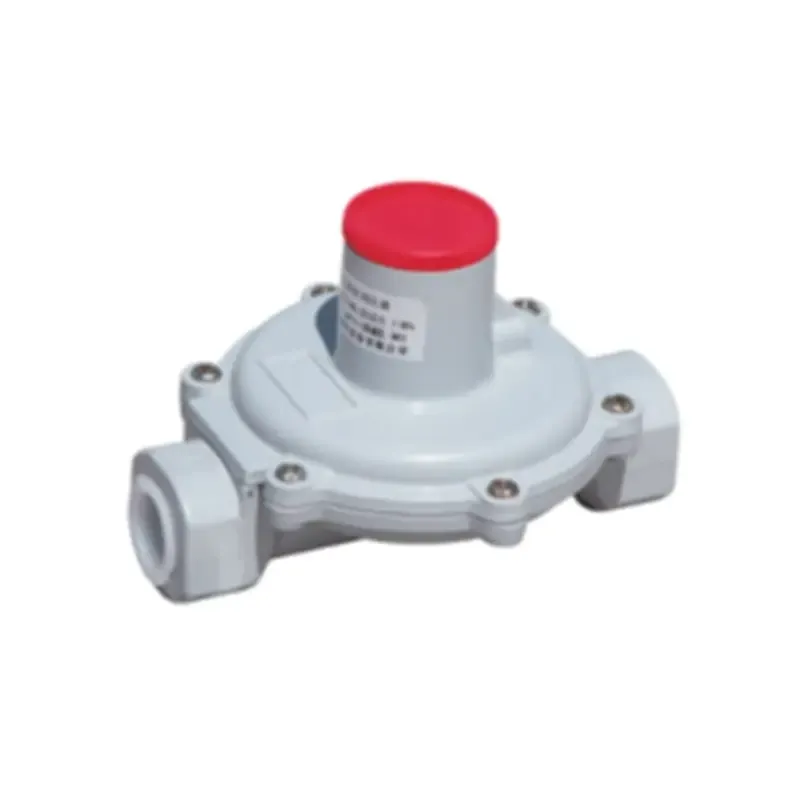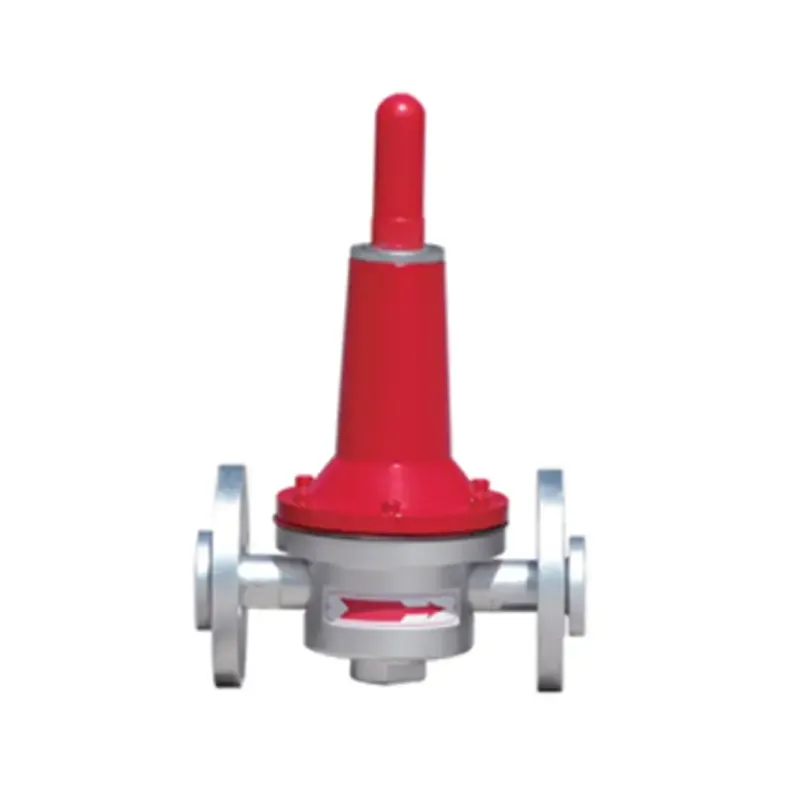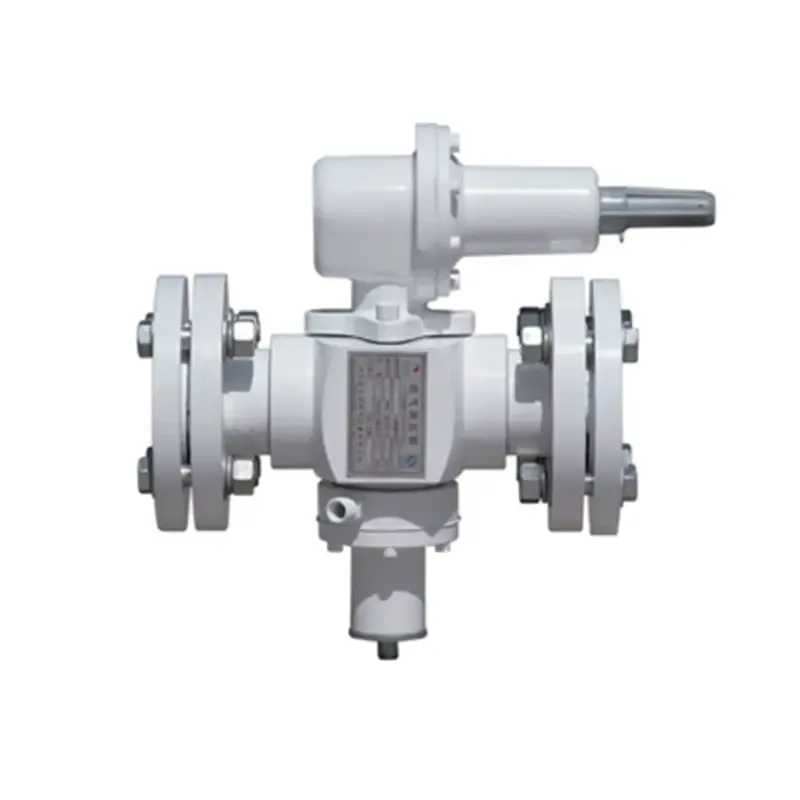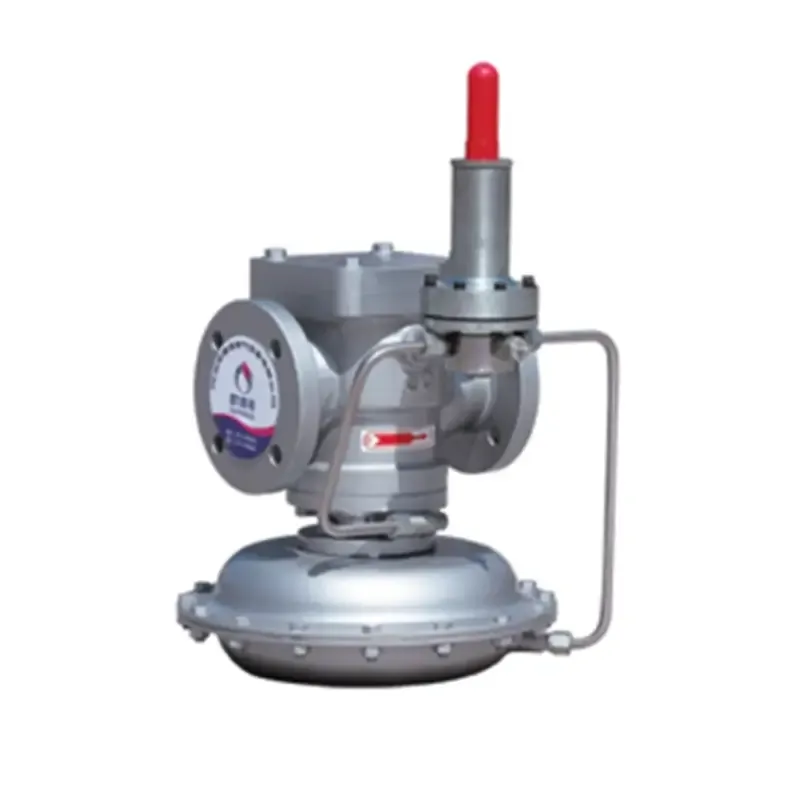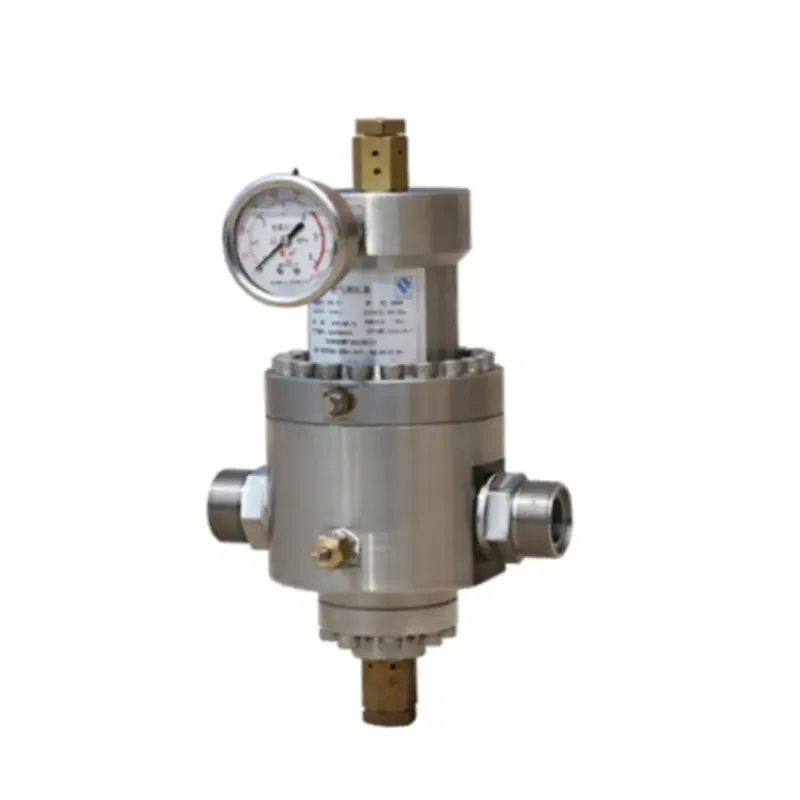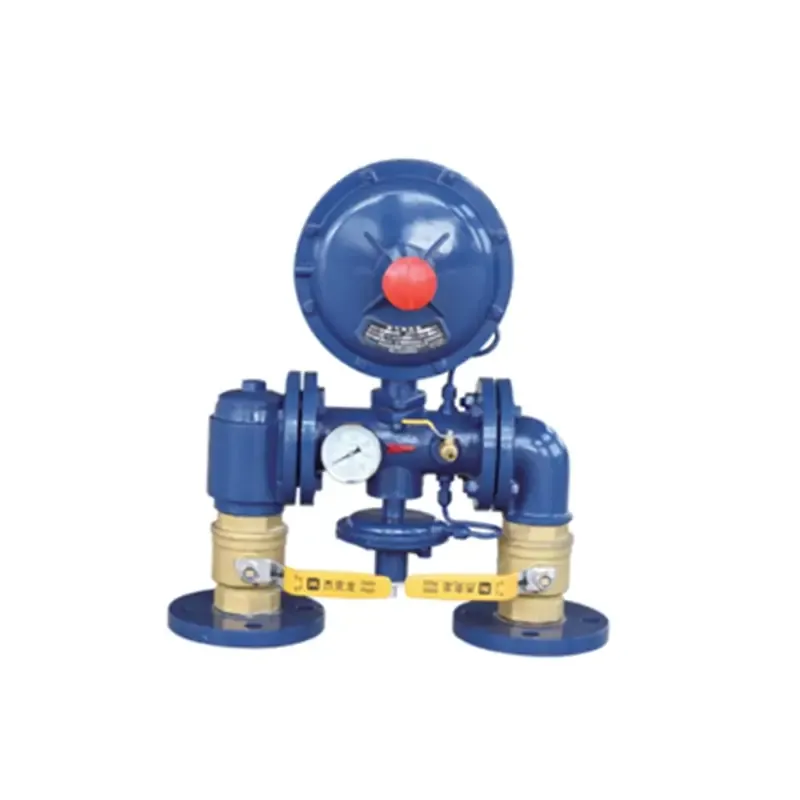
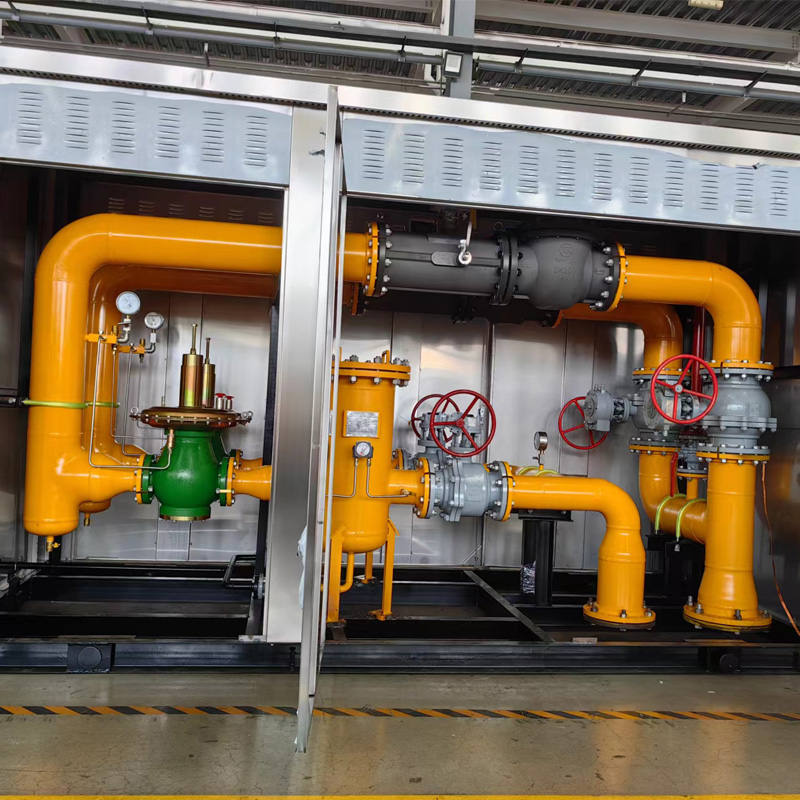
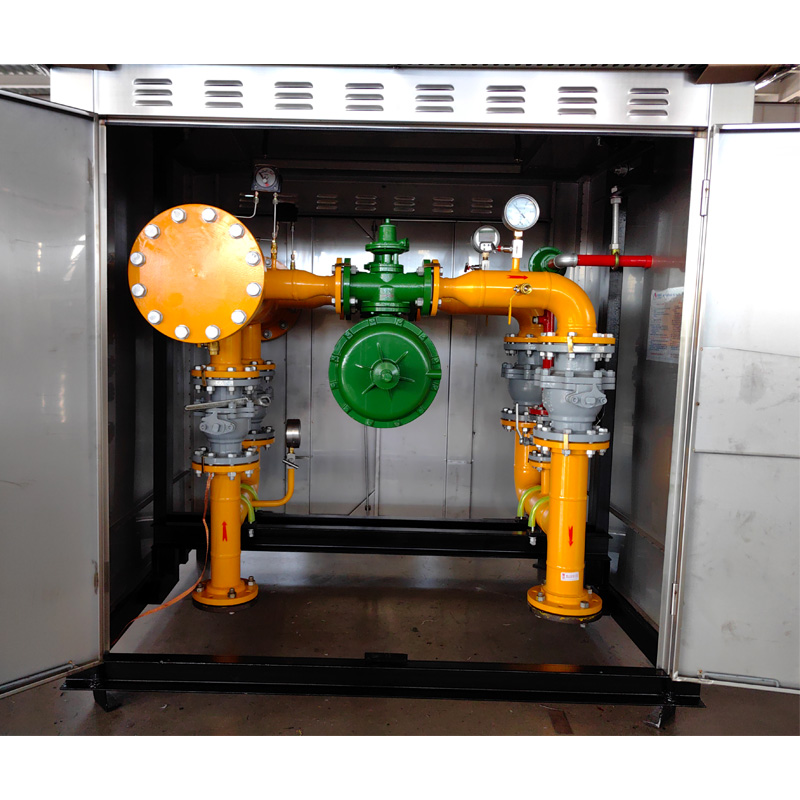
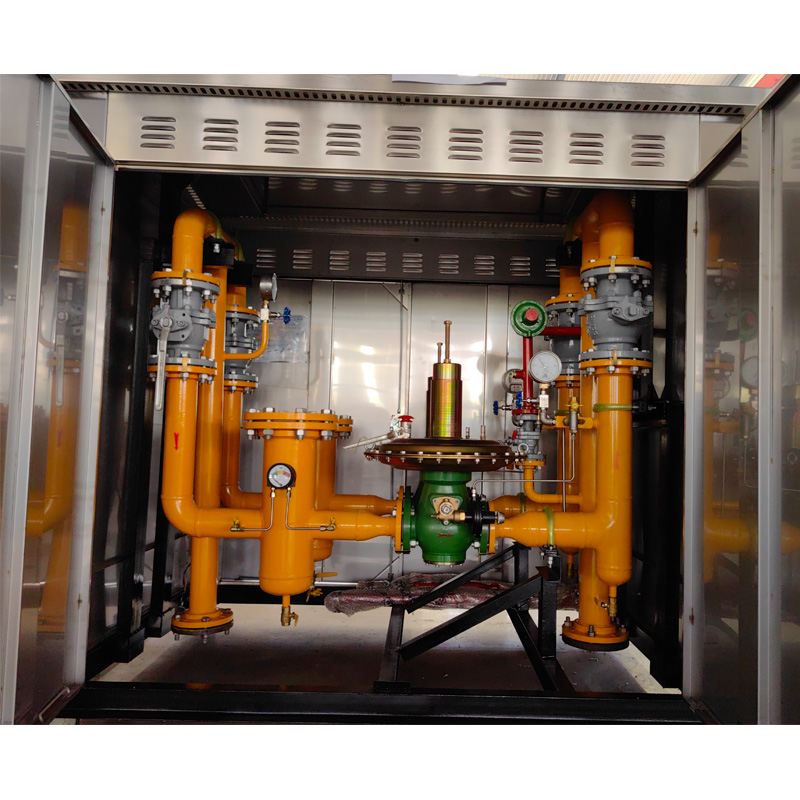
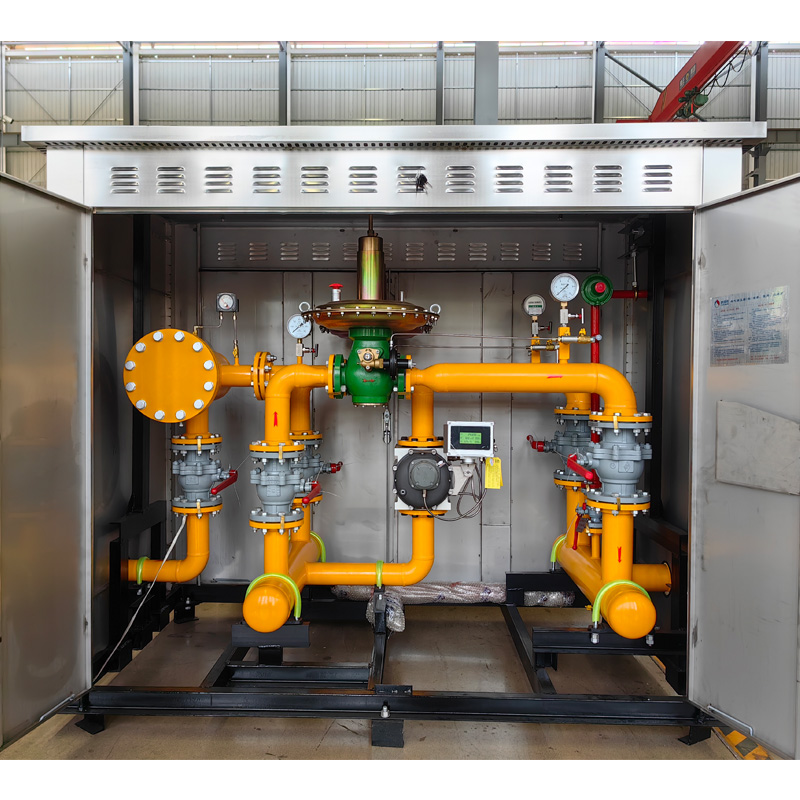
Adjustable gas compression (measurement) box (cabinet, station)as a gas transmission pipeline pressure device, for residential areas, public service users,direct tired gas equipment, gas boilcrs, indusirial fumaccs, etc.
By the gas filter, adjusi the gas pressure dvice. a safety cut-off valve, safety valve, cast steel ball valve or butterfly valve, ineter, main pipeline and control of pipeline components.
- ♦Can choose to configure the flow meter and pressure gauge.
- ♦Seleciable configuration data acquisition system
- ♦According to the user demand surge equipment insulation, warming measures.
-
Main structural form
2road pressure-f 1 road bypass
2road pressure no road bypass
1road pressure-f 1 road bypass
1road pressure no road bypass
Main technical parametersP1 Jnlet pressure range:0.02-4.0MPa
P2-Out let pressure range: l-5KPa 5-30KPa 30-150KPa
Pa Pressure regulating precision: ≤ ±5%
Pb Closing perssure: 1.2-1.25
Operating temperature: -40°C~60°C
Product features - ♦Sets of prcssure (measurement), safety, safety relief filter cut off in one.
- ♦The equipment has been tested strictly, so that the gas pressure and gas pressure and gas pressure and gas distribution are stable, safe and reliable.
- ♦The structure of the equipment is reasonable, and the design is beautiful, and the area of the equipment is in accordance with the requirements of environmental protection.
- ♦Good scalability, can be added to the user's demand for gas alarm, data acquisition and temperature warming system.
- ♦Equipment installation, Debugging is simple, easy to use, easy to maintain.
- ♦Reasonable structure, perfect function, high reliability, good coordination of the system.
- ♦Box material: Steel spray box, stainless steel box, color steel plate insulation box.can satisfy the customer requirements in different environment.
- ♦Use medium: Natural gas, artificial gas, liquefied petroleum gas, etc.
-
Main Technical Parameters
Model
P, (Mpa)
P, (Kpa)
Flow
Q(Nm3/h)
Optional function
Main purpose
RX-100/*A、B、C、D、E
0.05-4
3~30
100
1、Metering
2、Automatic Spread
3、Security alarm
Can be used for regional relating.
gasboier industral furnace and
direct combustion equipment
RX-200/*A、B、C、D、E
200
……
……
RX-900/*A、B、C、D、E
900
RX-1000/*A、B、C、D、E
1000
RX-1200/*A、B、C、D、E
1200
……
……
RX-4600/*A、B、C、D、E
4600
RX-5000/*A、B、C、D、E
5000
RX-6000/*A、B、C、D、E
6000
……
……
Note: The list of models are the basic configuration.if you need to change the configuration.should be marked in the order
-
Model
P, (Mpa)
P, (Kpa)
Flow
Q (Nm3/h)
Optional function
Main purpose
RX-100/*A、B、C、D、E
0.05~1.6
0.02~1.0
100
1、Metering
2、Automatic Spread
3、Security alarm
Can be used for natural gas well station, large and medium city gate station, and small town pressure.
RX-200/*A、B、C、D、E
200
RX-300/*A、B、C、D、E
300
……
……
RX-800/*A、B、C、D、E
800
RX-900/*A、B、C、D、E
900
RX-1000/*A、B、C、D、E
1000
RX-1500/*A、B、C、D、E
1500
RX-1600/*A、B、C、D、E
1600
……
……
RX-9000/*A、B、C、D、E
9000
RX-9500/*A、B、C、D、E
9500
RX-10000/*A、B、C、D、E
10000
RX-12000/*A、B、C、D、E
12000
RX-14000/*A、B、C、D、E
14000
……
……
Where should a gas pressure regulator be installed?
A gas pressure regulator should be installed at a location that ensures safe, efficient, and reliable control of gas pressure for downstream appliances or systems. Its primary function is to reduce high supply pressure from the utility or storage tank to a level suitable for equipment, preventing overpressure and potential hazards. Proper installation location is critical for system safety, performance, and ease of maintenance.
For residential or commercial systems, regulators are typically installed near the gas entry point, such as adjacent to the gas meter. This allows them to immediately reduce the supply pressure before gas is distributed to appliances or piping networks. In industrial applications, regulators may be positioned directly upstream of pressure-sensitive equipment, such as furnaces, boilers, or burners, to maintain stable and precise pressure under varying flow conditions.
The installation area must be accessible for maintenance, inspection, and adjustment. Adequate clearance around the regulator ensures that gauges, filters, and internal components can be serviced safely. Most regulators also require correct orientation according to the manufacturer’s instructions, often indicated by a flow direction arrow, to function accurately.
Environmental factors are important: the regulator should be installed in a well-ventilated, dry location, protected from extreme temperatures, vibration, corrosive substances, and direct sunlight. For outdoor installations, additional enclosures or weatherproofing may be necessary to prolong the regulator’s life and maintain performance.
Finally, compliance with local codes and standards such as NFPA, ASME, or other regional regulations is essential. These codes often specify minimum distances from ignition sources, walls, or other equipment to ensure safety.
In summary, a gas pressure regulator should be installed near the gas entry point or upstream of critical equipment, in an accessible, ventilated, and properly oriented location, following manufacturer guidelines and relevant safety codes to ensure reliable and safe gas system operation.
Gas pressure regulator cabinet replacement
Replacing a gas pressure regulator cabinet is a critical maintenance task that ensures safe and reliable operation of gas distribution systems. These cabinets house regulators that control the downstream pressure of natural gas or LPG, protecting pipelines, appliances, and equipment from overpressure. Proper replacement requires careful planning, adherence to safety standards, and the use of compatible components.
The first step is system isolation. Shut off the gas supply and depressurize the system to prevent leaks or accidents. Ensure the area is well-ventilated and free of ignition sources, as residual gas may still be present in pipelines. Only trained personnel should perform the replacement due to the potential hazards associated with pressurized gas.
Next, remove the existing cabinet by disconnecting inlet and outlet piping, electrical connections (if applicable), and any mounting hardware. Inspect the surrounding piping and fittings for corrosion, wear, or damage, and replace any defective components before installing the new cabinet.
When selecting a replacement cabinet, ensure it is compatible with the system’s gas type, pressure rating, and regulator model. The cabinet should provide adequate space for regulators, piping, gauges, and other accessories while allowing proper ventilation to prevent gas accumulation. Many cabinets include features such as weather protection, lockable access, and corrosion-resistant construction to improve longevity and safety.
During installation, secure the cabinet in a level and accessible location, following manufacturer guidelines and local codes. Reconnect piping, regulators, and any electrical or monitoring systems, ensuring proper orientation of flow and pressure regulators. After installation, conduct a leak test and operational check to verify that regulators function correctly and maintain stable downstream pressure.
Finally, document the replacement, noting the cabinet model, installation date, and any calibration or maintenance performed. Regular inspection and maintenance will prolong the service life of the cabinet and regulators, ensuring continuous safe operation.
In summary, gas pressure regulator cabinet replacement involves safely isolating the system, removing the old cabinet, installing a compatible replacement, performing leak and functionality checks, and documenting the process to maintain a secure and reliable gas distribution system.
What are the three types of pressure regulators?
Pressure regulators are devices designed to maintain a consistent downstream pressure regardless of fluctuations in upstream pressure or flow demand. They are widely used in gas, air, and liquid systems, and can be categorized into three main types based on their design and operation: spring-loaded (direct-acting) regulators, pilot-operated regulators, and balanced regulators.
Spring-loaded (direct-acting) regulators are the most common type. They use a spring to apply force against a diaphragm or piston. When downstream pressure rises above the setpoint, the diaphragm moves to reduce flow, maintaining the desired pressure. These regulators are simple, compact, and respond quickly to pressure changes, making them suitable for residential gas lines, small compressors, and low-to-moderate flow applications. However, their accuracy may decrease at very high flow rates.
Pilot-operated regulators consist of a main valve controlled by a smaller pilot valve. The pilot senses downstream pressure and modulates the main valve accordingly. This design allows the regulator to handle high flow rates and larger pressure differences while maintaining precise control. Pilot-operated regulators are commonly used in industrial gas systems, large boilers, and process control applications where stable pressure is critical. Their complexity requires careful maintenance, and they are more sensitive to contamination than direct-acting types.
Balanced regulators are designed to minimize the effects of backpressure on valve operation. By incorporating a balanced piston or diaphragm, these regulators maintain consistent output pressure even when downstream or backpressure fluctuates. They are often used in multi-stage systems, high-pressure gas distribution, or situations where pressure stability is essential under varying flow conditions.
In summary, the three types of pressure regulators—spring-loaded, pilot-operated, and balanced—offer different performance characteristics, with each type selected based on flow rate, pressure stability requirements, and system complexity to ensure safe and reliable operation.
commercial regulator
gas coalescer filter
gas safety relief valve
natural gas distribution station
natural gas safety valve
Write your message here and send it to us
Products categories