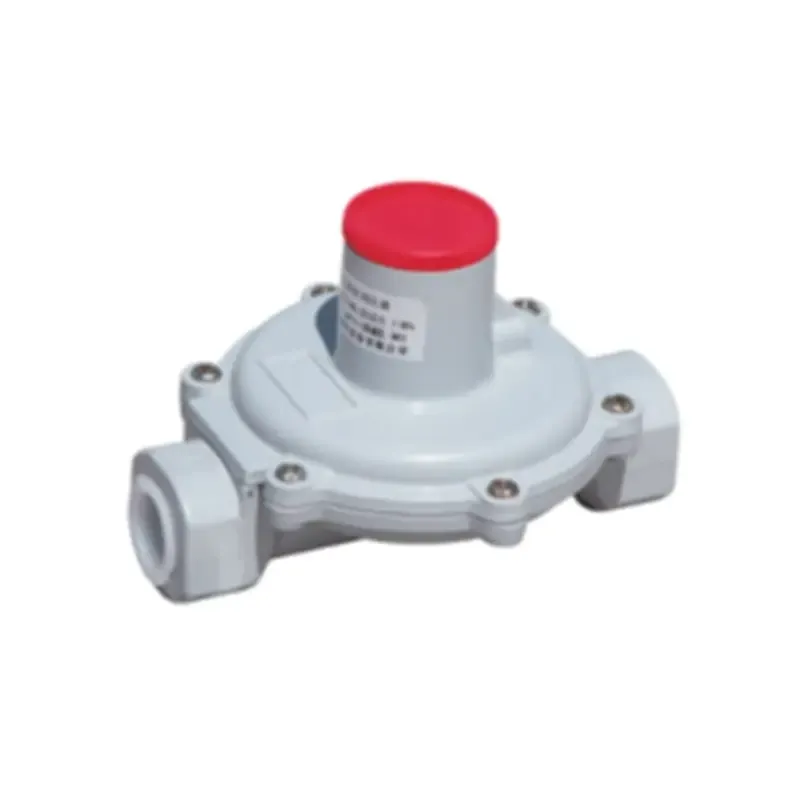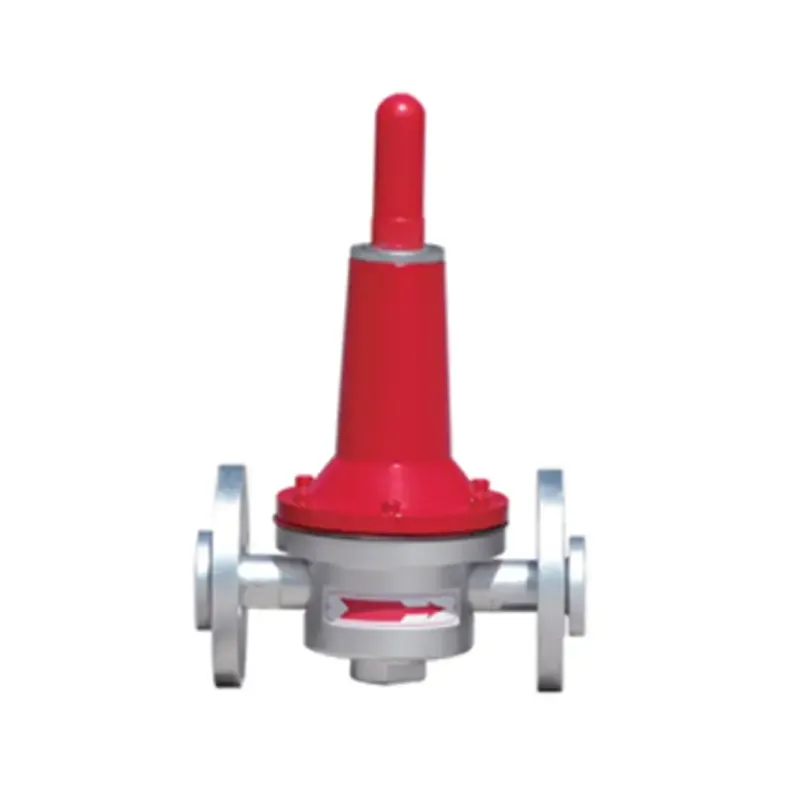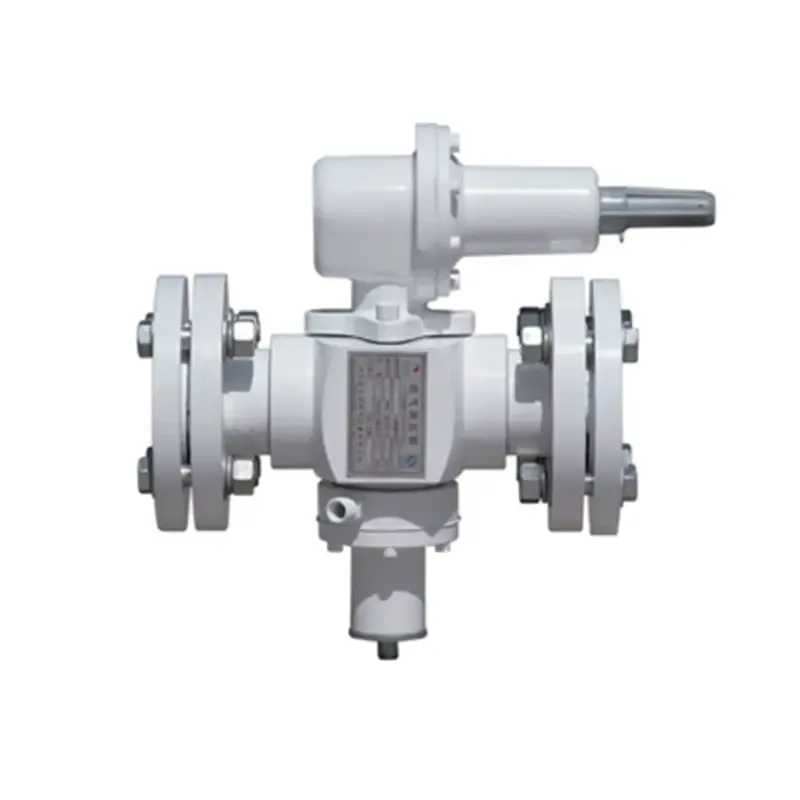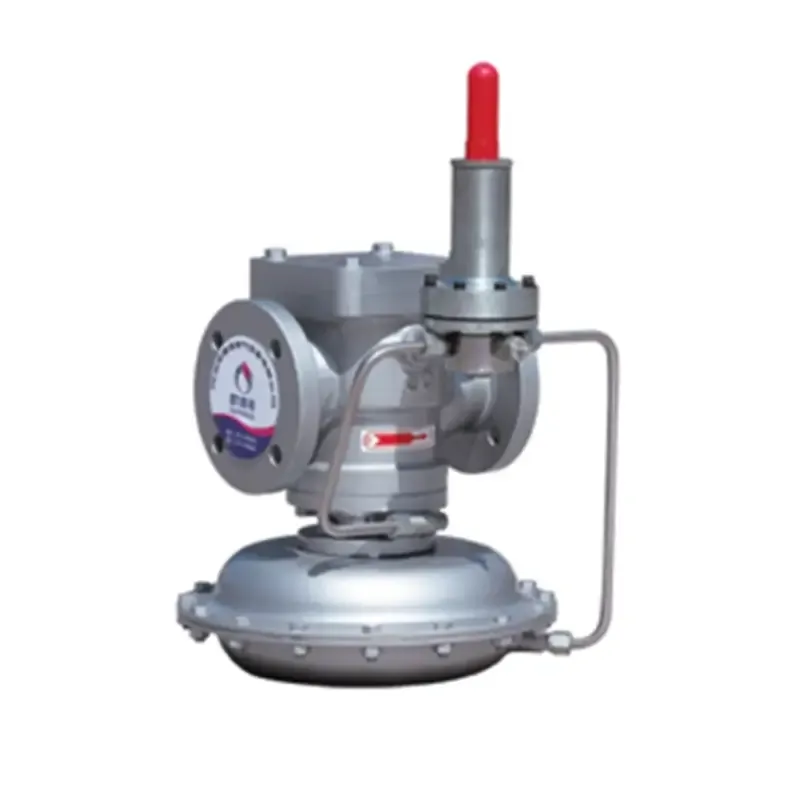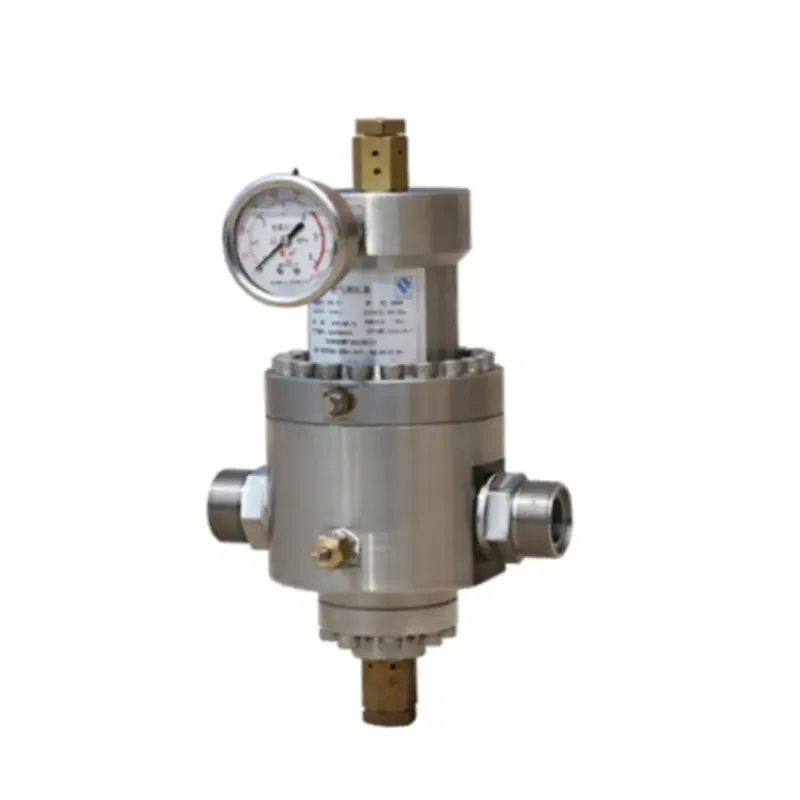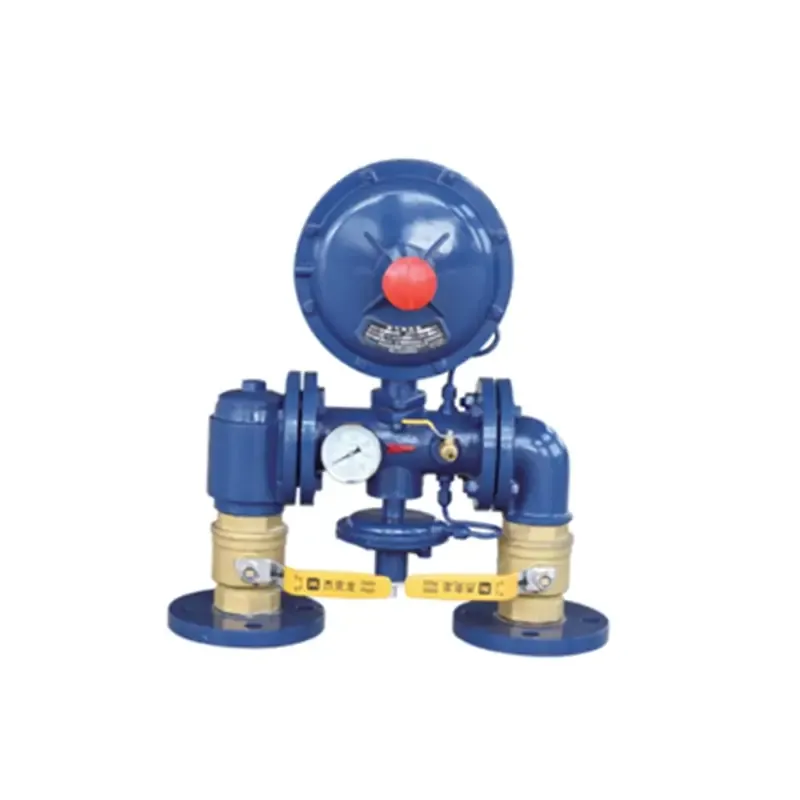
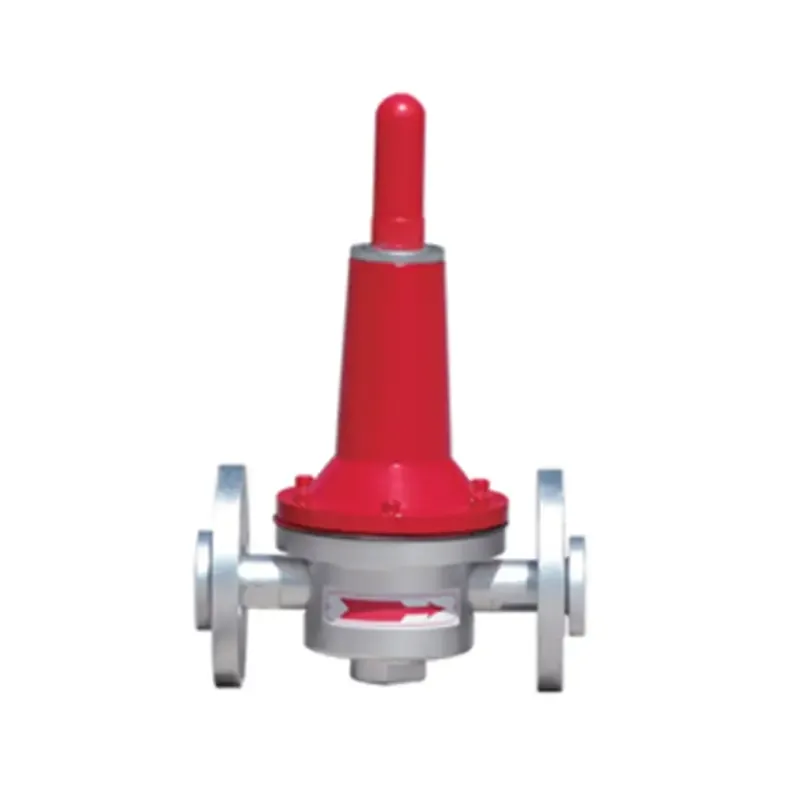
RTZ-*/*Series High-Pressure Pipeline Liquefied Gas Pressure Regulatoy
The sries of pressure regulator is used for primary pressure regulation ofmining area, well nield and water liquefied gas, as well as high, mediumpresure regelation and stabilization for gas distribution in remotely dispersedcaimopniries.
Applicable medium
Nntural gus, coal gas, liquefied petroleuml gas and other non-corrosive gases.
Small size, high pressure difference, it uses its own inlet pipeline pressure to close the valve seat. The higher the inlet pressure, the better the closing performance; the valve seat is directly connected to the sensitive element membrane through the stainless steel valve stem, and the conduction is direct, so the regulator responds quickly , sensitive response, stable performance; because of its simple structure, it is easy to maintain.
Production standards: GB 27790-2020 City Gas Pressure Regulators.
Technical parameters
Inler pressure: P1:≤1.6MPa
Ourlet pressure: P2: 20-200KPa ( adjustable )
Flow: Q ≤90Nm3/'h
Pressure regulatian aceuracy grade: AC10
Closing pressure grade: SGl5
Working temperature: -20℃-+60℃
Series specifications: DN20, DN25
Conncction mode: British pipe thread/flange connection PN2.5MPa HG/120592-2009
Installation method: open air, indoor and box type at the station. Indoor installation should comply with building explosion-proof requirements. The gas pressure regulator should be level and upright.
What is a high pressure gas regulator?
A high pressure gas regulator is a specialized device designed to control and reduce gas coming from a high-pressure source—such as industrial gas cylinders, large propane tanks, or high-pressure distribution lines—to a lower, usable, and safe pressure level. Unlike low- or medium-pressure regulators used in household or light commercial systems, high pressure regulators are built to handle extremely elevated inlet pressures, often ranging from 1,000 psi to over 6,000 psi, depending on the gas type and cylinder rating.
The purpose of a high pressure regulator is to provide stable, controlled gas flow even when the supply pressure is very high or gradually decreases as the cylinder empties. These regulators are commonly used in welding, cutting torches, laboratory gas systems, industrial manufacturing, medical gas delivery, gas-powered tools, and certain high-demand propane applications. They are built using durable materials—such as brass, stainless steel, or specialized alloys—to withstand both high pressure and potential chemical reactions with specific gases.
A typical high pressure regulator functions by using an internal valve, diaphragm, and spring system. When gas enters the regulator at extremely high pressure, the diaphragm senses the downstream pressure, while the spring sets the desired outlet pressure. As downstream pressure changes, the regulator adjusts the valve opening to maintain a steady output. Because of the high forces involved, these regulators often include reinforced diaphragms, precision-machined valve seats, and safety mechanisms to prevent over-pressurization.
Many high pressure regulators are single-stage, meaning they reduce the pressure in one step. Others are two-stage for applications requiring extremely precise and stable output, even as the gas cylinder pressure drops significantly. Two-stage regulators are common in scientific laboratories and medical environments.
Safety is a major focus of high pressure regulator design. Most models include features such as pressure relief valves, gauge ports, and threaded connections designed to prevent accidental gas release. Proper installation, maintenance, and periodic inspection are essential because a damaged or worn high pressure regulator can pose serious hazards, including gas leaks or uncontrolled gas discharge.
In short, a high pressure gas regulator is a robust, precision-engineered device used to safely manage gas coming from very high-pressure sources. It ensures reliable, controlled delivery of gas for industrial, scientific, and high-demand applications where stability and safety are critical.
What is the difference between a low pressure regulator and a high pressure regulator?
A low pressure regulator and a high pressure regulator serve the same basic purpose—controlling and reducing gas pressure—but they are designed for very different operating conditions and applications. The main differences relate to the inlet pressure they can handle, the outlet pressure they provide, their internal construction, and where they are used.
A low pressure regulator is designed to manage gas pressures that are already relatively low. In residential and light commercial systems, low pressure typically means under 1 psi, often as low as 7–14 inches of water column. These regulators are used for appliances such as stoves, furnaces, water heaters, fireplaces, and grills. Their job is to supply a stable, gentle flow of gas that appliances can use safely and efficiently. Because the forces inside the regulator are small, low pressure regulators use lighter springs and smaller diaphragms. They are not built to handle extreme inlet pressures and should only be used in systems where the incoming gas is already at a safe, moderate level.
In contrast, a high pressure regulator is engineered to handle gas entering at much higher pressures—often between 1,000 psi and 6,000 psi in industrial gas cylinders, or up to 250 psi for certain propane systems. These regulators are built with stronger materials, reinforced diaphragms, and heavier springs to control the powerful forces created by high-pressure gas. They reduce this high pressure to a manageable level for tools, equipment, or secondary regulators. High pressure regulators are commonly used in welding, laboratory gas systems, industrial machinery, high-capacity propane burners, and medical gas cylinders.
Another important difference is precision and safety design. High pressure regulators often include safety relief valves, multiple gauges, and more robust fittings to prevent dangerous over-pressurization. Low pressure regulators, while still safe, do not require such heavy-duty construction because the risk level is lower.
In summary, the key difference is the range of pressure they are built to handle. Low pressure regulators manage gentle, appliance-safe pressures, while high pressure regulators control gas at extremely high levels and reduce it to usable ranges. Choosing the correct one is essential for both performance and safety.
When to use a high pressure regulator?
A high pressure regulator is used whenever gas is supplied from a source at pressures that are too high for direct use by equipment or appliances. These regulators are essential in industrial, commercial, and specialized applications where gas is stored in cylinders or pipelines at pressures far above what the downstream system can safely handle. High pressure regulators ensure both safety and precise control of gas flow.
One common use is with compressed gas cylinders, such as oxygen, acetylene, nitrogen, or carbon dioxide. These cylinders often contain gas at thousands of pounds per square inch (psi). Supplying this gas directly to equipment would be dangerous and could cause damage or even explosions. A high pressure regulator reduces the cylinder pressure to a safe, controlled level, suitable for welding torches, laboratory experiments, or other industrial processes.
High pressure regulators are also used in propane systems where the storage tank pressure can exceed several hundred psi. For example, large propane tanks for commercial kitchens or industrial heating require a first-stage regulator to bring the pressure down to a manageable level before it is further reduced by a second-stage, low-pressure regulator for appliances. This two-step process ensures both efficiency and safety.
In laboratory or medical environments, high pressure regulators are critical for gases like oxygen, nitrous oxide, or specialty gas mixtures. They provide consistent pressure even as the cylinder pressure decreases, which is crucial for precise experiments, analytical equipment, or medical devices such as anesthesia machines and ventilators.
High pressure regulators are also used in industrial manufacturing for processes that require controlled high-pressure gas, such as chemical reactions, pneumatic systems, or laser cutting. In these applications, accurate pressure control is necessary for quality, consistency, and safety.
In summary, a high pressure regulator should be used whenever the gas source exceeds the safe operating pressure of the downstream equipment. It is essential for compressed gas cylinders, high-pressure propane systems, laboratory and medical gas systems, and various industrial processes. These regulators protect equipment and personnel by safely reducing and controlling the gas pressure.
cng
gas metering
heat exchanger
lng
ng
ng equipment
Write your message here and send it to us
Products categories