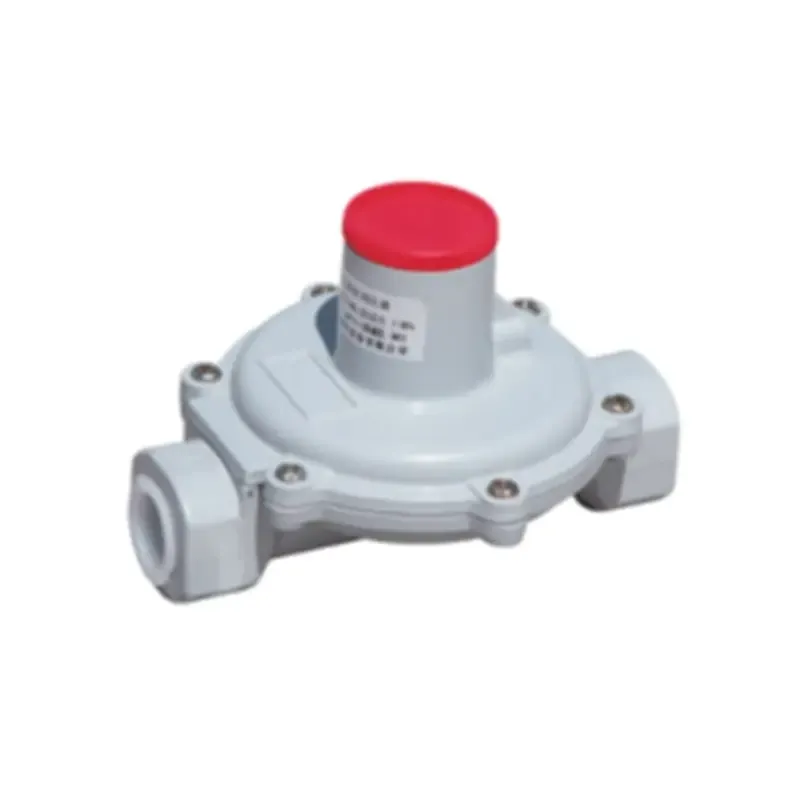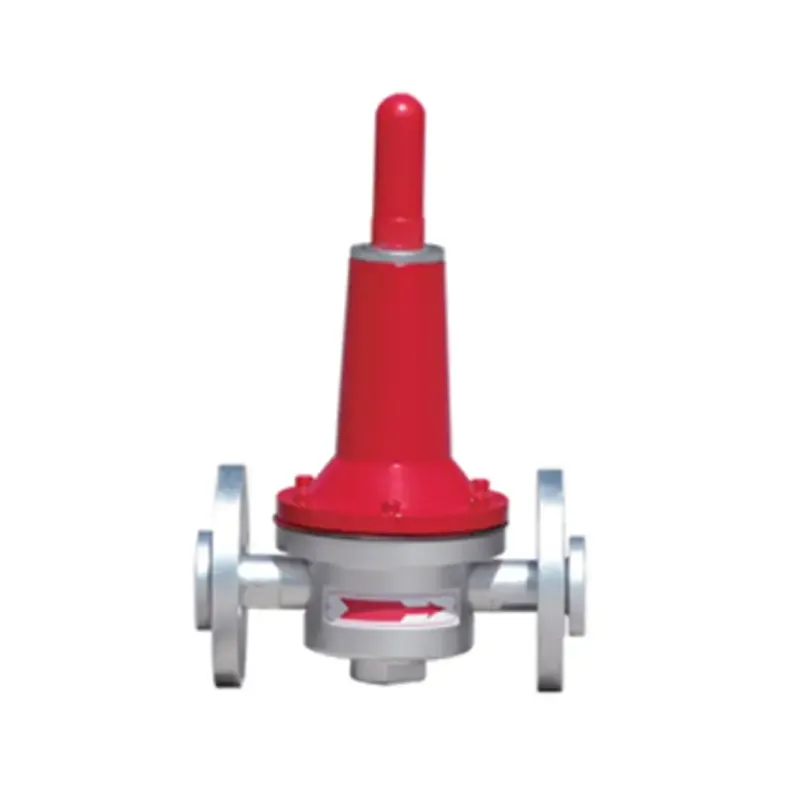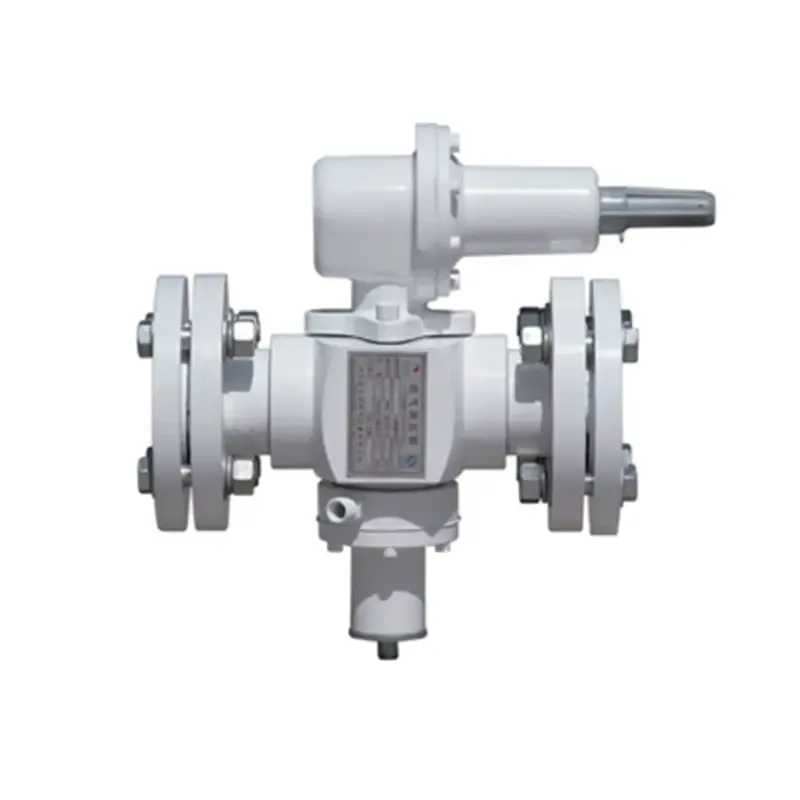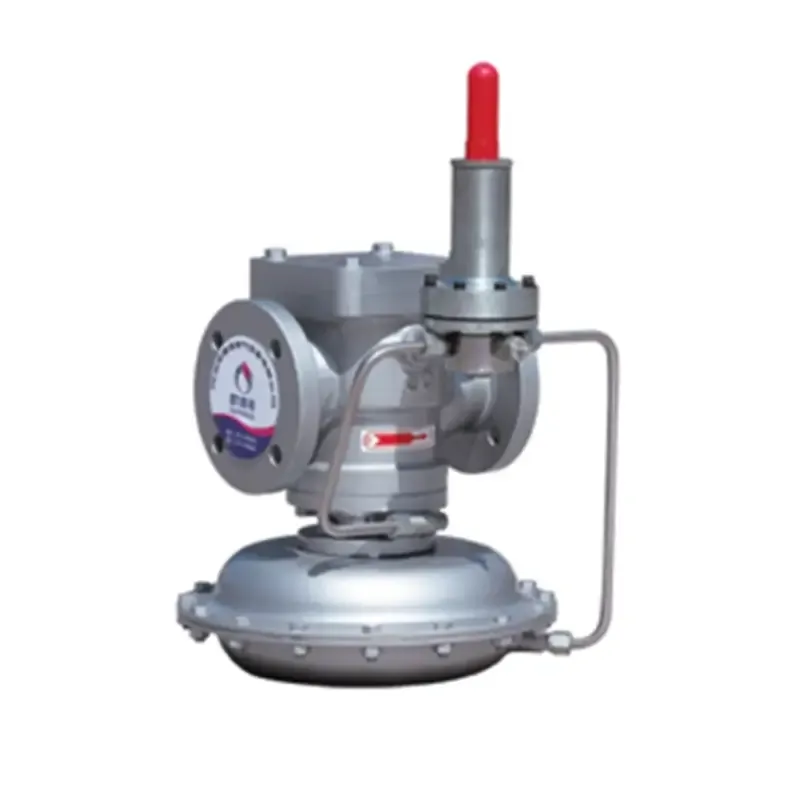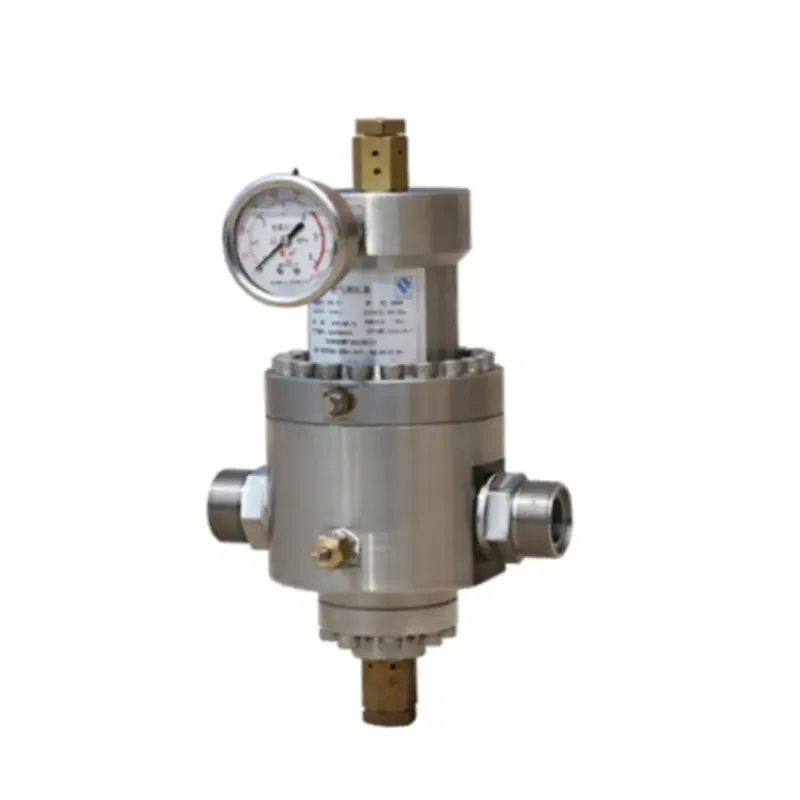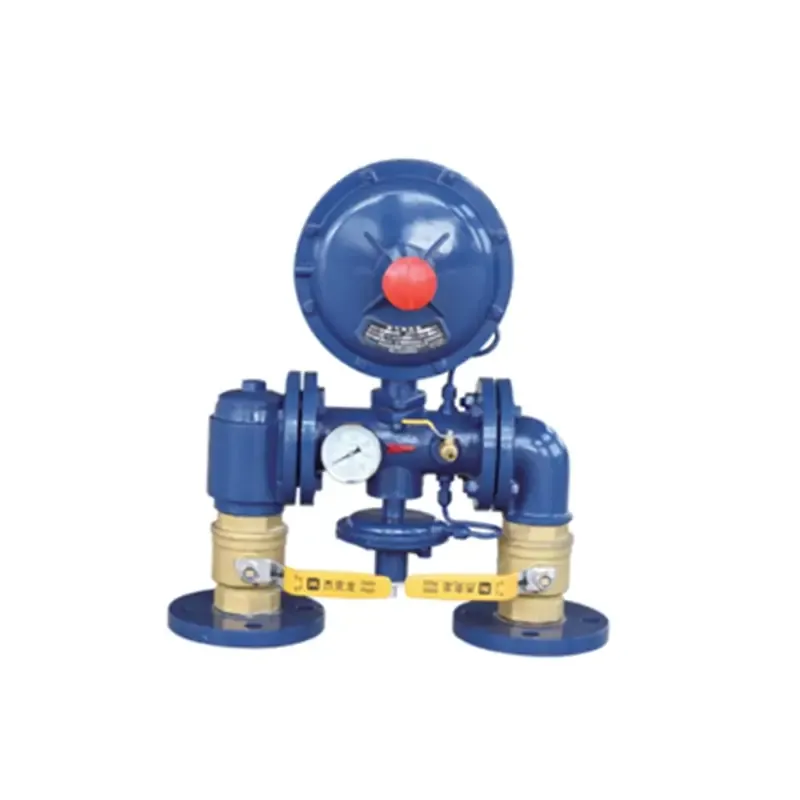
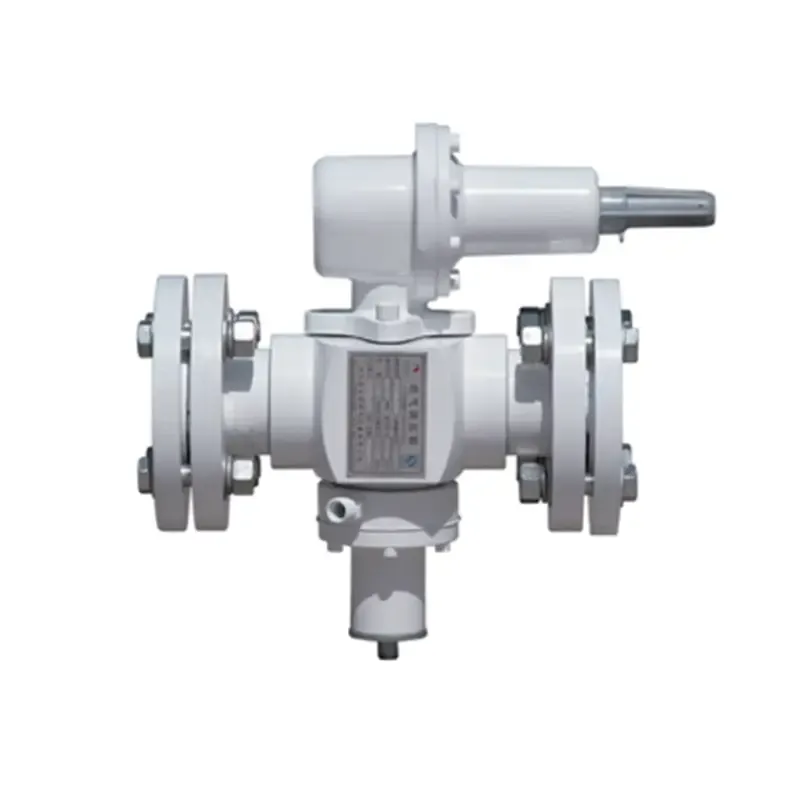
This series of production are mainly used in medium and high pressuresystem (such as pressure reduction and stabilization of primary, secondaryand high-pressure gas pipe for PN40CNG tankers,LNG small-scaleusers) and also can be used for small town or small urban gas station.
Features
Small size, reliable performance, simple pressure setting, easy installation and maintenance, with safety cut-off device.
Applicable mediaum
Natural gas, coal gas,liquefied petroleum gas and other non-corrosive gases.
Production standards: GB 27790-2020 City Gas Pressure Regulators.
The voltage regulator is a direct-acting, fail-open type voltage regulator.The voltage stabilization accuracy reaches AC5 and the closing accuracy reaches SG15. It can be repaired and maintained online. The product is easy to manage and replace.
It has few accessories, reliable operation and saves money. The repair time and cost are determined. The cut-off valve adopts the fifth generation cut-off mechanism; this mechanism is in the form of trip brake release. This structure combines high response sensitivity and the overall design structure is more reasonable to cut off the total process. Safety shut-off valve cutting pressure accuracy AG2.5; response time ≤1s;
Inlet pressure: P1: 0.1-6.4MPa
Outlet pressure: P2:0.05-1.0MPa
Pressure regulation accuracy grade: AC5
Closing pressure grade: SG15
Working temperature: -20℃~+60℃
Series Specifications: DN25、DN50
Connection mode: flange connectionPN6.4MPa HG/T20592-2009
|
Model |
Ltem |
L (mm) |
A (mm) |
H (mm) |
H1 (mm) |
|
RTZ-50GQ |
P1≤0.6MPa |
200 |
170 |
162 |
220 |
|
0.6<P1≤2.5MPa |
254 |
170 |
160 |
220 |
|
|
2.5<P1≤6.4 MPa |
267 |
170 |
160 |
220 |
|
Inlet pressure (Mpa) |
Outlrt Pressure (MPa) |
RTZ-25/6.4GQ |
RTZ-50/6.4GQ |
|
0.4-1.6 |
0.05 |
420 |
650 |
|
0.1 |
410 |
640 |
|
|
0.2 |
400 |
630 |
|
|
0.3 |
380 |
620 |
|
|
1.6-6.4 |
0.1 |
710 |
910 |
|
0.2 |
700 |
900 |
|
|
0.4 |
680 |
880 |
|
|
0.8 |
660 |
860 |
|
|
1.0 |
640 |
840 |
Here’s a concise explanation of what the RTZ1 */GQ Series gas pressure regulator is — and when and how you’d replace one.
A regulator from the RTZ1 */GQ Series is a medium to high pressure gas regulator designed for applications such as gas distribution networks, small town or urban gas station pipelines, and medium/high-pressure systems like CNG tankers or small scale LNG supply points.
What the RTZ1 */GQ does
It reduces a high inlet pressure (up to 6.4 MPa) to a safer, lower outlet pressure (typically 0.05–1.0 MPa) for downstream use.
It ensures stable, regulated pressure output even when inlet conditions fluctuate, maintaining safety and reliability.
It includes a safety shut off device (a built-in cut off mechanism) designed to stop gas flow rapidly if pressure exceeds safe limits — a key feature when dealing with high-pressure gas.
When to Replace an RTZ1 */GQ or Similar Regulator
You should consider replacement (or at least a full inspection) when:
The regulator has been in service a long time, especially in harsh or demanding conditions (e.g. high-pressure, frequent cycling). Aging components like diaphragms, springs, or seals may degrade.
There are signs of malfunction: unstable outlet pressure, inability to maintain target pressure, frequent shut offs or trips, leaks, or visible damage (corrosion, cracks, dents).
The system application or requirements change (e.g. moving from lower to higher flow/pressure demand or different gas type), and the existing regulator no longer matches the new demands.
Maintenance or repair history indicates internal wear or after a pressure event that may have stressed the regulator.
Because RTZ1 */GQ are used in demanding medium/high pressure systems, ensuring they are in top condition — or replacing them when necessary — is critical for safety and system performance.
rtz 1-*/gq series gas pressure regulator adjustment
Here is a brief explanation of how one would adjust a RTZ1-*/GQ Series Gas Pressure Regulator — and some cautions to keep in mind.
The RTZ1 */GQ Series is used in medium/high pressure gas systems, with inlet pressures up to 6.4 MPa and adjustable outlet pressures from 0.05 to 1.0 MPa. (
How to adjust an RTZ1-*/GQ regulator
Check system conditions first
Confirm the inlet pressure does not exceed the regulator’s rated maximum (≤ 6.4 MPa).
Ensure downstream piping and appliances are suitable for the pressure setting.
Use a pressure gauge (manometer) downstream of the regulator so you can read the actual output pressure continuously.
Locate the adjustment screw
On many regulators, there is a cap screw on top covering the internal adjustment screw. Remove this cap to expose the adjustment mechanism.
The adjustment screw acts on an internal spring that sets how much downstream pressure is needed before the valve closes.
Adjust the outlet pressure
To increase outlet pressure: turn the adjustment screw clockwise. This tightens the spring, so it takes more pressure to close the valve, thereby raising flow and pressure.
To decrease outlet pressure: turn the screw counter clockwise. This reduces the spring force, so the valve will close at a lower downstream pressure.
Make adjustments slowly and in small increments. After each small turn, allow the pressure to stabilize, then check the gauge again.
Verify stability and lock the setting (if applicable)
Ensure the regulator maintains the desired outlet pressure without oscillation or fluctuation.
If the regulator design includes a cap or locking nut for the adjustment screw, re-tighten it once adjustments are done so the setting cannot drift.
Important safety and operational cautions
Always confirm that the inlet pressure is within the range the regulator is designed for — exceeding rated inlet pressure risks damaging the regulator or causing unsafe conditions.
Use a proper pressure gauge / manometer when adjusting; guessing by flame behavior alone is unsafe and unreliable.
Adjust slowly and incrementally; abrupt large changes may lead to pressure spikes downstream or unstable flow.
After adjustment, test the downstream system (piping, appliances) under normal load to confirm stable, correct pressure and safe operation.
If you don’t have experience with gas regulators, consider having a qualified technician perform the adjustment — because a poorly adjusted regulator can create safety hazards.
What psi should I set my fuel pressure regulator at?
The correct fuel pressure regulator (FPR) setting depends on the type of engine, fuel system, and manufacturer specifications, as incorrect settings can cause poor performance or engine damage. Typically, fuel pressure is measured in pounds per square inch (psi), and regulators are used to maintain a consistent pressure relative to the engine’s intake manifold or fuel rail.
For most modern fuel-injected gasoline engines, the standard fuel pressure is usually between 43–60 psi. Many fuel injection systems are designed to maintain a fixed pressure above manifold vacuum, so the regulator is often vacuum-referenced. This allows the fuel pressure to decrease slightly when the engine is under vacuum (idle) and increase under boost (turbocharged or supercharged applications), maintaining the correct fuel-to-air ratio.
For older carbureted engines, fuel pressure is much lower, typically in the range of 4–7 psi. Carburetors rely on low, steady fuel pressure to function properly; excessive pressure can flood the carburetor and cause rough running, poor fuel economy, or stalling.
When adjusting a fuel pressure regulator:
Check manufacturer specifications: Always refer to the vehicle’s service manual. Using the wrong pressure can damage injectors, seals, or the fuel pump.
Measure fuel pressure with a gauge: Connect a fuel pressure gauge to the fuel rail or test port.
Adjust gradually: Turn the adjustment screw slowly while monitoring the gauge, ensuring the reading matches the recommended psi.
Test under operating conditions: Measure pressure at idle, mid-throttle, and wide-open throttle to confirm the regulator maintains proper pressure across the full engine range.
For performance or forced-induction engines, the FPR may need higher pressure to compensate for increased fuel demand. In turbo or supercharged setups, the regulator must be boost-referenced so that fuel pressure increases proportionally with boost, keeping the fuel-to-air ratio stable.
In summary, the fuel pressure regulator should be set according to the vehicle or engine manufacturer’s specifications: 4–7 psi for carbureted engines and 43–60 psi for most fuel-injected engines, with adjustments made carefully while monitoring the fuel rail pressure. Incorrect settings can cause engine performance issues, fuel leaks, or damage.
cng
gas heat exchanger
heat exchanger
lng
natural gas heat exchanger
Write your message here and send it to us
Products categories