


Oct . 24, 2025 11:55
Back to list
CNG Heat Exchangers: High-Efficiency, Durable, LNG Ready
What’s Really Happening in CNG Pressure Regulation: Field Notes and a Practical Buyer’s Guide
The Cng conversation isn’t just about fuel prices anymore; it’s about reliability in unforgiving pressure windows, tighter compliance, and real-world uptime. In plants and small-town stations I visit, engineers want one thing: stable downstream pressure when upstream gets moody. That’s where the RTZ1-/GQ Series Gas Pressure Regulator steps in, quietly doing the hard work in medium/high-pressure networks—primary/secondary pressure reduction for PN40 systems, tanker loading skids, LNG small-scale users, even compact municipal stations.
Industry trends I keep hearing about
- Shift to integrated OPSO/UPSO and slam-shut safety to meet EN/ISO updates.
- Preference for low-noise trims and high turndown, because variable flow is the new normal.
- More data logging. Operators want to prove stability under transient surge—especially in Cng tanker bays.
Product snapshot: RTZ1-/GQ Series
Made in Hebei, China (No. 6 Weiqi Street, South District of Hengshui Innovation Port, Zaoqiang County, Hengshui City), this regulator family is built for medium/high-pressure duty. It’s the kind of set-and-forget unit you start to appreciate after your third midnight call-out—because there isn’t one.
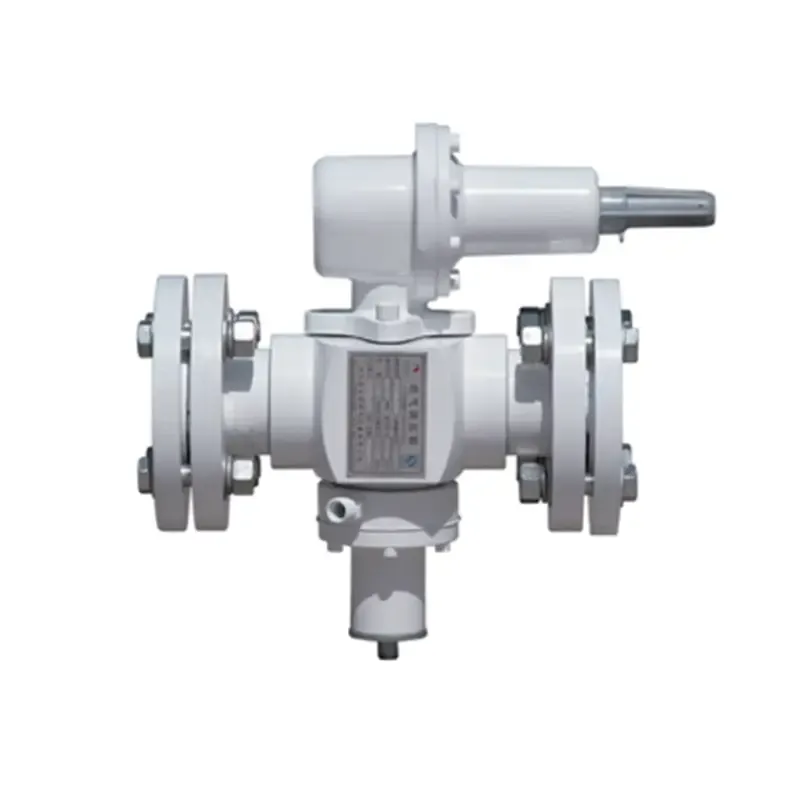
Technical specifications (typical)
| Inlet pressure (Pin) | up to ≈4.0 MPa (PN40; real-world setups vary) |
| Outlet pressure range (Pout) | 0.005–1.6 MPa, spring-selected |
| Accuracy class | AC 5 standard; AC 2.5 optional |
| Shut-off class | SG 5 typical |
| Sizes / Connections | DN25–DN150; flanged PN40 (EN 1092-1) or ANSI 300/600 |
| Body material | Carbon steel (WCB); stainless option for corrosive duty |
| Temperature | -20°C to +60°C standard; -40°C option |
| Capacity (Qmax) | ≈1,000–50,000 Nm³/h depending on DN and ΔP |
| Safety | Integrated OPSO/UPSO, slam-shut, relief (configurable) |
Process, testing, and service life
Materials are CNC machined; seat/plug are lapped for tight shut-off. Factory tests include strength at 1.5× MOP, body leak test with nitrogen, and seat leakage per EN 334 (≤0.1% Qmax). Set-point stability is checked across 10–100% load. With preventive maintenance, service life is ≈15 years in typical Cng distribution duty.
Where it’s used
- Primary/secondary pressure reduction skids for Cng and natural gas.
- PN40 Cng tanker loading/unloading manifolds.
- LNG satellite stations (vaporized gas branch lines).
- Small-town or industrial estate gas stations.
Vendor comparison (quick, informal)
| Vendor | Strengths | Lead Time | Certs/Standards | Cost Level |
| Yinuo RTZ1-/GQ | Custom trims, robust OPSO/UPSO, PN40 focus | Fast (often 3–6 weeks) | EN 334 alignment, ISO QA | $ (cost-efficient) |
| Pietro Fiorentini (typ.) | High polish on control accuracy, wide global base | Medium | EN/ISO, PED | $$$ |
| Honeywell/Elster (typ.) | Ecosystem, service network | Medium–Long | EN/ISO, local codes | $$–$$$ |
Customization options
Common tweaks: low-temperature package, stainless internals for sour gas, noise abatement trim, remote sensing, and calibrated OPSO/UPSO windows tailored to station logic. I’ve seen clients request painted tags with QR tracking—small detail, big maintenance win.
Case study (concise, but telling)
A small coastal city upgraded a skid supplying a mixed residential/industrial grid. Swapping in RTZ1-/GQ (DN80, OPSO/UPSO) cut downstream fluctuation from ±12% to about ±3% during morning peaks, verified over 30 days. The maintenance lead told me, “Honestly, the slam-shut saved us twice during compressor burps.” That’s not lab talk—that’s lived experience in Cng operations.
Compliance, testing standards, and documentation
- Design/test aligned with EN 334 and ISO 23555-1 (regulators for gas transmission/distribution).
- Installation per ASME B31.8 or local equivalent; electrical accessories per area classification.
- Typical dossier: calibration sheet, pressure test record, material certs (EN 10204 3.1), OPSO/UPSO setpoints.
Note: Specs above are indicative; real-world performance depends on gas composition, filtration, and line dynamics.
Authoritative citations
- ISO 23555-1:2021 – Gas pressure regulators for transmission and distribution.
- EN 334:2019 – Gas pressure regulators for inlet pressure up to 100 bar.
- ASME B31.8-2024 – Gas Transmission and Distribution Piping Systems.
Latest news
-
Industrial Natural Gas Pressure Reducing Valve Guide and SelectionNewsApr.16,2026
-
Understanding the Industrial Regulating Valve for Fluid ControlNewsApr.09,2026
-
Understanding Gas Pressure Reducer Types Applications and Safety MeasuresNewsApr.07,2026
-
Understanding and Optimizing Gas Pressure Reducing Valve SystemsNewsApr.04,2026
-
Optimizing System Performance with the Right Filter Separator SelectionNewsMar.31,2026
-
Comprehensive Guide to Understanding and Utilizing Pressure Pipe SystemsNewsMar.28,2026