


Feb . 25, 2026 01:55
Back to list
Comprehensive Guide to Understanding and Selecting a Pressure Reducing Valve
Understanding and Selecting the Right Pressure Reducing Valve
In numerous industrial and commercial applications, maintaining consistent and safe downstream pressure is crucial. A pressure reducing valve (PRV) plays a vital role in achieving this. This article will delve into the function, types, applications, and selection criteria for PRVs, providing a comprehensive guide for engineers, technicians, and anyone involved in fluid control systems. Proper PRV selection ensures optimal performance, safety, and longevity of your systems.

What is a Pressure Reducing Valve and How Does it Work?
A pressure reducing valve is a mechanical device designed to automatically reduce a higher inlet pressure to a desired lower, more stable downstream pressure. It achieves this by utilizing a spring-loaded diaphragm or piston. As the downstream pressure rises, it acts against the spring force, modulating the valve opening to maintain the set pressure. This ensures consistent pressure delivery even with fluctuations in the inlet pressure or downstream demand. PRVs are essential for protecting sensitive equipment, improving system efficiency, and ensuring operator safety. These valves are critical components in various industries, including oil and gas, chemical processing, water treatment, and HVAC systems.
Key Benefit: Consistent downstream pressure protects equipment, improves efficiency, and enhances safety.
Types of Pressure Reducing Valves
Several types of PRVs are available, each suited for specific applications. The most common include:
- Direct-Acting PRVs: Simplest type, directly controlled by downstream pressure. Suitable for small flows and applications where precise control isn’t critical.
- Pilot-Operated PRVs: Utilize a pilot valve to control the main valve, offering higher flow capacity and better accuracy. Ideal for larger systems and fluctuating demands.
- Self-Relieving PRVs: Automatically relieve excess pressure back to the inlet if downstream pressure exceeds the setpoint, preventing damage.
- Balanced Bellows PRVs: Offer excellent stability and accuracy by compensating for changes in inlet pressure.
PRV Type Comparison:
• Direct-Acting: Small flow, basic control
• Pilot-Operated: High flow, accurate control
• Self-Relieving: Automatic overpressure protection
• Balanced Bellows: Stable, accurate, and consistent
Key Considerations When Selecting a Pressure Reducing Valve
Choosing the right PRV involves several factors. Here’s a breakdown of essential considerations:
- Flow Capacity: Match the valve’s capacity to the maximum anticipated flow rate of the system.
- Inlet and Outlet Pressure: Ensure the valve's pressure range accommodates the expected inlet and desired outlet pressures.
- Fluid Compatibility: Select materials compatible with the fluid being controlled to prevent corrosion or degradation.
- Temperature Range: Confirm the valve can operate within the system’s temperature limits.
- Accuracy: Determine the required pressure accuracy and choose a valve accordingly (pilot-operated and balanced bellows offer higher accuracy).
- Connection Type: Ensure compatibility with existing piping (threaded, flanged, welded).
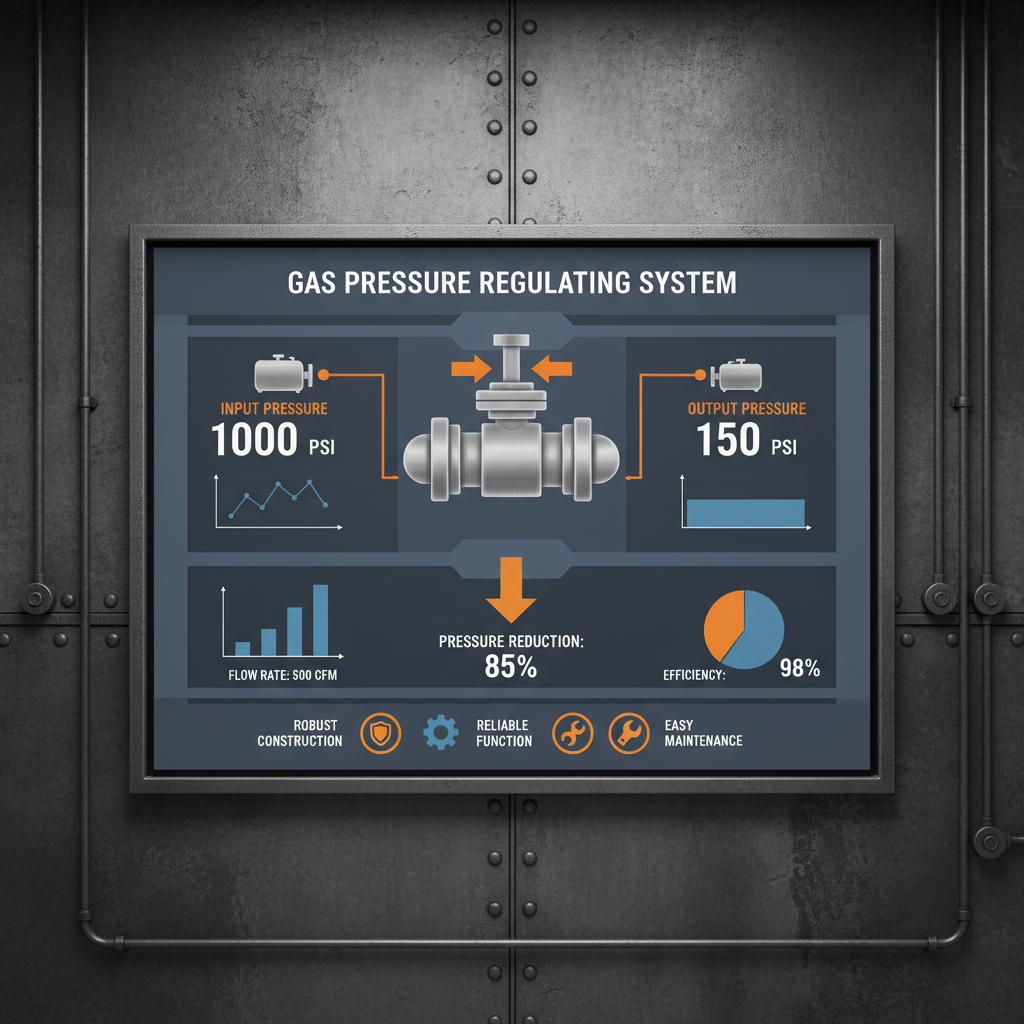
Applications of Pressure Reducing Valves
PRVs find widespread application across various industries. Common uses include:
- Water Distribution Systems: Reducing high municipal water pressure to safe levels for residential and commercial use.
- HVAC Systems: Controlling steam pressure in heating systems for efficient operation.
- Industrial Processes: Regulating pressure in chemical processing, manufacturing, and power generation.
- Gas Transmission and Distribution: Maintaining safe and consistent gas pressure for various applications.
- Laboratories and Research Facilities: Providing precise pressure control for sensitive experiments.
Pressure Reducing Valve Specifications and Performance Data
Understanding key specifications is crucial for selecting the correct PRV. The following table provides a sample specification for a typical pilot-operated PRV:
Conclusion: Ensuring Optimal System Performance with the Right PRV
Selecting the correct pressure reducing valve is vital for the efficient, safe, and reliable operation of numerous systems. By carefully considering flow rates, pressure requirements, fluid compatibility, and other critical factors, you can ensure optimal performance and longevity. Gasouyinuo provides a comprehensive range of high-quality PRVs designed to meet diverse industrial and commercial needs.
Frequently Asked Questions (FAQs)
What causes a pressure reducing valve to fail?
Several factors can contribute to PRV failure, including contamination of the valve seat by debris, wear and tear on internal components, incorrect sizing for the application, or excessive pressure fluctuations. Regular inspection and maintenance, including cleaning or replacing the valve seat and diaphragm, can help prevent failures. Addressing the root cause of pressure surges and ensuring proper filtration can also extend the valve’s lifespan. In some cases, material incompatibility with the fluid being controlled can lead to corrosion and eventual failure.
How do I adjust the outlet pressure of a PRV?
Most PRVs feature an adjustable knob or screw that controls the spring force acting on the diaphragm or piston. Turning the knob clockwise generally increases the outlet pressure, while turning it counterclockwise decreases it. It's crucial to make small adjustments and monitor the downstream pressure with a calibrated pressure gauge. Always follow the manufacturer's instructions for specific adjustment procedures. Be cautious not to exceed the valve's maximum outlet pressure rating.
What is the importance of a pressure relief valve in conjunction with a PRV?
While PRVs reduce pressure, they don't necessarily prevent overpressure situations. A pressure relief valve (PRV) acts as a safety mechanism, automatically releasing excess pressure if it exceeds a predetermined setpoint. This is crucial to protect downstream equipment and prevent catastrophic failures. Using a PRV in conjunction with a pressure relief valve provides a dual layer of protection, ensuring system safety and reliability. The relief valve will activate if the PRV malfunctions or if an unexpected pressure surge occurs.
What materials are commonly used in PRV construction?
PRVs are constructed from a variety of materials depending on the application and fluid being controlled. Common materials include stainless steel (for corrosion resistance), brass (for general-purpose applications), carbon steel (for high-pressure systems), and various polymers (for specific chemical compatibility). The valve seat and diaphragm materials are also critical and often made from materials like PTFE, rubber, or metal alloys. Choosing the appropriate material ensures long-term reliability and prevents degradation.
Latest news
-
Industrial Natural Gas Pressure Reducing Valve Guide and SelectionNewsApr.16,2026
-
Understanding the Industrial Regulating Valve for Fluid ControlNewsApr.09,2026
-
Understanding Gas Pressure Reducer Types Applications and Safety MeasuresNewsApr.07,2026
-
Understanding and Optimizing Gas Pressure Reducing Valve SystemsNewsApr.04,2026
-
Optimizing System Performance with the Right Filter Separator SelectionNewsMar.31,2026
-
Comprehensive Guide to Understanding and Utilizing Pressure Pipe SystemsNewsMar.28,2026