


Oct . 25, 2025 11:35
Back to list
Decompression Equipment for Gas: Safe, Precise, Skid-Mounted
Urban Gas Reliability Depends on Smart, Quiet Decompression Equipment
If you’ve ever wondered why a flame stays steady in a busy canteen at lunch rush, this is the quiet reason: the RTZ1-50/FPQ series gas pressure regulator. It’s a compact workhorse, built for urban residential blocks, small industrial parks, and direct-combustion appliances that don’t forgive pressure swings. I’ve toured a few district energy sites; operators keep telling me the same thing—stability beats raw capacity, every time.
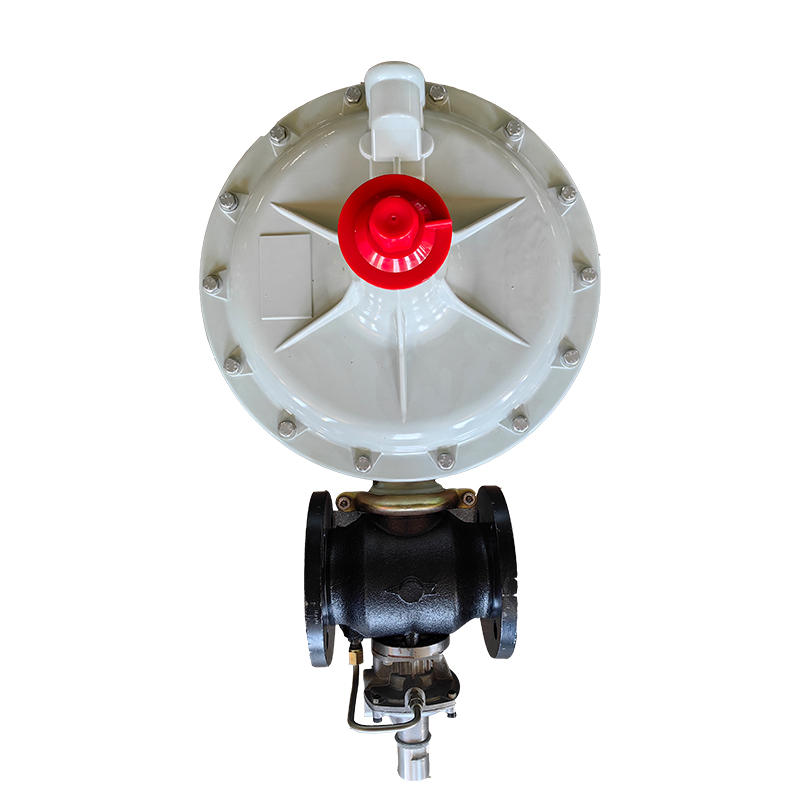
Industry snapshot: regulators are getting brains
Two big trends: remote telemetry (pressure/flow alarms straight to SCADA) and hydrogen readiness (materials that play nicely with H2 blends). Utilities are piloting data-driven maintenance, which, to be honest, is long overdue. The RTZ1-50/FPQ is positioned right in that sweet spot—solid mechanics first, with optional add-ons for monitoring.
What it is, where it fits
Origin: No. 6 Weiqi Street, South District of Hengshui Innovation Port, Zaoqiang County, Hengshui City, Hebei Province, China. Intended for: residential district regulators, small commercial users, and small direct-combustion equipment. In practice, think bakeries, school cafeterias, modest boiler rooms—places where a tidy footprint and predictable outlet pressure matter more than anything.
Typical specifications (real-world use may vary)
| Model | RTZ1-50/FPQ |
| Inlet pressure | ≈ 0.02–0.6 MPa (site-dependent; consult sizing) |
| Outlet setpoint | ≈ 2–60 kPa adjustable, fine-tuned on site |
| Accuracy class / lock-up | AC ≤ 5; SG ≤ 10% (typical for this class) |
| Flow capacity | up to ≈ 800–1,500 Nm³/h (depending on ΔP and gas) |
| Connections | DN50 body; flanged or threaded variants available |
| Materials | Ductile iron/C-wash coated body, SS trim, NBR/FKM seals |
| Safety | Integral relief; optional slam-shut (over/under-pressure) |
| Ambient | ≈ −20 to +60 °C (low-temp kits on request) |
| Standards | Designed to meet EN 334, ISO 23555; PED compliance on request |
How it’s built and validated
- Materials: ductile iron body, stainless steel seat/trim, elastomers matched to gas composition (NBR for NG, FKM for higher temps or H2 blends).
- Methods: CNC machining of seat/plug; spring-calibrated diaphragm actuator; anti-vibration fasteners.
- Process flow: incoming casting QC → machining → surface treatment → sub-assembly → spring set → calibration → leak/strength test → witness certification (when required).
- Testing: strength at ≥1.5× MOP; leak test with air or nitrogen; setpoint stability and lock-up; slam-shut trip verification against set curves (EN 334 / ISO 23555).
- Service life: ≈ 10–15 years with annual inspection; diaphragm/seal kits typically 3–5 year intervals depending on gas cleanliness.
- Industries: urban gas networks, food service, light manufacturing, institutional heating.
Field note: a Hebei industrial park swapped a legacy regulator train for RTZ1-50/FPQ units. Outlet fluctuation dropped from ±9% to around ±3% during morning start-up—operators noticed burner ignition stabilized and nuisance trips basically vanished. Small thing, big impact.
Customer feedback (typical)
- “Set it once and it holds—even when multiple tenants spike demand.”
- “Maintenance is straightforward; diaphragm access is quick.”
- “Lead time was reasonable, and spares were stocked locally.”
Vendor landscape vs. your needs
| Factor | RTZ1-50/FPQ (China) | Vendor A (EU brand) | Vendor B (Global) |
| Price | Competitive for municipal tenders | Higher, strong brand premium | Mid-to-high, broad catalog |
| Lead time | Shorter in China/APAC | Varies; import queues | Stable, but regional stock-driven |
| Hydrogen readiness | Available seals/materials on request | Mature H2 portfolio | Selective models |
| IoT/telemetry | Add-on ports/sensors | Integrated kits | Integrated kits |
Customization options
- Outlet range springs (low-pressure and mid-pressure)
- Seal materials matched to gas composition (including H2 blends)
- Slam-shut device setpoints (OPSO/UPSO)
- Flange standards (GB, ANSI, EN) and orientation
- Pressure taps and transmitter ports for SCADA
Quick test data snapshot (factory): outlet stability within ≈ ±1–3% across 20–80% load; closing pressure typically ≤ 10% above setpoint; zero-bubble leakage after 5-minute hold at 1.1× outlet rating. Numbers are indicative; your gas quality and piping will nudge them.
If you’re shortlisting Decompression Equipment, prioritize three things: verified compliance (EN 334/ISO 23555), realistic lead time, and a maintenance plan your local techs actually enjoy doing. It sounds simple. It isn’t—until it is.
Certifications and compliance
Manufacturing quality systems typically align to ISO 9001. Product design targets EN 334 and ISO 23555; PED 2014/68/EU and ATEX documentation available upon request, depending on configuration and market.
References
- EN 334:2019 Gas pressure regulators for inlet pressure up to 100 bar.
- ISO 23555-1:2022 Gas infrastructure — Gas pressure regulators with safety devices — Part 1: Requirements.
- Directive 2014/68/EU (PED) — Pressure Equipment Directive.
- GB 50028-2021 Code for design of city gas (China).
Latest news
-
Industrial Natural Gas Pressure Reducing Valve Guide and SelectionNewsApr.16,2026
-
Understanding the Industrial Regulating Valve for Fluid ControlNewsApr.09,2026
-
Understanding Gas Pressure Reducer Types Applications and Safety MeasuresNewsApr.07,2026
-
Understanding and Optimizing Gas Pressure Reducing Valve SystemsNewsApr.04,2026
-
Optimizing System Performance with the Right Filter Separator SelectionNewsMar.31,2026
-
Comprehensive Guide to Understanding and Utilizing Pressure Pipe SystemsNewsMar.28,2026