


Oct . 16, 2025 10:15
Back to list
Natural Gas Filter Separator: Higher Purity, Lower Drop?
Why a natural gas filter separator still makes or breaks CNG reliability
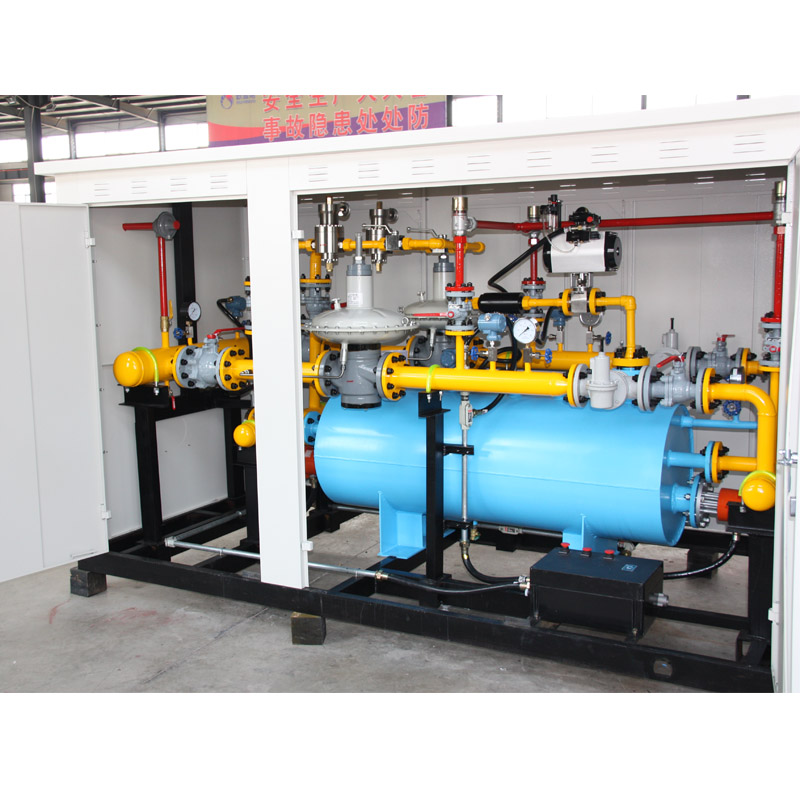
I’ve walked enough city gate stations and daughter stations to see the same story: great compressors, solid PRVs, and then, a tired separator letting liquid mists sneak downstream. That’s when meters drift and regulators cough. The CNG Decompression Equipment from Gasou Yinuo integrates a high-efficiency natural gas filter separator right into the skid—pragmatic, not flashy, and honestly what many operators ask for.
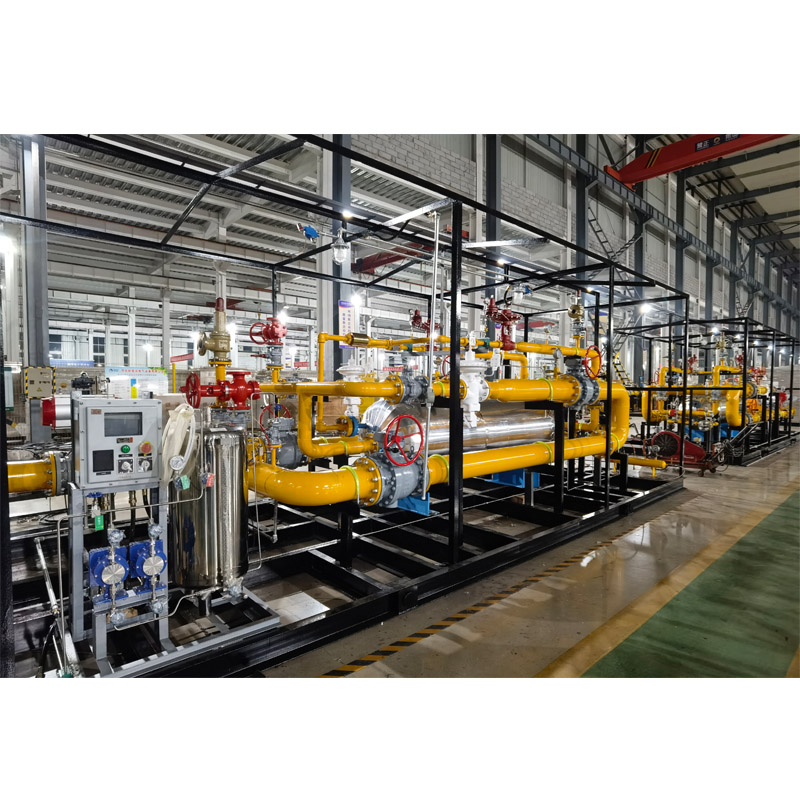
Industry snapshot (and a quick reality check)
Gas demand in China keeps shifting toward cleaner supply, while users expect near-zero downtime. The trend? Compact skids that combine preheating, multi-stage separation, and stable decompression with verifiable test data. It seems obvious, but many customers say their biggest pain isn’t capacity—it’s contamination: black powder, condensate, aerosols. That’s where a robust natural gas filter separator pays for itself.
Product specs at a glance
| Product | CNG Decompression Equipment (with integrated natural gas filter separator) |
| Flow Capacity | ≈ 500–10,000 Nm³/h (real-world use may vary) |
| Design Pressure | Up to 25 MPa inlet; ASME VIII Div.1 / GB 150 vessel design |
| Temperature Range | -20 to 60 °C (options for -40 °C service) |
| Filtration & Separation | Coalescing elements 0.3–1.0 μm; 99.97% aerosol removal; vane pack for bulk liquids |
| Materials | Carbon steel + 304/316L internals; NACE MR0175 (ISO 15156) options |
| Service Life | Vessel 20+ years; elements ≈ 6–18 months depending on inlet quality |
How the process flows (brief but useful)
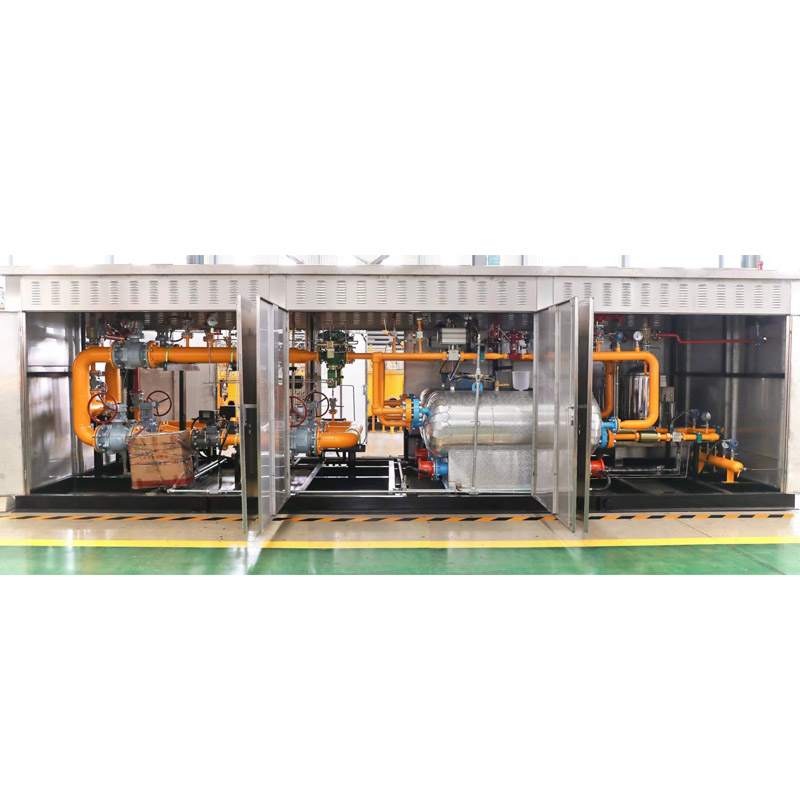
1) High-pressure CNG arrives from trailers or pipeline. 2) Pre-heating to offset Joule–Thomson cooling. 3) Two-stage natural gas filter separator: knock-out + coalescing. 4) Multi-stage pressure reduction with slam-free control. 5) Metering and odorization (if required). 6) Final delivery to the city network or industrial users.
Testing: vessels hydrotested at 1.3× design pressure (ASME VIII/GB 150), coalescer performance per ISO 12500-1/ISO 16889 benchmarks, separation design per API 12J principles; safety shut-in logic referenced to API 14C. Typical ΔP fresh element ≈ 0.07 bar; change-out at ≈ 0.35 bar.
Where it’s used (and why it sticks)
Common scenarios: city gate PRMS, CNG daughter/mother stations, industrial boilers, ceramics and glass plants, backup fuel systems for CHP. Users like the straightforward maintenance on the natural gas filter separator—top-lift covers, no-fuss drains, and DP gauges you can actually read from ground level.
Vendor comparison (shortlist I keep on a notepad)
| Vendor | Core Tech | Lead Time | Certs | After-Sales |
|---|---|---|---|---|
| Gasou Yinuo (Origin: No. 6 Weiqi Street, South District of Hengshui Innovation Port, Zaoqiang County, Hengshui, Hebei, China) | Integrated CNG decompress + natural gas filter separator | ≈ 6–12 weeks | ASME/GB; NACE options; PED on request | Local commissioning + spares |
| International Brand A | High-spec coalescers | 10–20 weeks | ASME, ATEX, CE | Global network, higher cost |
| Local Fabricator B | Basic separation | 4–8 weeks | GB only | Limited QA, lower price |
Customization and field notes
Options include duplex filtration for online switchover, heat-traced drains, sour-service metallurgy, and smart DP transmitters. One municipal CNG station (north China) reported a 27% drop in regulator maintenance after upgrading the natural gas filter separator stage—small win, big smiles. To be honest, that’s typical when aerosols were the hidden culprit.
What the data says
Lab-verified coalescing efficiency 99.97% at 0.3 μm; bulk liquid removal > 99.5% (API 12J methodology). Typical outlet aerosol oil content
Final thought
Equipment that quietly prevents problems is rarely glamorous. But a well-built natural gas filter separator inside your decompression train is exactly that: the quiet hero keeping meters honest and burners clean.
Authoritative references
- API 12J: Specification for Oil and Gas Separators
- ASME Boiler and Pressure Vessel Code, Section VIII, Division 1
- ISO 12500-1: Filters for compressed air — Oil aerosols removal
- ISO 16889: Hydraulic fluid power filters — Multi-pass method
- GB 150: Pressure Vessels (China)
- NACE MR0175 / ISO 15156: Materials for H2S-containing environments
- API 14C: Safety Systems for Offshore Production Facilities (logic references applicable onshore)
Latest news
-
Industrial Natural Gas Pressure Reducing Valve Guide and SelectionNewsApr.16,2026
-
Understanding the Industrial Regulating Valve for Fluid ControlNewsApr.09,2026
-
Understanding Gas Pressure Reducer Types Applications and Safety MeasuresNewsApr.07,2026
-
Understanding and Optimizing Gas Pressure Reducing Valve SystemsNewsApr.04,2026
-
Optimizing System Performance with the Right Filter Separator SelectionNewsMar.31,2026
-
Comprehensive Guide to Understanding and Utilizing Pressure Pipe SystemsNewsMar.28,2026