


Oct . 27, 2025 11:30
Back to list
Pressure Reducing Device – Skid-Mounted, Accurate, Safe
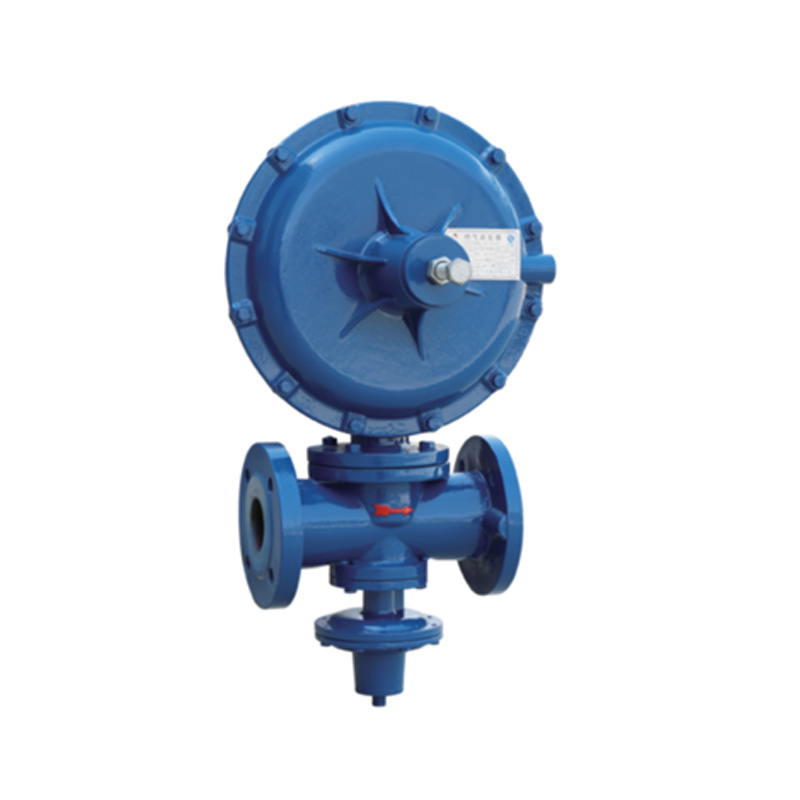
Field Notes on a Modern City-Gas Regulator: RTZ1-/ FQ
If you work around urban gas networks long enough, you quickly learn that the quiet heroes are the humble regulators. The first time I opened an RTZ1 cabinet in a residential block, I expected drama; instead I found a tidy, direct-acting unit humming along, barely a whisper. That’s the charm of a good Pressure Reducing Device—consistent, predictable, and frankly, underappreciated.
The product we’re talking about is the RTZ1-/FQ Series Gas Pressure Regulator, built in No. 6 Weiqi Street, South District of Hengshui Innovation Port, Zaoqiang County, Hengshui City, Hebei Province, China. It’s a direct-acting design for residential districts, small industrial and commercial users, and small direct-fired equipment. It can be assembled into wall-type surge tanks or ground pressure-regulating cabinets—simple, modular, practical. And, to be honest, that modularity is where many operators find the value.
Industry snapshot
Three macro trends keep popping up: tighter compliance to EN 334/ISO 23555, pressure control that tolerates messy real-world inlet fluctuations, and service-friendly designs. Utilities want traceable testing data, pre-calibrated ranges, and faster lead times. It seems obvious, but the market still rewards vendors who can ship configured units quickly and supply documentation without a paper chase.
Applications (and where it shines)
- Residential district gate regulation and risers
- Small industrial kitchens, micro-breweries, greenhouses
- Direct-fired heaters and compact boilers
- Wall-mounted surge tank and ground cabinet assemblies
Key specs at a glance
| Parameter | RTZ1-/FQ (typical) | Notes |
|---|---|---|
| Type | Direct-acting regulator | No external pilot required |
| Inlet pressure | ≈ 0.02–0.4 MPa | Actual ranges by model code |
| Outlet set range | ≈ 1–50 kPa | Residential to light commercial |
| Accuracy class | AC 5–10 (EN 334) | Real-world use may vary |
| Shutoff (lock-up) | SG 10–20 | Per EN 334 terminology |
| Materials | Al alloy body, NBR diaphragm, SS spring | Optional Viton® for LPG |
| Service life | ≈ 10–15 years | With periodic maintenance |
How it’s built and tested
- Materials: aluminum alloy casting, precision-machined orifice, elastomer diaphragm, stainless spring.
- Methods: CNC machining → ultrasonic cleaning → elastomer aging check → assembly in clean area.
- Testing: strength at 1.5× design pressure; leak test ≤ ~0.5 sccm; setpoint/lock-up to EN 334; response time snapshots often
- Documentation: factory test sheet, serial traceability; ISO 9001 QMS typical (verify scope).
Why this Pressure Reducing Device gets picked
Compact envelope for cabinets, steady outlet under uneven inlet, and to be honest, installers like the accessible spring adjustment. Many customers say the start-up is “plug-and-run,” which matches what I’ve seen on site.
Vendor comparison (quick take)
| Vendor | Origin | Lead time | Compliance | Customization | Cost band |
|---|---|---|---|---|---|
| RTZ1-/FQ (Gasou Yinuo) | Hebei, China | ≈ 2–4 weeks | EN 334/ISO 23555 oriented; PED on request | High (springs, orifices, ports) | $ |
| European Brand A | EU | ≈ 4–8 weeks | EN 334, PED, ATEX options | Medium-High | $$$ |
| Local OEM B | Regional | ≈ 1–3 weeks | Basic local codes | Low-Medium | $$ |
Customization
Configure springs for outlet ranges, choose orifice diameters for flow, specify NPT or ISO threads, add inlet strainers, vent orientation, and optional slam-shut per EN 14382. For LPG blends, elastomer upgrades help—ask for material compatibility sheets.
Case notes (real world)
- Residential retrofit, 380-apartment block: swapped legacy units; outlet drift dropped from ≈ ±12% to ≈ ±5% under peak dinner load.
- Small bakery line: direct-fired ovens, setpoint 3 kPa; reported smoother ignition and fewer nuisance shutdowns after changeover.
Test data snapshot
- Strength test: 1.5× design pressure, no visible deformation (batch sample).
- Tightness: ≤ ~0.5 sccm at 0.3 MPa, ambient 20 ±2°C.
- Lock-up: SG ≈ 10–15 depending on spring pack.
Customer feedback: “Set-and-forget,” one utility foreman told me. Another mentioned the “pleasantly boring” maintenance logs. I guess that’s the best compliment a Pressure Reducing Device can get.
Certifications and standards to reference
Specify compliance to EN 334 and ISO 23555-1 for regulators, PED 2014/68/EU for pressure equipment, and EN 14382 if slam-shut is integrated. Documentation should include material certificates and individual test results—ask for sample COC before bulk orders.
Authoritative citations
- EN 334: Gas pressure regulators for transmission and distribution systems.
- ISO 23555-1:2022, Gas pressure regulators—Functional requirements.
- Directive 2014/68/EU (PED): Pressure Equipment Directive.
- EN 14382: Gas supply systems—Slam-shut safety devices.
Latest news
-
Industrial Natural Gas Pressure Reducing Valve Guide and SelectionNewsApr.16,2026
-
Understanding the Industrial Regulating Valve for Fluid ControlNewsApr.09,2026
-
Understanding Gas Pressure Reducer Types Applications and Safety MeasuresNewsApr.07,2026
-
Understanding and Optimizing Gas Pressure Reducing Valve SystemsNewsApr.04,2026
-
Optimizing System Performance with the Right Filter Separator SelectionNewsMar.31,2026
-
Comprehensive Guide to Understanding and Utilizing Pressure Pipe SystemsNewsMar.28,2026