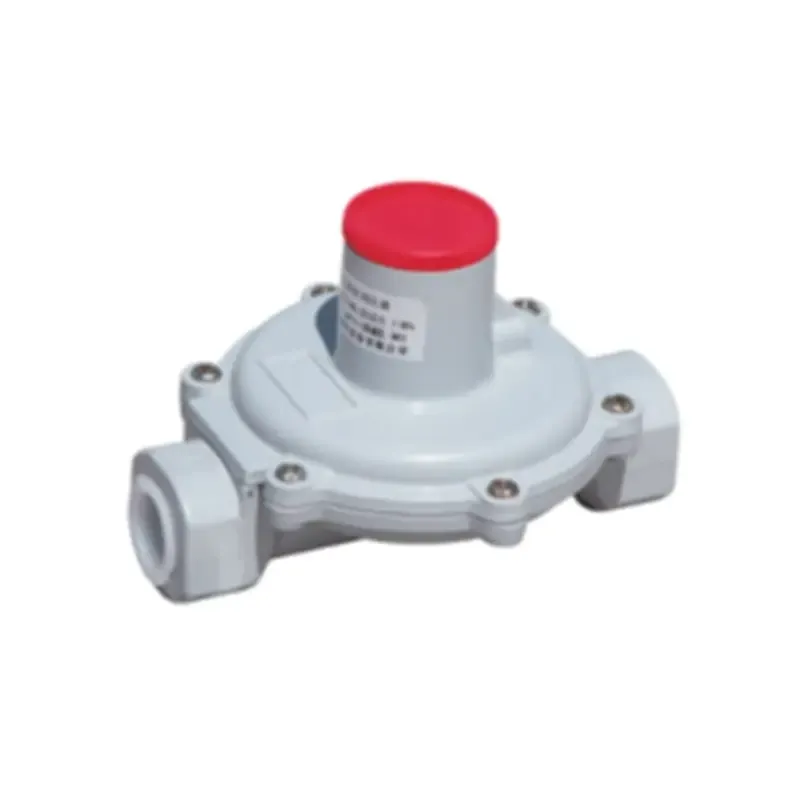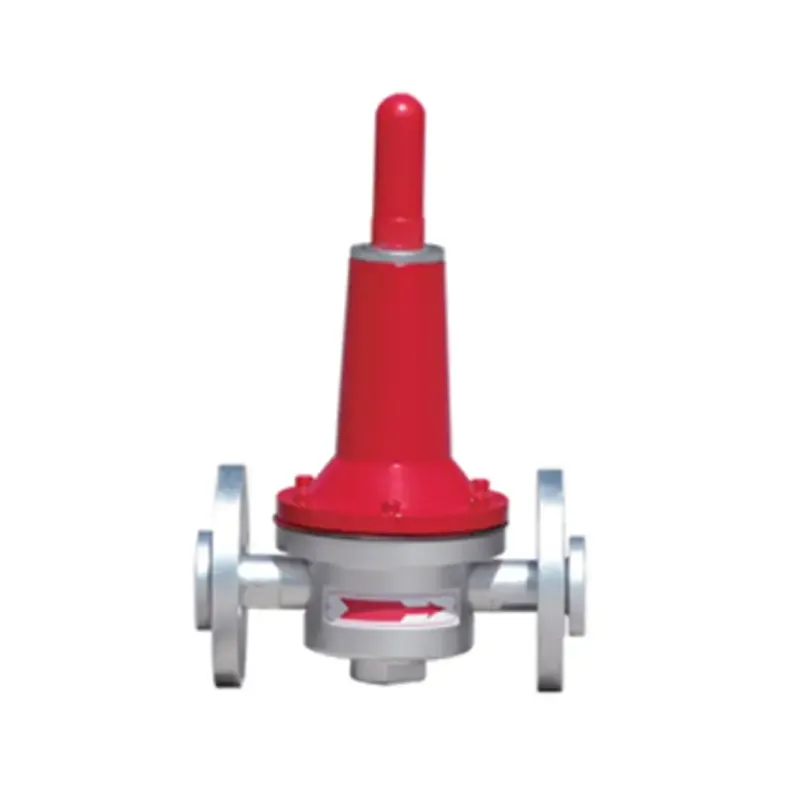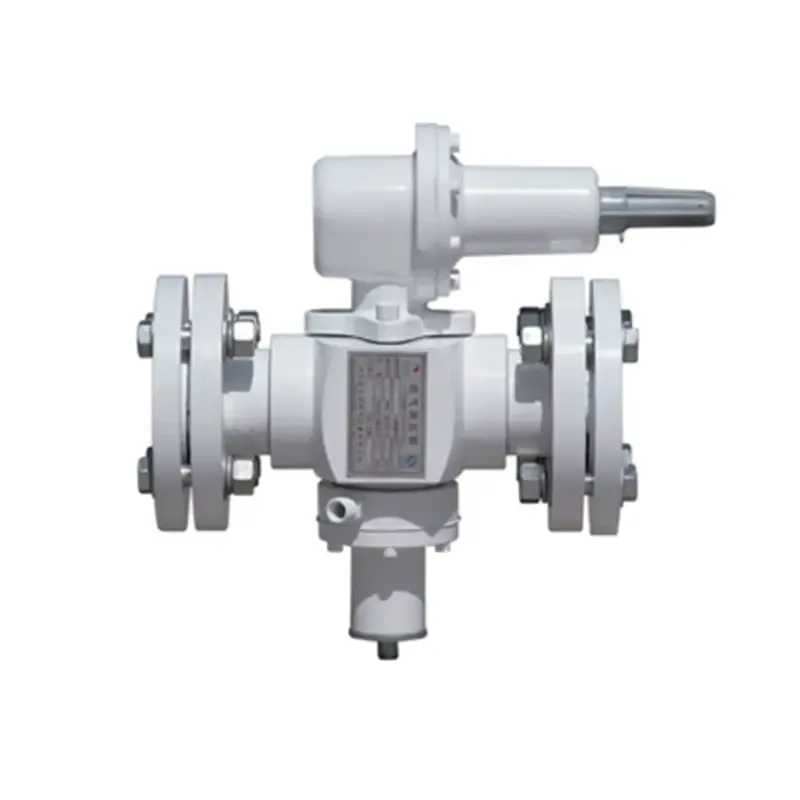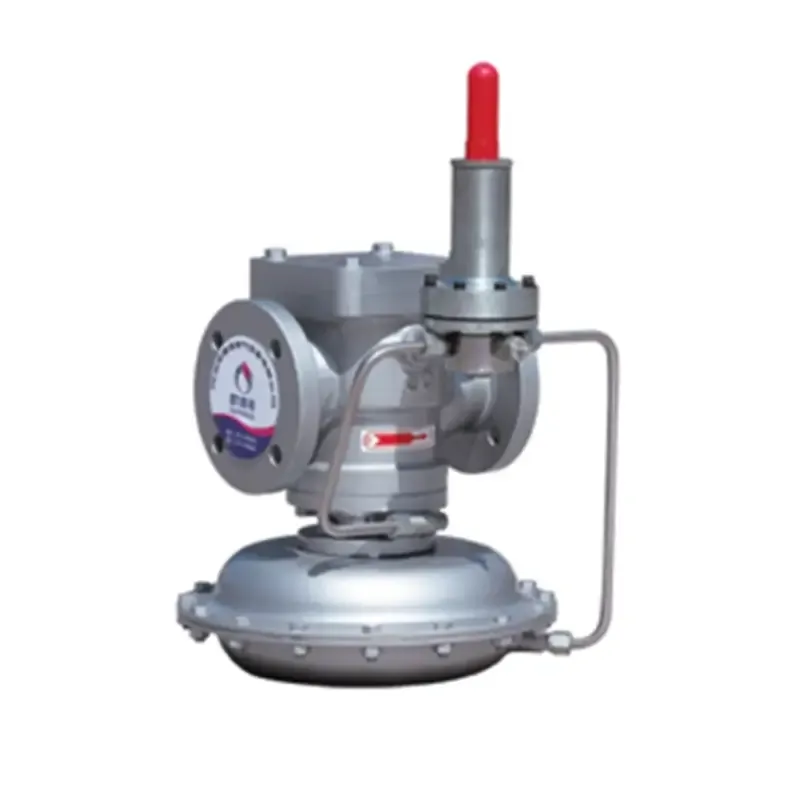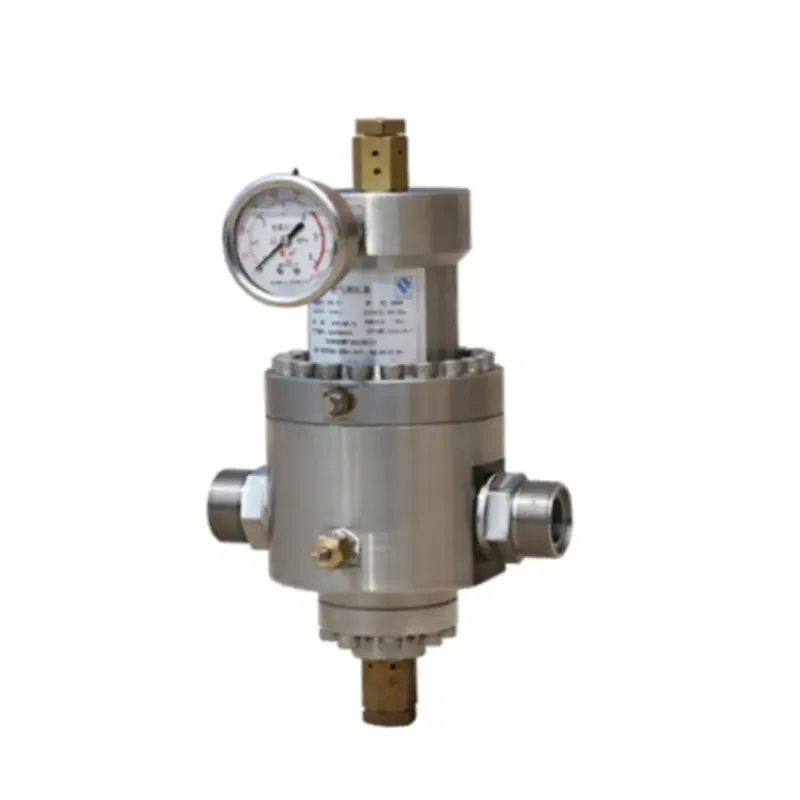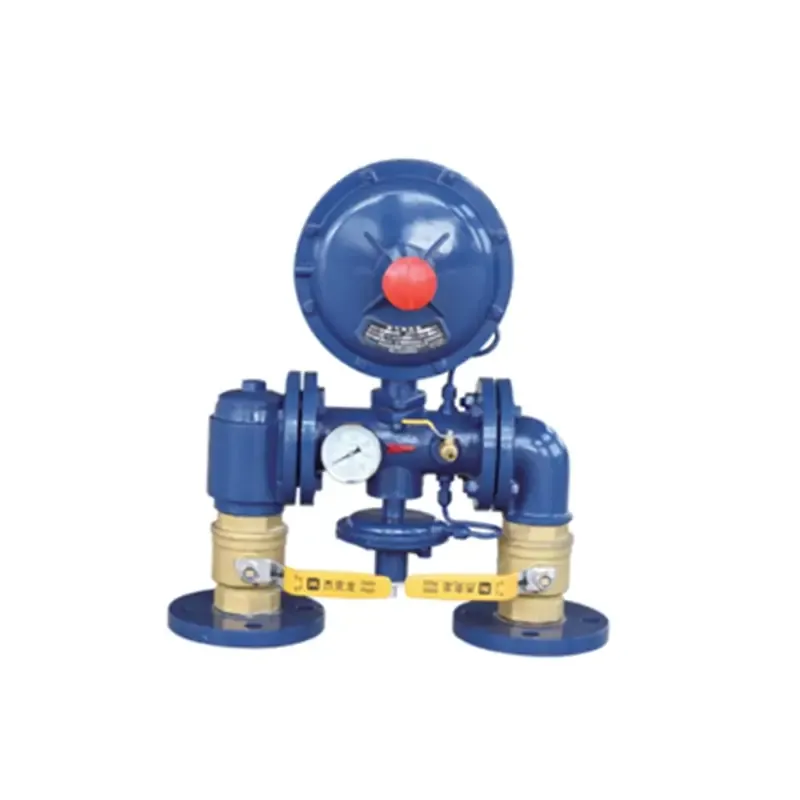
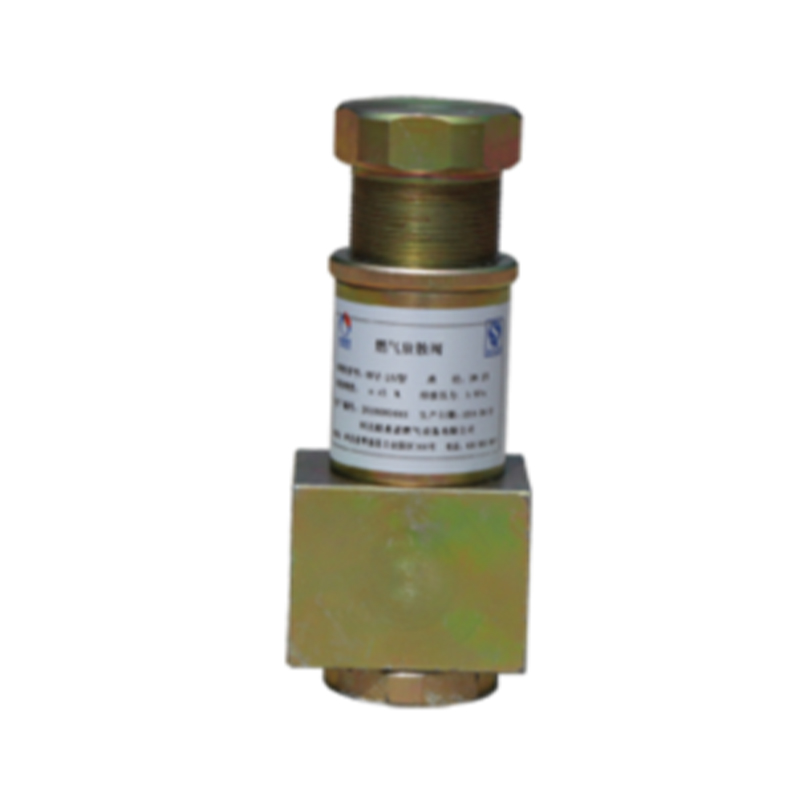
RFZ-V58F gas safety Relief valve is a gas sfety device. Which adapts spring-loaded regulation structure. It is commonly used in the downstreamsection of gas pipeline transmission and distribution system, providingoverpressure relief protection for middle and downstream system ofthe pressure regulator.
It udopts the method of smooth and continuousadjustment, with large diaphragm connection area, thus significantlyimproving the sensitivity, therefore, it is especially suitable for use in lowand medium pressure pipe network.
Applicable medium
Natural gas, coal gas, liquefied petroleum gas and other non-corrosive gases.
Direct action of the spring, sensitive action, quick response, high accuracy of regulation, can discharge with back pressure, long working life, stable and reliable performance, can be adjusted online and automatically reseat after repeated jump; close enclosure, equal-diameter discharging, compact structure and easy installation.
The micro-opening fail-closed relief valve has high precision, high performance and stable performance. After its continuous operation durability test was conducted in accordance with CJ/T335-2010 "Urban Gas Cut-Off Valve and Relief Valve", the external seal, accuracy and performance are still within the standard range. It can be repaired and maintained online, and the product is easy to manage and replace, with few spare parts and reliable operation, saving maintenance man-hours and costs.
This mechanism is in the form of air pressure-driven release. The main design is that the relief valve pad and the transmission mechanism are integrated. When the relief valve pad and the transmission mechanism are pushed by air pressure, the sliding mechanism will cause a displacement and the valve pad will separate from the valve port to form a release function. This structure has high response sensitivity and the overall design structure is more reasonable, and the starting accuracy meets the standard requirements;
Set pressure: P1: 0.1MPa-0.6MPa
Discharge pressure: ≤ 1.05Pf
Reseating pressure: ≥ 0.9Pf
Opening height: 1/4d (d is flow diameter)
Working temperature:20℃ ~+60℃
Series specifications: DN25
Connection mode: G1"thread
|
Model |
Nominal Pass-Through Diam (mm) |
L(mm) |
H(mm) |
|
RFZ-V58F |
DN25 |
75 |
190 |
Gas Safety Discharge Valve Replacement
A gas safety discharge valve is an essential component in many residential and commercial gas systems, designed to release pressure safely and prevent potentially dangerous over-pressurization. Over time, this valve may wear out due to age, corrosion, contamination, or mechanical stress, eventually requiring replacement. Understanding the purpose of the valve, recognizing when it may be failing, and knowing the general considerations involved in its replacement can help ensure continued safety and reliable system performance.
The primary function of a gas safety discharge valve is to act as a safeguard within the pressure control system. When internal pressure rises beyond a safe threshold, the valve automatically opens to release excess gas, thereby stabilizing the system. If the valve becomes stuck, leaks, or fails to open at the required set pressure, it can compromise the entire system’s safety. Common signs of a failing valve include unexplained drops in system pressure, persistent gas odor, corrosion around the valve body, and unusual noises such as whistling or clicking.
Because gas systems involve inherent risks, replacing a gas safety discharge valve should always be approached with caution. Different systems use different valve designs, pressure ratings, and materials, meaning that compatibility is critical. A replacement valve must match the manufacturer’s specifications in terms of pressure settings, connection size, material compatibility, and certification standards. Additionally, system isolation and depressurization procedures—performed by qualified professionals—are required before any component can be removed or installed.
The replacement process typically involves a licensed gas technician inspecting the system, verifying the failure of the existing valve, selecting the correct certified replacement, and ensuring that all seals, fittings, and connections meet code requirements. After installation, the technician will pressurize and test the system to confirm that the new valve operates correctly and maintains a proper seal under normal conditions. This final testing phase helps ensure that the system is functioning safely and that no leaks or pressure irregularities remain.
Regular maintenance and periodic inspections further extend the lifespan of gas safety components. Even newly installed valves benefit from routine checks to confirm they remain free of corrosion and debris. By ensuring timely replacement and proper professional installation, building owners and operators can maintain a safe, reliable, and efficient gas system.
How a Gas Safety Valve Works
A gas safety valve is a critical protective device found in many residential, commercial, and industrial gas systems. Its primary purpose is to ensure that gas flow remains within safe limits and that any abnormal conditions—such as excessive pressure, sudden flow increases, or equipment malfunction—do not lead to hazardous situations. Although different types of safety valves exist, they all operate on the same fundamental principle: monitoring system conditions and responding automatically when those conditions become unsafe.
Most gas safety valves rely on pressure-sensing components or mechanical triggers to detect irregularities. In a typical pressure-relief design, the valve remains sealed during normal operation because internal system pressure is lower than the valve’s preset limit. The valve contains a spring or diaphragm calibrated to resist opening until the gas pressure reaches that predetermined threshold. If pressure begins to rise—due to blockage, equipment failure, or temperature changes—the increasing force pushes against the internal mechanism. Once the pressure exceeds the valve’s rating, the mechanism moves, allowing the valve to open slightly. This opening releases excess gas in a controlled manner, reducing pressure and preventing damage to pipes, appliances, or storage tanks. After the pressure returns to a safe level, the spring or diaphragm automatically closes the valve again.
Other gas safety valves function by monitoring gas flow patterns. For example, excess-flow safety valves are designed to react when gas escapes too quickly, as might happen in the event of a pipe break or disconnected hose. Under normal conditions, gas flows smoothly through the valve’s internal passage. If a sudden surge occurs, a small internal piston or ball shifts into a blocking position, restricting or stopping the flow to minimize the escape of gas. When the system is repaired and normal flow resumes, the valve resets automatically.
Some modern systems incorporate thermal safety valves, which respond to heat rather than pressure. These valves contain elements that melt or change shape when exposed to dangerously high temperatures, shutting off gas flow to reduce the risk of fire spreading.
In all cases, gas safety valves serve as automatic, passive safeguards that require no user intervention. By reacting instantly to unsafe conditions, they help protect equipment, maintain system stability, and significantly reduce the risk of accidents. Regular inspection and maintenance ensure that these valves continue to operate reliably throughout their service life.
Safety Valve Discharge Coefficient
The discharge coefficient of a safety valve is an important performance parameter used to evaluate how efficiently the valve can release fluid—whether gas, steam, or liquid—when activated under overpressure conditions. It represents the ratio between the actual flow rate through the valve and the ideal theoretical flow predicted by fluid mechanics equations. Because real valves are affected by friction, turbulence, geometry, and manufacturing tolerances, the actual flow rate is always lower than the theoretical maximum. The discharge coefficient helps engineers account for these losses and accurately size safety valves to ensure they can relieve pressure effectively and maintain system integrity.
Typically denoted as Kd, the discharge coefficient depends on several factors, including valve design, nozzle shape, lift characteristics, spring responsiveness, and the type of fluid. For example, a well-designed valve with smooth, optimized flow passages will have a higher Kd, meaning less energy is lost as the fluid travels through the valve. Conversely, valves with abrupt transitions or internal restrictions tend to exhibit lower discharge coefficients. Because of this variability, industry standards often require manufacturers to test valves under controlled conditions to determine the certified Kd values used for engineering calculations.
In practical applications, engineers use the discharge coefficient when calculating the required flow area for a safety valve. To ensure safe operation, the selected valve must have sufficient capacity to prevent system pressure from rising above allowable limits during an upset condition. By using the certified Kd, engineers can predict how much fluid will be discharged for a given overpressure scenario. This helps determine whether a particular valve model is suitable or whether a larger or differently designed valve is necessary.
Different industries and regulatory bodies provide guidelines for determining and using Kd values. Organizations such as ASME and ISO specify testing procedures, minimum performance requirements, and correction factors for various operating conditions. These standardized methods ensure consistency and reliability in safety valve sizing across different manufacturers and applications.
Although the discharge coefficient may appear to be a purely technical number, its implications are significant. A properly determined Kd ensures that safety valves respond quickly and effectively during abnormal pressure events, protecting equipment, personnel, and facilities. Regular inspections and performance verification further help maintain the accuracy and reliability of these coefficients throughout the valve’s service life.
gas pressure reducer
gas pressure regulator
gas pressure regulator valve
gasifier
natural gas pressure regulator
pressure reducer
Write your message here and send it to us
Products categories