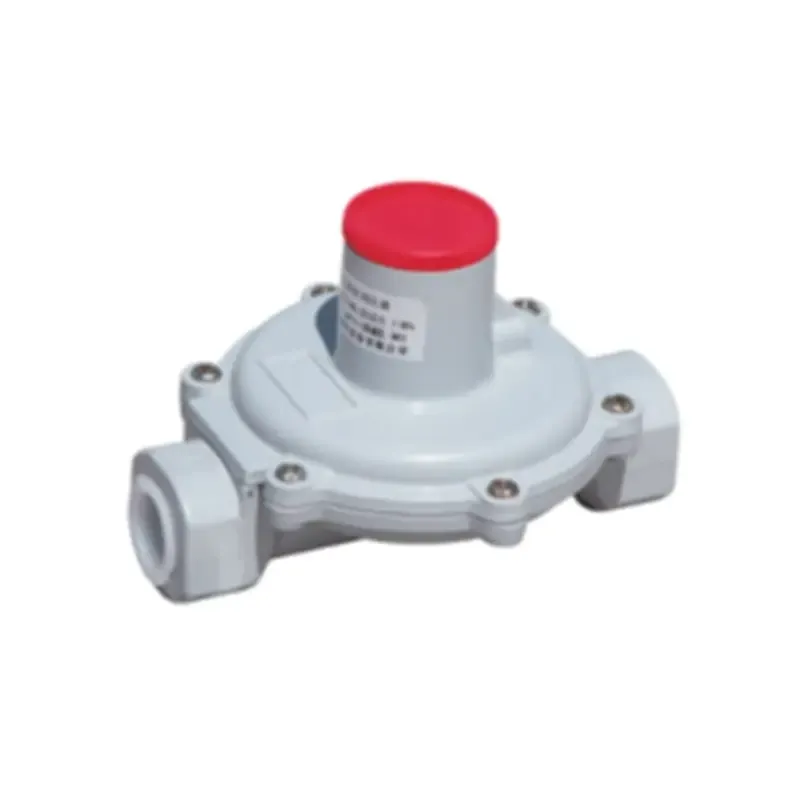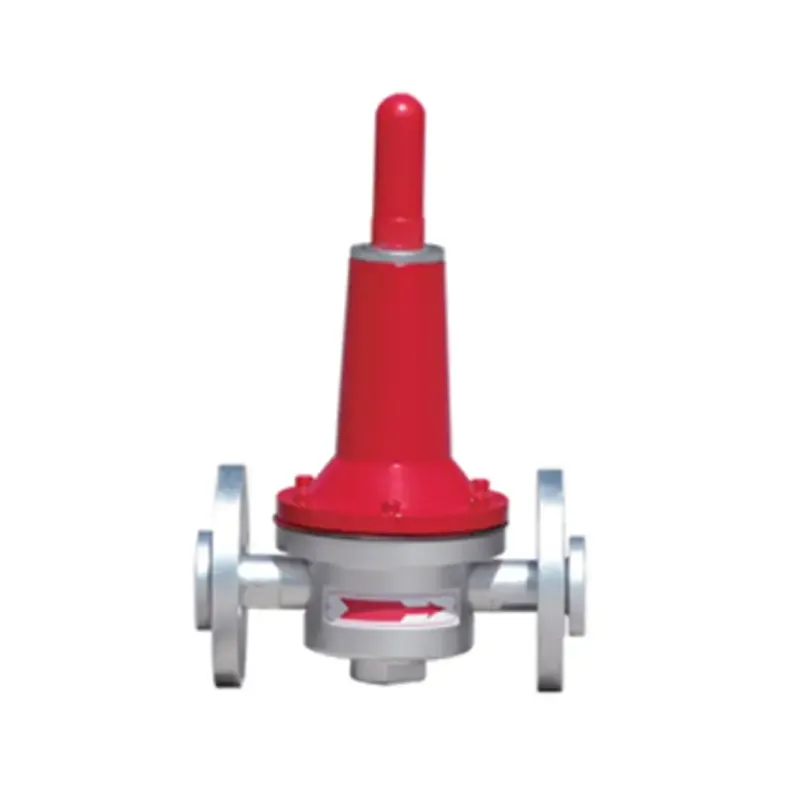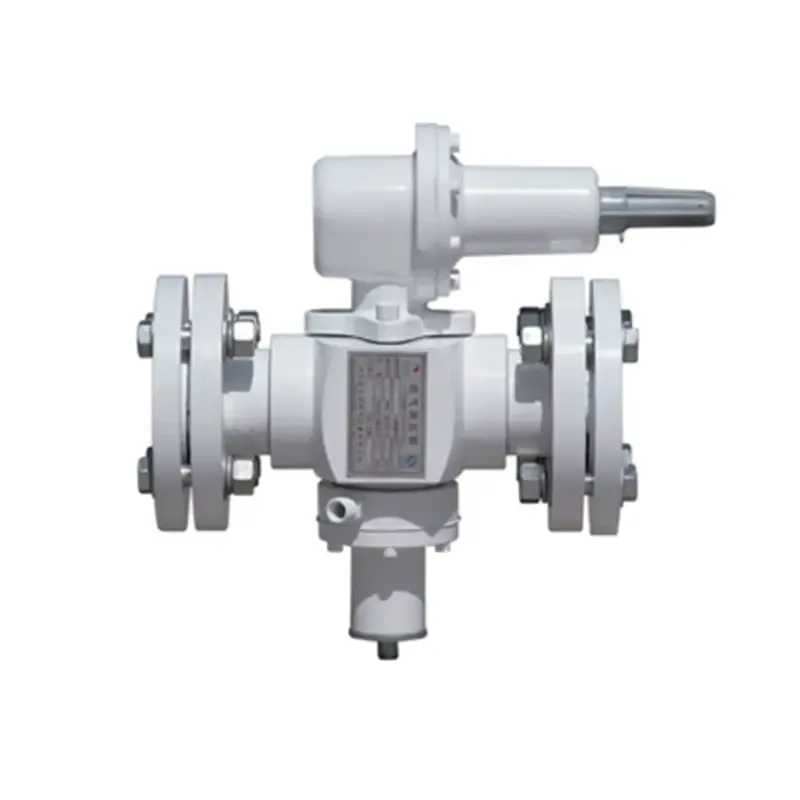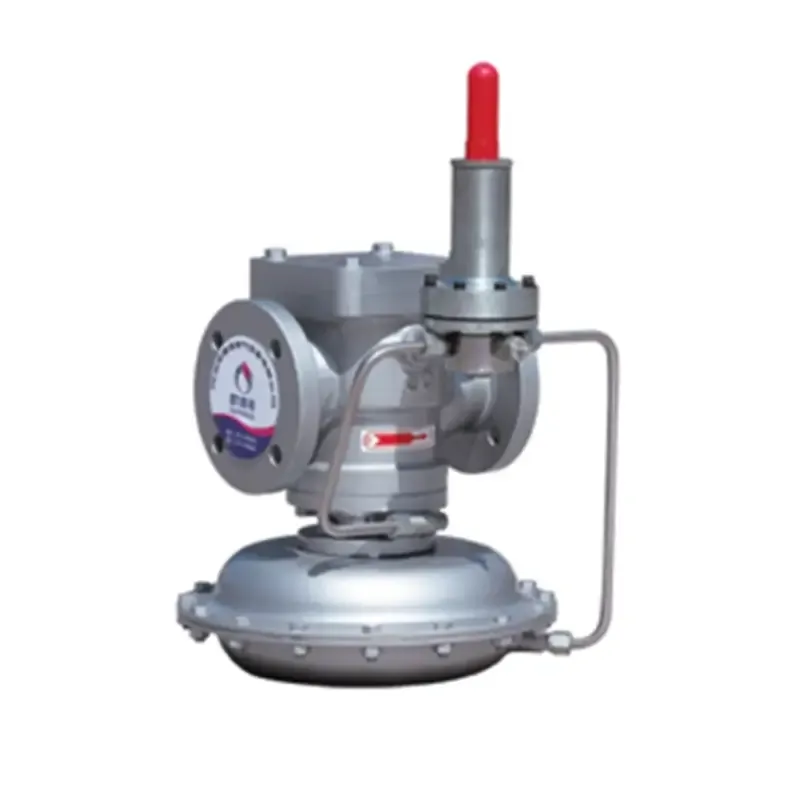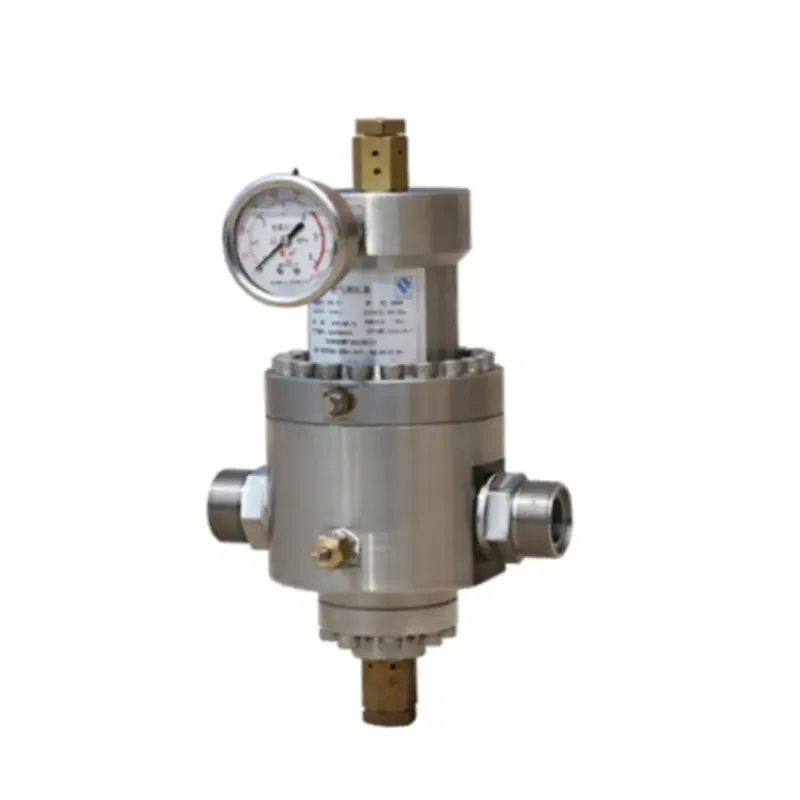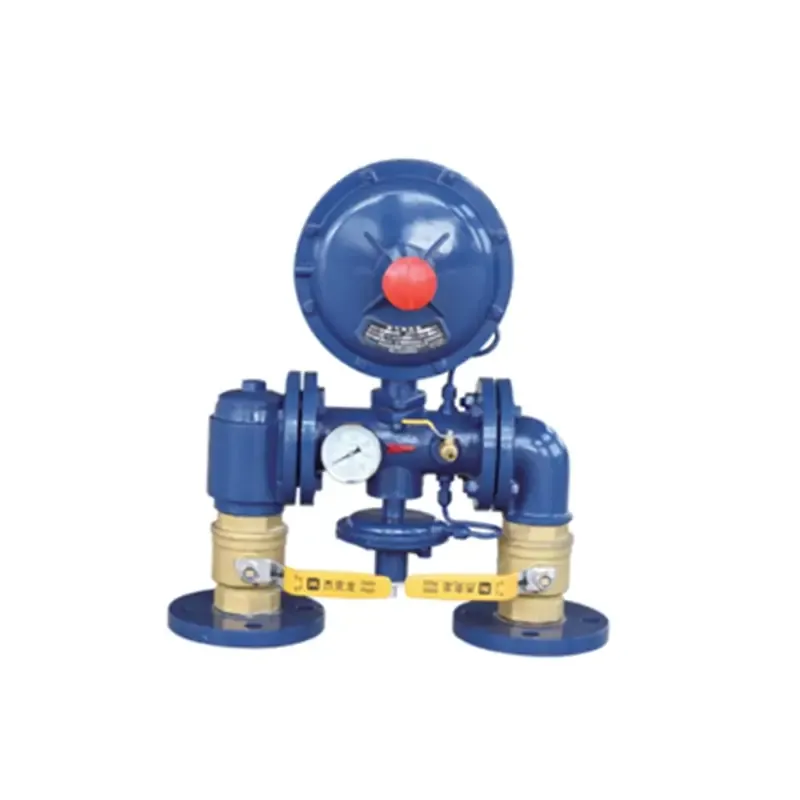
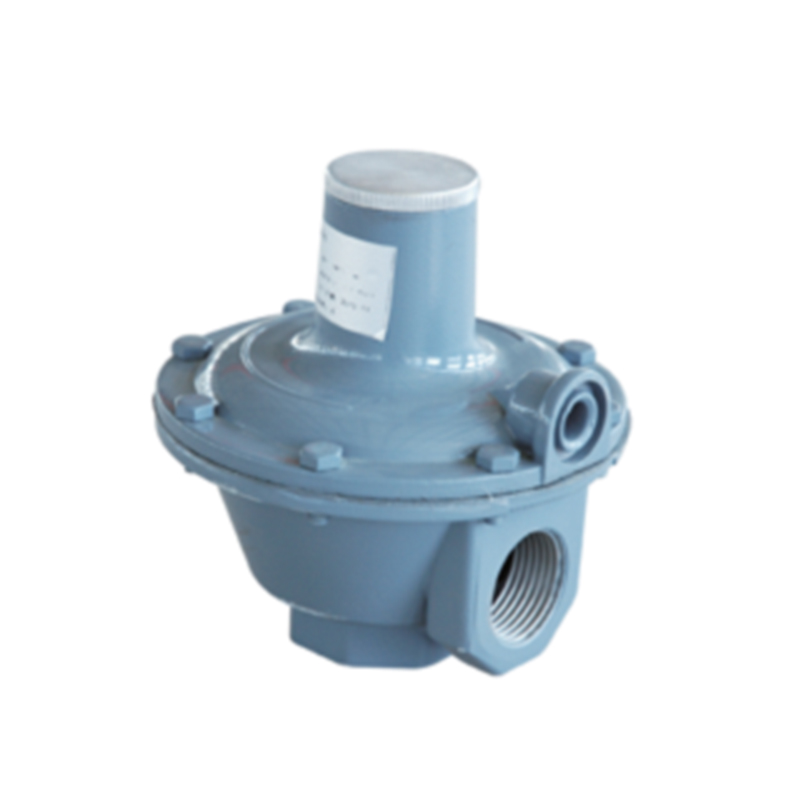
RFZ*/* gas safety relief valve is a gas safety device. It adopts spring-loaded regulation structure and is commonly used in the downstreamsection of gas pipeline transmission and distribution system, providing overpressure relief protection for middle and downstream sysemof the pressure regulator.
It adopts the method of increasing slip and continuous adjustment, with large diaphragm connection area, thosignificantly improving the sensitivity. therefore, it is especially suitable for use in low and medium pressure pipe network.
Applicable medium
Natural gas, coal gas, liquefied petroleum gas and other non-corrosive gases.
Direct action of the spring. sensitive action. quick response, high accuracy of regulation, can discharge with back pressure, long workinglife, stable and reliable performance, can be adjusted online and automatically reseat after repeated jump: close enclosure, equal-diameterdischarging, compact strucfure and easy installation.
The micro-opening fail-closed relief valve has high precision, high performance and stable performance. After its continuous operation durability test was conducted in accordance with CJ/T335-2010 "Urban Gas Cut-Off Valve and Relief Valve", the external seal, accuracy and performance are still within the standard range. It can be repaired and maintained online, and the product is easy to manage and replace, with few spare parts and reliable operation, saving maintenance man-hours and
This mechanism is in the form of air pressure-driven release. The main design is that the relief valve pad and the transmission mechanism are integrated. When the relief valve pad and the transmission mechanism are pushed by air pressure, the sliding mechanism will cause a displacement and the valve pad will separate from the valve port to form a release function. This structure has high response sensitivity and the overall design structure is more reasonable, and the starting accuracy meets the standard requirements;
Set pressure:P1:1.5-30KPa,30KPa-0.4MPa
Discharge pressure: ≤ 1.05Pf
Reseating pressure: ≥ 0.9Pf
Opening height: 1/4d (d is flow diameter)
Working temperature:-20℃ ~+60℃
Series specifications: DN20,DN25,DN40.DN50 ( G3/4",G1 1/2",GI",G2")
|
Model |
Nominal Pass-Through Diam (mm) |
L (mm) |
H1 (mm) |
H (mm) |
|
RFZ-25 |
G1″ |
125 |
35 |
150 |
|
RFZ-40 |
G1 1/2″ |
160 |
40 |
155 |
|
RFZ-50 |
G2″ |
180 |
50 |
190 |
What are the three types of relief valves?
The three primary types of relief valves commonly used in industrial and mechanical systems are direct-acting relief valves, pilot-operated relief valves, and balanced-piston relief valves. Each category operates with a distinct mechanism and serves different performance requirements, especially regarding pressure stability, response characteristics, and suitability for varying flow rates.
Direct-acting relief valves are the simplest and most widely used type. They rely on a spring that acts directly against the system pressure applied to the valve poppet. When the system pressure exceeds the spring force, the valve opens and relieves excess pressure. Because of their straightforward construction, these valves respond quickly and are relatively easy to maintain. However, their pressure setting can vary slightly with flow changes, making them more suitable for systems where high precision is not critical or where flow rates are moderate.
Pilot-operated relief valves use a small pilot valve to control the opening of a larger main valve, allowing for more stable pressure regulation even at high flow rates. When system pressure rises, the pilot valve modulates the pressure in a control chamber, causing the main valve to open smoothly. These valves are highly accurate and provide excellent performance in demanding systems such as hydraulic presses, high-capacity pumps, or industrial process equipment. Their main disadvantages include higher complexity and sensitivity to contamination, which means they typically require cleaner fluids and regular maintenance.
Balanced-piston relief valves are designed to minimize the effects of back pressure on valve performance. A balanced piston or diaphragm helps ensure that the valve opens at a consistent pressure, even when downstream conditions vary. This makes them especially useful in systems where back pressure may fluctuate significantly, such as multi-stage pumping installations or interconnected piping networks. Although slightly more complex than direct-acting valves, they offer improved stability while remaining more rugged and less sensitive to contamination than many pilot-operated designs.
Together, these three types of relief valves provide engineers with a range of options to ensure overpressure protection across diverse applications.
Do I need a safety valve on my gas valve?
Whether you need a safety valve on your gas valve depends on the type of gas system you are using, the applicable safety codes in your region, and the specific equipment connected to the gas line. In most cases, gas systems—especially those involving pressurized natural gas, propane, or industrial gases—require some form of overpressure protection. A safety valve, often called a pressure relief valve, is one of the key devices used to ensure that unexpected pressure buildup does not damage equipment or create hazardous conditions.
For residential systems, such as home natural-gas supply lines or gas appliances, safety valves are usually built into the equipment or regulated at the supply source. For example, gas regulators installed by utility companies typically include internal relief mechanisms to prevent dangerous overpressure events. Because of this, homeowners do not usually install an additional safety valve directly on their indoor gas valves. However, if you are adding specialized gas-fired equipment, such as a high-pressure burner or a custom gas manifold, an additional safety valve may be required by code or recommended by the manufacturer.
In commercial or industrial environments, safety requirements are stricter. Systems that store or distribute gas in cylinders, tanks, or high-pressure pipelines almost always require dedicated relief valves to prevent ruptures or explosions caused by excessive pressure. Industrial gas boilers, large ovens, and compressed-gas systems must also include safety valves—often installed at key points such as regulators, manifolds, or pressure vessels. Without a safety valve, a blocked line, malfunctioning regulator, or unexpected heat source could increase internal pressure to a dangerous level.
Another consideration is compliance with standards such as ASME, NFPA, or local gas installation regulations. These standards often specify where relief valves must be installed and what type is required. If your system falls under any of these guidelines, a safety valve is not optional; it is a mandatory component of safe operation.
In summary, while household gas valves typically do not require separate safety valves for normal operation, more complex or high-pressure gas systems absolutely do. If you are unsure about your specific installation, it is best to consult a licensed gas technician or review applicable safety codes to ensure full compliance and protection.
Rfz * * gas safety relief valve replacement
Replacing an RFZ-series gas safety relief valve—or any model of gas-system relief valve—requires careful planning and strict adherence to safety standards. A relief valve is a critical overpressure-protection device, so replacement should never be rushed or treated as a simple hardware swap. The main goal is to ensure that the new valve matches the system’s pressure rating, gas type, and flow requirements while maintaining compliance with relevant codes and manufacturer specifications.
The first step in any replacement process is proper system isolation. Before a technician can remove the old valve, the gas supply must be completely shut off, and the system must be depressurized according to established safety procedures. This prevents accidental gas discharge and reduces the risk of fire or explosion. In many installations, especially those involving natural gas, LPG, or industrial gases, the system may also need to be purged using approved methods to remove residual fuel before any components are handled.
Next, it is essential to verify that the replacement valve is correctly specified. RFZ-type relief valves often come in multiple pressure ranges, material options, and connection sizes. The new valve must meet or exceed the original valve’s pressure setpoint, temperature rating, and compatibility with the gas being used. Substituting an incorrect valve can lead to delayed opening, excessive leakage, or complete failure during an overpressure event. Technicians typically consult the manufacturer’s data sheets or certification documents to confirm that the chosen replacement matches the system requirements.
Once installation begins, a qualified professional should follow proper torque guidelines, use approved sealing materials, and ensure the valve is oriented correctly. Many RFZ-style valves rely on specific mounting positions to function accurately, particularly when designed for vertical flow or gravity-assisted operation. After installation, a leak test and function check must be performed using safe, regulated procedures. This step confirms that the valve seats properly and that there are no unintended gas escapes around fittings or threads.
Finally, the system must be documented and brought back online gradually. Maintenance logs should record the replacement date, model number, pressure setting, and any calibration information. Some jurisdictions require the relief valve to be certified or tagged for inspection purposes, especially in industrial environments.
In summary, replacing an RFZ gas safety relief valve is a task that demands careful preparation, correct component matching, and professional execution. For safety and compliance, it should always be performed by a trained technician following applicable codes and manufacturer guidelines.
gas booster
gas safety relief valve
gas safety valve
natural gas safety valve
safety relief valve
Write your message here and send it to us
Products categories